

Did you know that a single delay in a fit-out project can cost a UAE hotel over AED 15,000 in lost profit every single day? With the Middle East construction pipeline reaching a record 717 projects in 2026, the margin for error in your supply chain has vanished. You're likely feeling the strain of unpredictable shipping routes and the rising costs of premium OS&E. It's a volatile environment where a single shipment of sub-standard linens can compromise your brand standards and guest trust.
We believe that true operational security comes from a partnership built on transparency and global expertise. This guide will show you how to master hotel procurement risk management in the Middle East by implementing strategies that mitigate geopolitical and logistical risks. You'll learn how to stabilize pricing for high-volume items and build a resilient framework that ensures 100% room readiness. We'll explore the practicalities of source-level quality control and the latest regulatory shifts to keep your procurement process audit-ready and efficient.
Key Takeaways
- Understand the unique 2026 regional dynamics that make hotel procurement risk management in the Middle East a critical priority for maintaining 100% room readiness.
- Identify why high-turnover categories like OS&E and hotel linens are most prone to quality degradation and how to prevent "linen leakage" in your supply chain.
- Discover the strategic advantage of balancing global manufacturing in China and the UK with a dedicated UAE-based presence for real-time oversight.
- Learn to map your supply chain beyond Tier-1 providers and establish contract guardrails to protect your budget from shipping surcharges and energy volatility.
- Explore how a turnkey project management approach effectively transfers procurement risk to an experienced partner with a proven track record in the GCC.
Understanding the Landscape of Hotel Procurement Risk in the Middle East
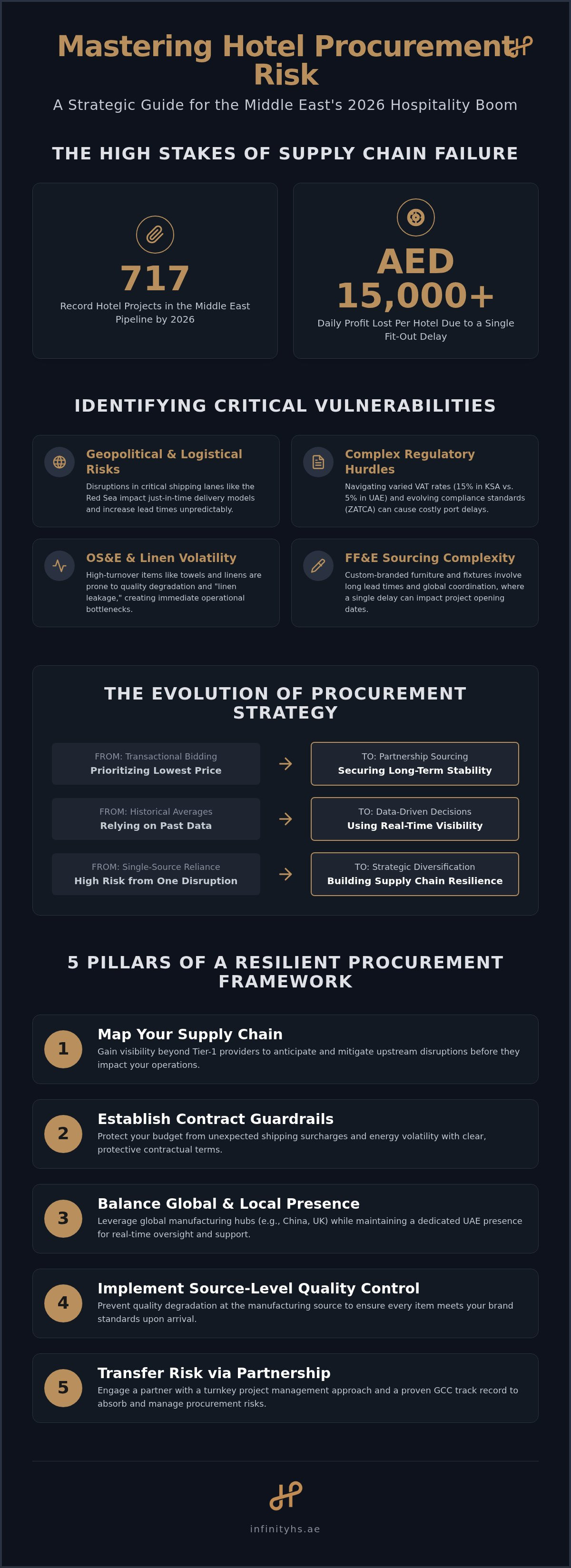
Effective hotel procurement risk management in the Middle East is no longer a secondary administrative task; it's a fundamental pillar of a hotel's commercial viability. With the regional construction pipeline hitting a record 717 projects in early 2026, the competition for high-quality FF&E and OS&E has intensified. This surge in demand, coupled with the Middle East's role as a global logistics hub, creates a unique set of supply chain pressures that don't exist in other markets. Procurement risk management is the proactive identification of disruptions that threaten hospitality operational excellence.
The cost of failure in this region is particularly high. In the booming UAE market, delays in fit-out projects can drain over AED 15,000 in potential profit every day. Beyond the financial loss, procurement failures directly erode guest satisfaction. If a room isn't ready because room electronics haven't cleared customs, or if the quality of hotel linen falls short of luxury standards, your Average Daily Rate (ADR) and brand reputation suffer immediate damage. Managing these risks requires a sophisticated understanding of both global logistics and local regulatory frameworks.
External vs. Internal Hospitality Risks
External risks in the Middle East are often tied to geopolitical shifts that impact critical shipping lanes. Recent disruptions in the Red Sea and the Gulf of Aden have forced many operators to rethink their reliance on just-in-time delivery models. A comprehensive approach to supply chain risk management allows operators to anticipate these hurdles before they manifest as operational failures. Simultaneously, internal vulnerabilities like "maverick spend" or a lack of transparency in vendor selection can lead to significant financial leakage.
Regulatory compliance also presents a complex challenge. As of July 2026, Saudi Arabia maintains a 15% VAT on imported goods, while the UAE stands at 5%. Navigating the latest ZATCA amendments in Saudi Arabia or the new audit requirements for UAE free zone businesses requires meticulous attention to detail. Failure to comply with these evolving standards can result in costly delays at GCC ports, further straining the supply chain.
The Evolving Role of Procurement Leaders
The role of the procurement specialist is shifting from transactional buying to strategic risk mitigation. In 2026, successful leaders are moving away from traditional bidding wars that prioritize the lowest price over long-term stability. They're instead focusing on partnership-based sourcing to secure the supply of essential items for megaprojects across the region. This evolution involves several key shifts:
- Data-Driven Decisions: Using digital tools for real-time visibility into lead times and logistics rather than relying on historical averages.
- Strategic Diversification: Moving toward multi-source strategies to ensure that a single regional disruption doesn't halt operations.
- Value-Based Sourcing: Prioritizing vendors who offer turnkey solutions and total quality control at the source, particularly for complex FF&E projects.
By treating procurement as a strategic partnership rather than a series of one-off transactions, hotel operators can build the resilience needed to thrive in a fast-paced, high-growth environment. This proactive stance ensures that guest experiences remain consistent, regardless of external volatility.
Identifying Critical Vulnerabilities in OS&E and FF&E Sourcing
Operating Supplies and Equipment (OS&E) represent the most volatile category for hotel procurement risk management in the Middle East. High turnover items pose the greatest threat to operational stability. When a property cycles through its inventory of towels and bed sheets every few months, any inconsistency in the supply chain becomes an immediate operational bottleneck. Unlike one-time FF&E installations, OS&E requires a continuous, flawless flow of goods to maintain guest satisfaction and room readiness.
Furniture, Fixtures, and Equipment (FF&E) present a different set of challenges, primarily centered on long lead times and custom branding requirements. Sourcing bespoke furniture for a luxury development in Riyadh or Doha often involves global coordination that spans multiple continents. A single delay in a specialized manufacturing hub can ripple through a project, pushing back opening dates and costing owners thousands in daily potential revenue. Balancing the high expectations for Middle Eastern luxury with the harsh realities of global logistics requires a meticulous, detail-oriented approach.
The Vulnerability of Hotel Linens
Linen leakage is a pervasive risk that extends beyond simple inventory loss. It encompasses the gradual degradation of quality and the inconsistencies found in bulk supply orders. Many hotel linen wholesale suppliers lack the local quality control infrastructure necessary to verify thread counts or fabric durability before a shipment arrives at the port. This leads to hidden costs, such as premature replacement cycles and guest complaints regarding sub-standard bedding.
To mitigate these risks, procurement managers must look for transparency at the source. Understanding the manufacturing process is essential to avoid thread count fraud or excessive shrinkage after the first industrial wash. For a deeper dive into securing your inventory, you can explore The Comprehensive Guide to Sourcing Premium Hotel Linen in the UAE. Ensuring your supply chain is resilient against these quality dips is the only way to maintain a five-star guest experience.
Electronics and Technology Risks
The rapid pace of technological change makes hotel room electronics a high-risk procurement category. Obsolescence is a constant threat; a device specified during the design phase may be outdated by the time the hotel opens its doors. Furthermore, ensuring that global technology standards are fully compatible with Middle East power grids and regional connectivity requirements is a technical hurdle that requires expert oversight.
Poorly sourced electronics often lack the necessary warranty support or local maintenance teams. This leaves hotels with "dead zones" in guest rooms when devices fail. Beyond functionality, sub-standard amenities and electronics can derail a brand's sustainability goals if they aren't manufactured to modern energy-efficiency standards. If you're concerned about the technical integrity of your current supply chain, you may want to consult with a sourcing specialist to audit your upcoming requirements.
Strategic Mitigation: Balancing Global Sourcing with Local Support
Sourcing from global hubs like China offers undeniable quality and scale, yet it introduces significant logistical hurdles. Relying solely on distant manufacturers without a regional anchor often leads to communication breakdowns and delayed resolutions. Effective hotel procurement risk management in the Middle East requires a dual-grip approach; you must capitalize on global manufacturing while maintaining a robust local presence to manage unforeseen variables. Infinity Hotel Supplies uses offices in the UAE, China, and UK to bridge the gap between sourcing and delivery, ensuring that every project benefits from both international reach and local accountability.
Moving toward a turnkey model allows hotel operators to transfer the burden of risk to a partner with established networks. This shift from transactional buying to comprehensive project management provides a powerful buffer against regional volatility. It's about creating a system where the provider takes ownership of the timeline, from the initial factory audit to the final on-site installation. This proactive stance ensures that guest experiences remain consistent, regardless of external market fluctuations.
Supplier Diversification vs. Consolidation
Choosing between consolidation and diversification depends on the criticality of the inventory. Consolidating spend with a single-source turnkey partner builds significant leverage, particularly for large-scale FF&E projects where design consistency is paramount. This approach streamlines communication and reduces the administrative burden on your internal team. Conversely, diversifying the supply of critical guest-facing items protects against localized disruptions. Evaluating the reliability of hotel amenities suppliers in the GCC is essential. You need partners who can guarantee stock availability even when primary shipping lanes are congested.
Quality Control Protocols
Quality control must begin at the source, not at the destination port. Implementing multi-stage inspections at the point of manufacture in China or the UK ensures that defects are caught before goods are shipped across oceans. This proactive oversight is complemented by local warehousing in the UAE, where pre-delivery inspections (PDI) act as a final safeguard. This rigorous methodology ensures that high-touch items, such as leather accessories and room accents, arrive in pristine condition. It eliminates the risk of receiving sub-standard goods that could delay a room's readiness or compromise the guest experience.
Building a Resilient Procurement Framework for 2026
Creating a robust framework for hotel procurement risk management in the Middle East requires a shift from reactive problem-solving to proactive architecture. It's about building a shield that protects your property from the volatility of global markets while ensuring your guests receive an uncompromised experience. A resilient strategy isn't just about finding the right products; it's about securing the entire journey of those products from the factory floor to the guest room.
Step 1: Map your supply chain beyond Tier-1 providers. Don't just look at who you pay. Investigate who they pay. Hidden bottlenecks often lie deep within Tier-2 or Tier-3 suppliers, particularly when sourcing specialized raw materials that are sensitive to regional logistics shifts. Understanding these dependencies allows you to anticipate delays before they impact your timeline.
Step 2: Establish Contract Guardrails for volatility. With shipping surcharges and energy costs fluctuating, your contracts must include transparent mechanisms for handling price spikes. Pre-agreed caps on freight surcharges can protect your budget from the sudden shifts often seen in the Red Sea or GCC ports.
Step 3: Conduct quarterly audits of operational equipment. High-use assets like housekeeping trolleys require regular performance checks. Meticulous auditing prevents sudden mechanical failures that force you into emergency, high-cost procurement cycles.
Step 4: Implement a sustainable sourcing policy. Align your procurement with regional ESG goals, such as the UAE's "Make it in the Emirates" initiative or Saudi Vision 2030. Sustainable sourcing isn't just a trend; it's a future-proofing strategy that enhances brand reputation and ensures compliance with evolving regional regulations.
The Pre-Opening Risk Checklist
For new developments, securing long-lead FF&E items at least 12 months in advance is non-negotiable. This lead time provides a buffer for custom manufacturing and potential shipping reroutes. Pay close attention to the branding and material quality of bathroom accessories and other high-touch accents. Coordinating these deliveries for just-in-time arrival is essential; it avoids the risk of site damage or theft that occurs when items are stored in unsecured construction zones for too long.
Contract Management and Legal Protections
Navigating Force Majeure clauses requires a sophisticated understanding of the Middle East's geopolitical context. Ensure your contracts clearly define what constitutes a disruptive event and what the recovery obligations are for both parties. Transparency is equally vital when working with turnkey partners. Demand clear visibility into fee structures to ensure your budget is spent on quality materials rather than hidden commissions. This level of detail protects you against price spikes in raw materials like cotton, leather, and plastics, ensuring your project stays on track and within budget.
Partnering for Stability: Why Infinity Hotel Supplies is the Strategic Choice
Since our founding in 2014, Infinity Hotel Supplies has served as a steady, experienced hand for hospitality operators across the GCC. We understand that hotel procurement risk management in the Middle East involves more than just selecting products; it requires a deep-seated commitment to partnership and a global operational footprint. By maintaining dedicated offices in the UAE, China, and the UK, we provide total oversight at every stage of the supply chain. This physical presence allows us to navigate the complexities of the current landscape, from Red Sea shipping delays to the meticulous quality control needed to maintain five-star standards.
Our end-to-end OS&E and FF&E solutions are designed to transfer the burden of risk away from the hotelier. Instead of managing dozens of individual vendors and hoping for consistency, you partner with a single entity that understands the nuances of regional logistics and regulatory compliance. This holistic approach ensures that your project remains on schedule and within budget, even during periods of regional volatility. For a broader perspective on modern methodology, explore our Hospitality Procurement Solutions: A Strategic Guide for 2026.
Our Meticulous Approach to Quality
We believe that excellence is found in the finer details. Our approach to global supply chain management ensures zero-defect delivery by implementing rigorous inspections at the point of origin. Whether it's verifying the thread count of your hotel linen or the technical specifications of room electronics, our teams in China and the UK act as your eyes on the ground. This proactive oversight prevents sub-standard goods from ever reaching your property, saving you from the hidden costs of replacements and guest dissatisfaction.
This methodology has been instrumental in the successful launch of numerous luxury hotels across Dubai and Abu Dhabi, where brand reputation depends on flawless execution. Our turnkey procurement project fees offer developers and renovators a transparent, predictable cost structure. This transparency eliminates the hidden commissions that often plague traditional bidding models, allowing you to allocate your budget toward high-quality guest experiences rather than administrative waste.
Secure Your Supply Chain Today
The record-breaking hotel construction pipeline of 2026 demands a procurement partner that combines visionary guest experience understanding with pragmatic execution. We don't offer generic solutions; we customize a sourcing strategy that protects your margins and ensures your guest experience remains uncompromised. Our experts are available to audit your current procurement risks and identify vulnerabilities before they manifest as costly operational delays. By building a resilient framework today, you ensure your property is ready for the guests of tomorrow.
Future-Proofing Your Hospitality Supply Chain for 2026 and Beyond
Mastering the complexities of the GCC market requires a fundamental shift from reactive buying to strategic risk mitigation. By mapping supply chains beyond Tier-1 providers and balancing global manufacturing with a dedicated UAE presence, you can protect your margins from regional volatility. Identifying vulnerabilities in high-turnover items and securing long-lead FF&E items 12 months in advance are essential steps to ensure 100% room readiness and consistent guest satisfaction.
Achieving excellence in hotel procurement risk management in the Middle East is a continuous process of auditing and adaptation. Since 2014, leading hotels across the GCC have relied on our global sourcing offices in the UAE, China, and the UK to maintain total quality control. As a one-stop solution for FF&E and OS&E turnkey projects, we provide the steady, experienced hand needed to navigate logistical challenges with ease.
Your guest experience is too valuable to leave to chance. Let's build a resilient, audit-ready supply chain that supports your long-term vision and operational stability.
We look forward to facilitating your next high-end hospitality experience with the precision and reliability your brand deserves.
Frequently Asked Questions
What are the biggest procurement risks for hotels in the Middle East today?
Geopolitical instability and unpredictable shipping delays are the primary risks facing the region in 2026. Disruptions in the Red Sea and Gulf of Aden have forced many operators to abandon just-in-time delivery models. These external variables require proactive hotel procurement risk management in the Middle East to ensure that essential items like linens and electronics reach properties before operational bottlenecks occur.
How does geopolitical conflict affect hotel supply chains in the GCC?
Conflict directly impacts supply chains by forcing the rerouting of vessels, which significantly increases lead times and fuel costs. Additionally, insurance premiums for cargo passing through regional hot zones have surged, adding unforeseen expenses to every shipment. These factors create a volatile pricing environment that can quickly destabilize project budgets if not managed with established contract guardrails and experienced oversight.
Why is supplier diversification important for Middle East hospitality?
Relying on a single source creates a critical vulnerability where one regional disruption can halt your entire operation. Diversification ensures that if a primary manufacturer in one hub faces delays, alternative suppliers in different geographic regions can fill the gap. This strategy is vital for maintaining guest-facing amenities and protecting the property's brand reputation during periods of localized instability or manufacturing strikes.
What is the difference between OS&E and FF&E procurement risk?
OS&E risk centers on high-turnover logistics and the need for constant replenishment, while FF&E risk involves long-lead times for custom manufacturing. A failure in OS&E supply leads to immediate room readiness issues; however, FF&E failures can delay an entire hotel opening. Managing both requires a sophisticated understanding of different lifecycle requirements, from bulk linen orders to bespoke lobby furniture and custom branding.
How can hotels in Dubai reduce shipping delays for guest amenities?
Utilizing local UAE warehousing and conducting pre-delivery inspections (PDI) are the most effective ways to bypass last-mile delays. By storing critical inventory within the GCC, hotels can move to a call-off model where goods are delivered to the site only when needed. This approach reduces site storage risks and ensures that products have already cleared customs and quality checks before they're required for guest use.
Can outsourcing procurement help mitigate financial fraud in hotels?
Professional outsourcing through a turnkey provider enhances transparency by establishing clear audit trails and fee-based models. This structure eliminates hidden commissions and maverick spend that often occur in decentralized procurement departments. Effective hotel procurement risk management in the Middle East relies on these transparent partnerships to ensure that every dollar spent is visible and adds direct value to the guest experience.
What role does quality control play in hospitality risk management?
Quality control acts as a safeguard against the reputational damage caused by sub-standard or counterfeit products entering the supply chain. Inspections at the point of manufacture ensure that every item meets luxury standards before it's shipped across oceans. This meticulous oversight prevents the arrival of defective goods that could compromise brand consistency or lead to costly, emergency replacement cycles during peak occupancy periods.

Article by
Infinity Editorial Team
With deep expertise in hospitality product FF&E and OS&E across the Middle East and Africa, Infinity Editorial Team brings insights from Infinity Hotel Supplies, helping developers, hoteliers, and homeowners transform spaces from empty shells to fully furnished, design-ready environments.
Disclaimer
The content published by Infinity Editorial Team is intended for informational purposes only. All articles, guides, and insights are based on industry knowledge and experience in hospitality FF&E and OS&E supply across the Middle East and Africa. Infinity Hotel Supplies does not guarantee specific outcomes and recommends consulting a qualified professional for project-specific requirements.


