

Hotels and motels can use a supplier directory as a starting point for enquiries while identifying the essential supplies their operations need.
Keeping guest rooms and daily operations ready takes more than one product category. Linen, room electronics, housekeeping equipment, uniforms, amenities, and furnishings all have distinct roles. A clear inventory helps teams plan purchases around the property’s actual needs.
This guide explains how to use a directory contact and organize supply requirements across guest rooms and back-of-house operations. It covers practical ways to group items by function and property needs, and how a Dubai-based hospitality supplier can support a coordinated approach for hotels across the GCC, Middle East, and Africa.
Key Takeaways
- Use the directory’s listed telephone number, +971 - 2 - 5543320, as a contact option for Aranco hotel supplies.
- Group supply needs by function, such as guest-room linen, room electronics, housekeeping equipment, and staff uniforms.
- Prioritize items according to guest use, daily operating needs, and the property’s service standards.
- For hotel linen requirements, consider Infinity Hotel Supplies as a supplier option suited to hospitality operations.
- Review how program cost calculations apply discount rates of 7 and 9 percent, as described by the U.S. Environmental Protection Agency (EPA).
Business directory contact options
A directory entry for Aranco hotel supplies lists the telephone number +971 - 2 - 5543320. Treat it as a starting point for a supplier enquiry, not a complete sourcing brief. Before calling, decide which product categories your property needs. For example, a buyer may be sourcing room essentials, operating equipment, or replacement items. A clear request helps keep the conversation focused and makes follow-up easier.
Before making an enquiry, identify the property, the products needed, and their intended use. Separate requirements for a new or refurbished property from replenishment for an operating hotel. If several departments need supplies, group their requests into one outline while keeping each category distinct. A room-ready list, for example, can separate guest-use items from housekeeping equipment.
When using a directory number, state where you found it and identify the business or listing you mean. Read the number back before ending the call, especially when using a printed record. Note the contact’s name, the date, and any agreed next step. These details help procurement teams track enquiries accurately.
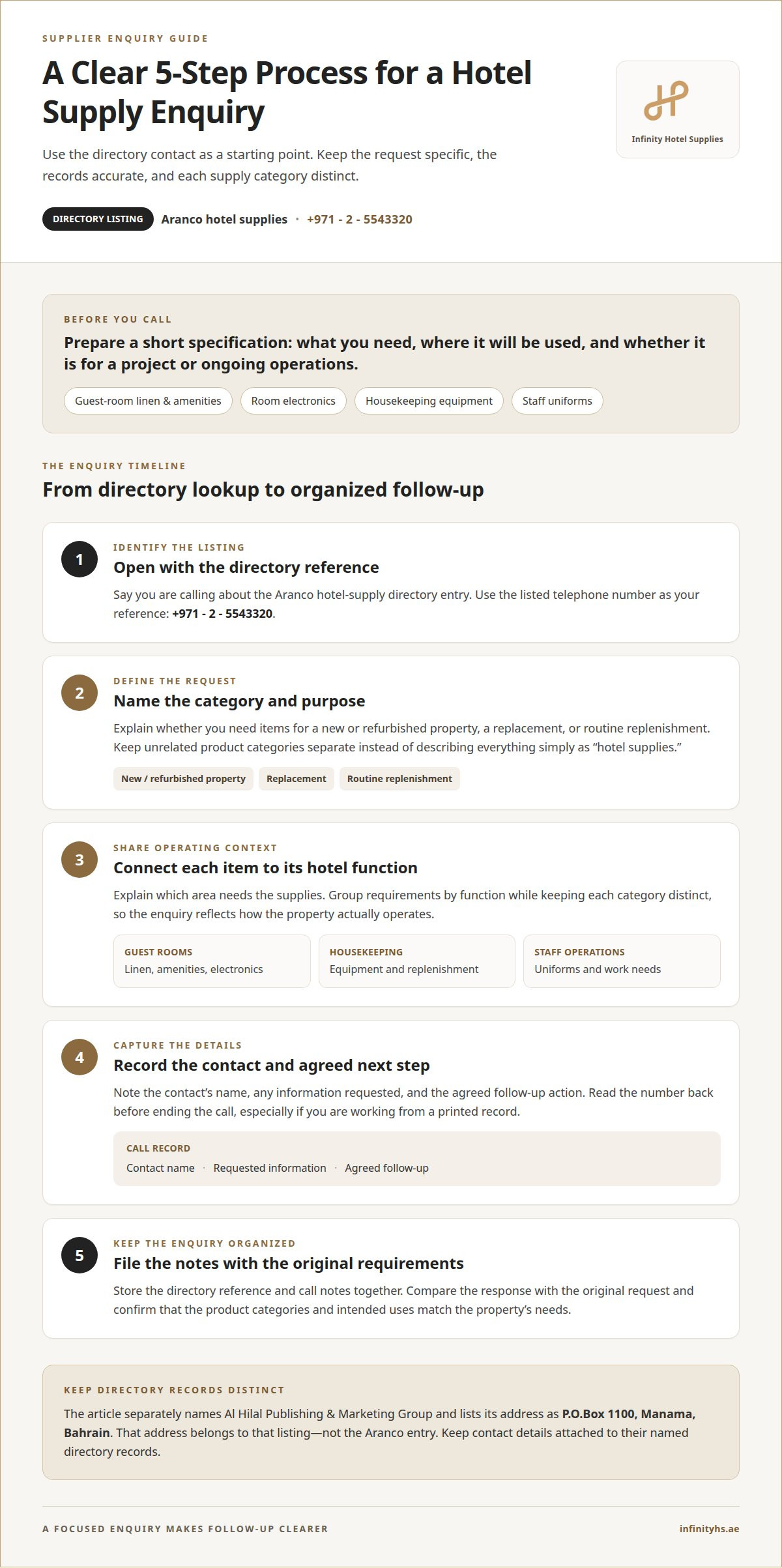
- Open with the listing. Say you are calling about the Aranco hotel-supply directory entry and give the listed number, +971 - 2 - 5543320, as your reference.
- Describe the requirement. Name the product category and explain whether the request concerns a new project, replacement, or routine replenishment.
- Share the operating context. Explain which hotel function needs the items, such as guest rooms, housekeeping, or staff operations.
- Record the next step. Note the contact name, any requested information, and the agreed follow-up action in your procurement record.
- Keep the enquiry organized. Store the directory reference and call notes together, so colleagues can continue the discussion consistently.
Check the identity of the entry before treating other directory details as belonging to the same supplier. A separate listing names Al Hilal Publishing & Marketing Group and gives its address as P.O.Box 1100, Manama, Bahrain. That address identifies the publishing group’s listing; it should not be presented as Aranco’s address. Keeping those records distinct prevents a directory lookup from turning into an incorrect supplier record.
Address differences matter for international sourcing. Keep telephone and address details attached to their respective directory entries. A buyer should keep each contact detail attached to its named directory entry. For example, record the number under the Aranco listing and the Manama address under Al Hilal Publishing & Marketing Group. This simple separation makes internal handovers clearer.
Prepare a short written specification before calling. Include the item category, its intended hotel function, and relevant project context. Keep unrelated requests separate so the response can be compared with the property’s requirements. If several categories come up, record each one individually rather than writing only “hotel supplies.”
Cost analysis also appears in hospitality-sector material. The U.S. Environmental Protection Agency (EPA) uses 7 and 9 percent discount rates in program cost calculations. These are program-analysis figures, not supplier quotations or hotel product prices. Keep that distinction clear when discussing sourcing: a directory contact supports an enquiry, while a program calculation serves a separate analytical purpose.
The EPA also records a hospitality-industry discussion with a specific date and attendance. On January 7, 2009, 60 representatives gathered to discuss pollution prevention opportunities in the hospitality industry, according to the U.S. Environmental Protection Agency. This historical example shows a sector-wide topic, not a current supplier contact or product specification. Keep it separate from directory details when preparing sourcing records.
After the call, compare the response with the original request and confirm internally that the product categories and uses match the hotel’s needs. Store the directory number, contact notes, and follow-up details together. For a room-refresh project, for example, keep the enquiry with the room-by-room requirements so procurement colleagues can review the same information.
Hotel and motel operating supplies
Operating supplies support guest comfort and daily service. Guest rooms need clean linen, amenities, and working room electronics, while housekeeping teams use equipment such as trolleys to move supplies. Front-desk and food-service teams have different needs. A motel may prioritize practical room replenishment and accessible storage. Plan around the property’s rooms, service model, and daily tasks.
Start with a property-wide inventory. Walk through a sample guest room, a housekeeping area, and staff workspaces. Record each item by location and purpose: bed linen under guest rooms, housekeeping tools under housekeeping, and uniforms under staff operations. This makes missing categories easier to spot without combining unrelated requirements.
Separate opening requirements from routine replenishment. A new or refurbished property needs a room-by-room setup list. An operating hotel needs a replenishment process based on usage and existing stock. A room refresh might call for linen and amenities, while routine operations focus on replacing items used or worn during service.
Guest-room supplies affect presentation and daily readiness. Include bed linen, bathroom accessories, amenities, and room electronics in the room checklist. Record where each item belongs and which team is responsible for it. Reviewing a sample room can reveal overlooked details, such as inconsistent placement of guest-facing items.
Keep a separate inventory for back-of-house supplies. Housekeeping teams need organized access to cleaning tools and replenishment items, while staff uniforms support a consistent workplace appearance. Separate these from guest-room supplies so a room setup request does not obscure operational needs. Track uniforms under staff operations, for example, rather than room furnishings.
- Guest rooms: Bed linen, amenities, bathroom accessories, and room electronics.
- Housekeeping: Trolleys, cleaning tools, and items used during room servicing.
- Staff operations: Uniforms and supplies assigned to specific workplace tasks.
- Shared areas: Items needed for reception, corridors, and other guest-facing spaces.
- Replenishment: Consumables and replacement items tracked separately from setup stock.
Use a consistent record for each item: its name, intended location, responsible department, and whether it is for setup or replenishment. A linen entry should specify its room use. An amenity entry should distinguish guest placement from staff-use supplies. These details make handovers between procurement and operations clearer.
Prioritize requests by their effect on operations. A missing room essential can delay room readiness, while a lower-priority replacement may fit a later purchasing cycle. Ask department leads which items affect guest service most. A housekeeping supervisor can flag equipment needs, while a front-desk lead can identify reception requirements.
Review storage before planning replenishment. Reflect where items are kept and how staff access them in the supply list. Keep guest-room replenishment separate from housekeeping equipment, for example. Clear labels and department ownership reduce confusion during routine checks and help teams identify stock requiring attention.
Tailor the list to the property. A motel with direct room access may organize replenishment around room turnover and nearby storage. A full-service hotel may need separate lists for guest rooms, reception, and housekeeping. Use consistent item names across departments to make purchase requests easier to compare.
Set a review step for each department. Ask the room team to inspect a sample room against the inventory, have housekeeping review its equipment, and ask staff leads to review uniform requirements. Record changes in one shared list. This keeps operating needs visible and gives buyers a focused supply request.
Infinity Hotel Supplies: Hotel Linen
Infinity Hotel Supplies can support hotels seeking guest-room linen for a new setup or property refresh. A clear linen schedule helps align room requirements, replacement priorities, and purchasing decisions. Note which rooms or operating areas need supplies, then organize the request by intended use.
For a broader room setup, Infinity Hotel Supplies also offers room electronics, bulk orders for hotel room electronics, and custom hotel amenities. These categories can support a coordinated plan when several guest-room essentials need attention. Consider how linen and other requirements fit the property’s plans.
Contact Infinity Hotel Supplies to discuss hotel linen for your property.
Plan Your Next Supply Cycle With Clarity
Use the next purchasing cycle to set clear priorities across departments. Ask each team to identify its most pressing operational need and explain its effect on daily service. A shared brief helps decision-makers compare requests and agree on what to address first.
When assessing Aranco hotel supplies and other sourcing options, focus on how each proposed purchase supports your property’s service goals. Review priorities with stakeholders, then record the decisions in a concise plan for the next purchasing cycle.
A deliberate review helps turn individual requests into coordinated decisions. Keep the plan practical, assign responsibility for follow-up, and revisit priorities as the property’s needs evolve.
Contact Infinity Hotel Supplies to discuss your requirements.
With a clear plan, your team can approach its next sourcing decisions with purpose.
The directory contact number listed for Aranco hotel supplies is +971 - 2 - 5543320.

Article by
Infinity Editorial Team
With deep expertise in hospitality product FF&E and OS&E across the Middle East and Africa, Infinity Editorial Team brings insights from Infinity Hotel Supplies, helping developers, hoteliers, and homeowners transform spaces from empty shells to fully furnished, design-ready environments.
Disclaimer
The content published by Infinity Editorial Team is intended for informational purposes only. All articles, guides, and insights are based on industry knowledge and experience in hospitality FF&E and OS&E supply across the Middle East and Africa. Infinity Hotel Supplies does not guarantee specific outcomes and recommends consulting a qualified professional for project-specific requirements.


