

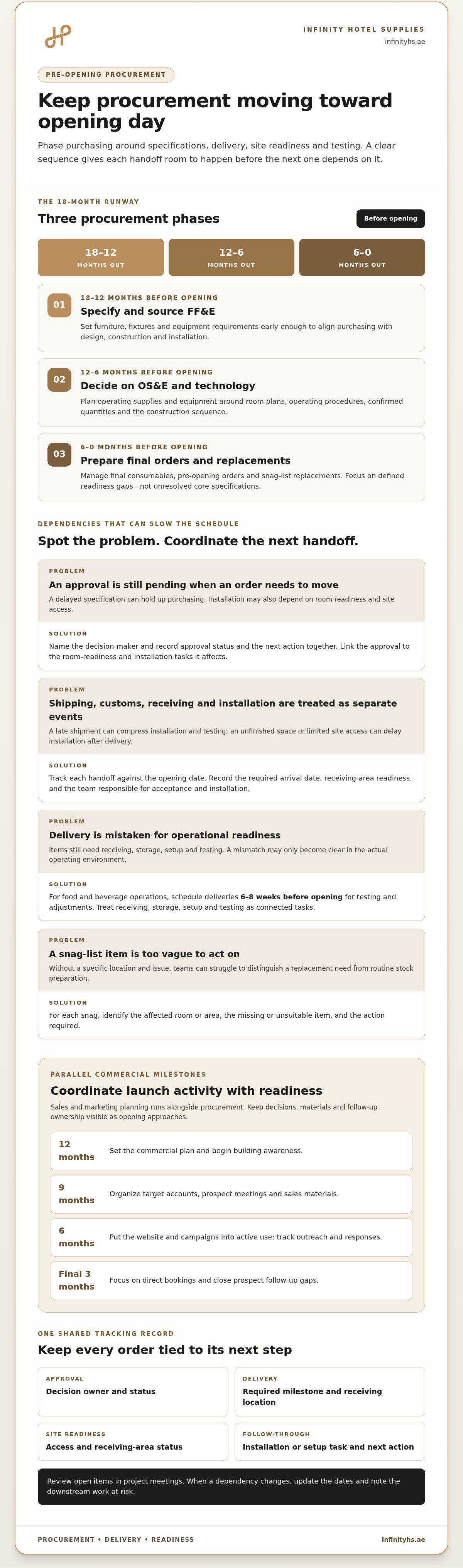
Opening-day readiness is built months before the first guest arrives. A pre-opening hotel procurement timeline typically starts 12 to 18 months before opening: FF&E is specified and sourced 18-12 months out, operating supplies and technology decisions typically take place 12-6 months out, and final consumables and snag-list replacements are handled during the 6-0 months before opening. The sequence gives teams time to align purchasing with design, construction, installation, and operational testing.
It’s easy to see procurement as a series of orders, but each decision affects what comes next. A delayed specification can hold up purchasing, while a late delivery leaves less time for setup, testing, and staff familiarisation.
This guide explains how to phase procurement, manage dependencies, and track decisions as opening day approaches. See how FF&E and operating supplies connect with handover and operational readiness, so you can plan each phase with greater clarity.
Key Takeaways
- Phase purchasing around design, construction, installation, and testing so each decision supports the next stage.
- Map operational dependencies and assign owners to decisions, approvals, deliveries, and follow-up actions.
- Use a shared timeline to record milestones, decision status, dependencies, and changes in one place.
- Coordinate handover, staff preparation, and operational testing before moving from controlled opening to a public launch.
- Align hotel linen, room electronics, and other operating supplies with the property’s requirements and readiness schedule.
Managing delays and operational dependencies
For hotel projects in the GCC, the Middle East, and Africa, shipping, customs clearance for imported goods, and installation are connected handoffs that affect the schedule. A late shipment can compress installation and testing, while limited site access or unfinished spaces can delay installation after delivery.
Track every handoff against the opening date, not just the purchase order. Record when each shipment must arrive, when the receiving area will be ready, and which team is responsible for acceptance and installation. This makes dependencies visible before a delay affects the next task.
Assign an owner to every decision that could hold up purchasing or setup. A room-equipment specification may need approval before ordering, while installation depends on room readiness and access. Record the decision-maker, approval status, and next action together, so teams can resolve a hold before handover.
Operational work runs alongside procurement. Sales and marketing planning should be coordinated with procurement and opening readiness. These milestones rely on timely decisions about the property’s positioning, materials, and launch readiness.
- At 12 months before opening, set the commercial plan and begin building awareness.
- At 9 months before opening, organize target accounts, prospect meetings, and sales materials.
- At 6 months before opening, bring the website and campaigns into active use, then track outreach and responses.
- In the final 3 months before opening, focus on direct bookings and close prospect follow-up gaps.
Sales milestones can also expose dependencies early. If approved property information or photography is delayed, marketing materials may slip too. If campaign responses arrive without a clear follow-up owner, the sales team can lose time sorting out responsibilities as opening approaches.
Keep a shared delay log alongside the project timeline. For each issue, note the affected delivery or task, its decision owner, the next action, and any downstream work at risk. Review open items in project meetings and update dates when dependencies change. This gives teams coordinating purchasing, site access, installation, and launch activity a practical record to work from.
Use the final 3 months to resolve the most immediate operational gaps. Compare delivery status with installation readiness, then escalate decisions that could affect staff preparation or guest-facing operations. A clear chain of ownership helps teams respond in sequence, instead of treating each delay as an isolated problem.
Operating supplies and equipment procurement
Hotel furniture, appliances, linens, and guest-room supplies don’t have one standard lead time. Their schedules depend on approved specifications, production, shipping, receiving access, and installation requirements. For example, a custom furniture item may need design approval before production starts, while room supplies depend on confirmed quantities and delivery coordination.
Hotel OS&E procurement and technology decisions typically take place 12-6 months before opening. Hotels scheduled to open in 2027 are choosing suppliers in 2026. These decisions cover the operating equipment and supplies teams need to prepare rooms and daily operations. Starting early gives project teams room to align product choices with room plans, operating procedures, and the site’s construction sequence.
Schedule each product category separately rather than relying on a single purchasing date. Furniture and equipment need approved dimensions, layouts, and installation requirements. Linens and guest-room supplies need quantities linked to room inventory and the operating plan. Appliances need a place in the room plan and a clear path from delivery to installation. This detail helps teams identify when an approval or site condition could hold up a group of items.
- Furniture: connect approved room layouts with dimensions, delivery access, and installation sequencing.
- Appliances: coordinate product selection with room requirements and the installation plan.
- Linens: align quantities and room assignments with the property’s planned operating setup.
- Guest-room supplies: group items by room or function, then coordinate ordering and delivery with room readiness.
For food and beverage operations, schedule deliveries 6-8 weeks before opening for testing and adjustments. This milestone gives the team time to assess how delivered items work in the actual operating environment. It also creates a chance to identify a mismatch before regular service begins. Coordinate receiving, storage, setup, and testing as connected tasks, rather than treating delivery as the finish line.
In the six months before opening, hotels typically manage final consumables, pre-opening orders, and snag-list replacements. Use this period to address defined gaps, not unresolved core specifications. A snag-list item should identify the affected room or area, the missing or unsuitable item, and the action required. This helps distinguish replacement needs from routine stock preparation.
To manage the full sequence, link each order to an approval owner, delivery milestone, receiving location, and installation or setup task. Review changes against room readiness and opening operations. This keeps furniture, appliances, linens, and guest-room supplies moving through procurement as one coordinated plan, while focusing final purchases on actual readiness needs.
Plan procurement decisions for these categories about 12-6 months before opening, while allowing each item’s schedule to vary with specifications, production, shipping, receiving access, and installation needs. Final consumables and pre-opening orders are typically handled during the six months before opening.
Shared timeline templates and decision tracking
A shared procurement timeline gives the project team one working record of dates, decisions, and dependencies. Use a common template linking each purchase to its approval, delivery, installation, and operational owner. For example, show a guest-room item’s specification status alongside the room or area it serves. This makes the schedule useful to both procurement and operations.
Anchor the schedule to the opening date, then set milestones relative to it. Each line should identify the task, accountable owner, planned date, status, and predecessor. A furniture order might depend on an approved room layout, while installation might depend on room access. Recording both links shows which activities need to move if a decision or site condition changes.
Track decisions separately from general tasks. A task records work, such as preparing a purchase order. A decision records an approval, such as selecting a finish or accepting a room-equipment specification. For every open decision, capture the options under review, the responsible person, the required input, and the next action. This prevents unresolved choices from being mistaken for completed work.
- Milestone: name the deliverable, such as approved room specifications.
- Owner: identify the person or team accountable for the next action.
- Dependency: link the deliverable to its prerequisite, such as design approval.
- Status: record whether work is planned, in progress, blocked, or complete.
- Change record: note what changed, who approved it, and which tasks are affected.
Use clear status definitions across design, procurement, construction, and hotel operations. “In progress” should mean active work has started, while “blocked” should name the unresolved input. For example, “blocked by room layout approval” gives the team a specific next step. A vague label such as “delayed” doesn’t explain who needs to act or what must happen.
Avoid conflicting schedule copies by assigning one owner to maintain the master file and giving project teams access to the same current version. Record revisions when an approved specification changes, and link each revision to affected orders or installation tasks. In project meetings, review overdue decisions, changed dependencies, and upcoming approvals. This keeps the discussion focused on resolution, not reconciling separate spreadsheets.
A useful template also preserves decision history. Record the approval date, decision-maker, and reason for material changes beside the relevant task. If a room finish changes after an order enters production, note the approval and affected scope. This history helps teams assess schedule impacts and brief colleagues who weren’t present when the decision was made.
Make the template easy for every department to read. Use consistent names for rooms, product categories, and project milestones. Procurement can then link each order to the right location, while operations can see when supplies or equipment support readiness tasks. A shared structure turns updates into coordinated actions rather than isolated status reports.
Handover and opening readiness
Handover connects completed construction with hotel operations. Technical completion and commissioning are typically scheduled 6-9 months before opening. This gives the project team a defined stage to test building systems, record outstanding work, and coordinate operational requirements. Procurement teams should link delivery records to the rooms or departments receiving each item.
Commissioning is not the same as operational readiness. A system may be installed, but teams still need to understand its use and identify unresolved issues. For example, review a completed guest room for installed equipment, missing supplies, and snag-list replacements. Recording each issue’s location and required action helps teams track progress through handover.
Before operational teams accept an area, reconcile delivered items against the relevant order and room plan. A practical handover record can include:
- Location: the room, floor, or department receiving the items.
- Delivery status: what arrived and what remains outstanding.
- Condition: any visible damage or mismatch against the approved specification.
- Follow-up: the owner and next action for each open issue.
- Readiness: whether the area can proceed to setup, testing, or staff familiarisation.
Then test operating procedures in the actual space. A housekeeping team can walk through room setup and report missing supplies. A front desk team can rehearse guest arrivals using the systems and materials prepared for opening. These exercises reveal coordination gaps that a delivery receipt alone cannot show.
A soft opening is typically scheduled within the 0-2 months before opening. It enables controlled operational testing with limited guest exposure. A grand opening, by contrast, is a public-facing launch with full market exposure. Hotels should plan the soft opening 2-4 weeks before the grand opening, allowing teams to learn from operations before the public launch.
Use the soft opening to observe specific processes, not simply to mark a date. Note whether room supplies reach the right locations, staff can use installed equipment, and handover issues affect guest-facing work. Assign an owner to each finding and record its resolution before the next operating phase.
Focused staff training should take place 2-3 weeks before the grand opening. Match sessions to each team’s duties and the systems or equipment they will use. Track attendance, practice tasks, and unresolved questions in the readiness record. This helps managers distinguish completed training from areas that still need instruction.
Review open handover items against the planned launch. Separate operational blockers from cosmetic or non-urgent work, and assign each item a responsible owner. A clear record of commissioning, testing, training, and follow-up gives hotel leaders a practical view of readiness before the grand opening.
Phased procurement and pre-opening timeline
Hotel purchasing moves through connected phases, from early specifications to final opening orders. The right sequence depends on the project type, approval path, and opening date.
Procurement Phases
Procurement phases group decisions by when teams need specifications, approvals, deliveries, and supplies. For a new build, procurement decisions typically begin 12 to 18 months before opening. FF&E is typically specified and sourced 18-12 months before opening, making this the planning window for aligning selections with design and room requirements.
Hotel pre-opening setup, including staffing, systems, and procurement, typically takes place 3-6 months before opening. Final consumables, pre-opening orders, and snag-list replacements are typically handled during the 6-0 months before opening. Separating these stages helps teams distinguish early design-linked purchases from final operational requirements.
Project-Type Timeline Differences
Project type shapes how much design and construction work must precede purchasing. New-build procurement decisions typically begin 12 to 18 months before opening, with FF&E specified and sourced 18-12 months before opening. Renovation schedules depend on the affected areas and work sequence, so orders need to align with room access and completion milestones.
Conversion procurement timelines can vary with the scope of work and the assets retained. Existing building conditions and retained items shape what teams replace, adapt, or add. An early scope review can identify usable assets and required replacements, then connect new orders to the conversion schedule.
Approvals, Contracts, and Compliance
For U.S. hotel openings, map purchasing approvals to the ownership, operator, and project decision process. Record who approves specifications, order commitments, changes, and delivery acceptance. Connect each approval to its contract and purchasing milestone, so teams can see how an open decision affects the order sequence.
For payment systems, consider PCI DSS requirements from the outset of implementation. Where applicable, consider GDPR data-protection requirements at the same stage. Keep the responsible decision-maker and related implementation milestone visible to procurement and technology teams.
Procurement Costs and Budget Benchmarks
Pre-opening expenditure depends on project scope, room count, property type, and items already available for use. Treat this as a broad pre-opening expenditure benchmark, not a U.S. product price or quote.
Organize the project budget by scope, separating FF&E, operating supplies, technology, and final consumables. Track approved commitments against each category. This helps teams see how a scope change or replacement affects planned spending before opening.
Infinity Hotel Supplies: Hotel Linen
Infinity Hotel Supplies supports hotel teams preparing guest rooms with Hotel Linen. Include linen requirements in the opening plan while room specifications and operating needs are being coordinated. This keeps the category visible alongside other room essentials, rather than leaving it until final readiness checks.
Consider hotel linen as you organize the property’s supply requirements. Infinity Hotel Supplies also offers LOVO Premium Electronics, LUFTER PHYTOGREEN, and Leather Accessories for hotel teams planning relevant product categories for opening.
Contact Infinity Hotel Supplies to discuss Hotel Linen for your property.
Carry procurement learning into hotel operations
Keep the pre-opening hotel procurement timeline useful after launch by recording what the opening process revealed. Note which assumptions proved accurate and where actual use differed from planned needs. These observations can inform future purchasing decisions without treating every opening issue as a recurring problem.
As the hotel settles into daily operations, gather feedback from the teams using supplies and equipment. Ask staff to describe the specific task affected and the circumstances, such as a storage issue or an item that doesn’t suit the workflow. Concrete observations help managers identify patterns and distinguish individual preferences from operational needs.
Assign an owner to collect feedback, bring relevant teams together to review it, and record agreed actions. This creates a practical learning loop for the property’s next operating cycle.
Contact Infinity Hotel Supplies to discuss your hotel’s supply requirements.
Each well-documented observation can help your team make more informed decisions as hotel operations develop.
Frequently Asked Questions
What is a hotel launch and pre-opening plan?
A hotel launch and pre-opening plan aligns the people, decisions, and operational work needed to welcome guests. It gives department leads a shared view of responsibilities and unresolved questions. For example, a front-office manager can use it to identify which guest information, procedures, and staff resources need approval before practice sessions. The plan is a coordination tool, not just a calendar of construction dates.
What is a typical hotel pre-opening timeline from construction completion to opening?
The interval depends on what remains before the property can operate, including commissioning outcomes, outstanding construction work, staff preparation, and operational testing. Construction completion is a project milestone, not proof that every department can serve guests. For example, a hotel may need to resolve room defects and rehearse its arrival process before welcoming the public. Set opening readiness against documented operational criteria, not the building handover date alone.
When should suppliers contact a hotel in the construction pipeline?
Bring suppliers into the conversation while the hotel team is developing requirements and considering purchasing decisions. A useful first discussion covers the product category, intended use, project stage, and information needed for a relevant proposal. For example, when discussing room items, establish whether the hotel has approved its room concept. This makes the conversation more useful than waiting until purchasing decisions are complete.
Who actually makes the buying decision for a hotel that hasn’t opened?
Buying authority varies with the hotel’s ownership and management arrangements. The owner or operator may approve spending, while a procurement lead coordinates purchasing and department heads define functional requirements. A general manager may also provide operational input. For each purchase, distinguish the person recommending an item from the person authorizing the commitment. This avoids treating a product discussion or departmental preference as final approval.
What is a typical hotel pre-opening procurement timeline by phase?
Follow one purchase from need to use to understand the phases. A department identifies the requirement, the authorized team approves the specification, purchasing records the commitment, and operations confirms the item suits its intended purpose. For example, link a guest-room requirement to the room type it serves. This keeps the procurement record useful beyond order placement and explains why each item was selected.
When should hotels procure operating supplies and equipment (OS&E)?
Plan OS&E purchasing once the hotel can define how teams will use each item and where it belongs. Department heads can help distinguish essential operating equipment from supplies that depend on final procedures. For example, a housekeeping team can identify storage and workflow needs that shape its equipment list. Capturing this input before finalizing requirements helps avoid choosing items that don’t fit the hotel’s intended daily operations.
What procurement milestones should be included in a hotel opening schedule?
Include milestones showing when a requirement becomes actionable and when the receiving department accepts responsibility. Useful records include the approved specification, authorization reference, delivery receipt, discrepancy record, and acceptance sign-off. A delivery receipt documents arrival, while an acceptance record confirms the intended department reviewed the item. Keeping these records connected makes it easier to trace questions about a purchase after operations begin.
What risks commonly delay hotel pre-opening procurement, and how can they be mitigated?
Risks include changing room requirements, unclear approval authority, incomplete purchase details, and delivery arrangements that don’t match site conditions. Reduce avoidable confusion by documenting the agreed scope and recording amendments. For example, if the room count changes, identify which quantities and purchase records need review. A clear change history helps decision-makers understand the impact of revisions and prevents teams from relying on outdated requirements.
Put the opening plan into action
Use the answers above to turn open questions into assigned decisions, documented requirements, and clear ownership. Start with the next unresolved purchasing decision, then move it forward with the right department input. A well-maintained plan gives your team a practical foundation for a coordinated hotel opening.

Article by
Infinity Editorial Team
With deep expertise in hospitality product FF&E and OS&E across the Middle East and Africa, Infinity Editorial Team brings insights from Infinity Hotel Supplies, helping developers, hoteliers, and homeowners transform spaces from empty shells to fully furnished, design-ready environments.
Disclaimer
The content published by Infinity Editorial Team is intended for informational purposes only. All articles, guides, and insights are based on industry knowledge and experience in hospitality FF&E and OS&E supply across the Middle East and Africa. Infinity Hotel Supplies does not guarantee specific outcomes and recommends consulting a qualified professional for project-specific requirements.


