

Choosing between a hotel FF&E turnkey sourcing partner and a separate interior contractor across GCC countries, the Middle East, and Africa depends on who coordinates procurement, delivery, and installation. A sourcing partner can bring purchasing activities together, while an interior designer develops the concept and specifications and a general contractor focuses on construction and fixed items. With separate suppliers, the owner or project team handles more coordination between these roles.
For hotel owners comparing a turnkey FF&E sourcing partner with a separate interior contractor in GCC countries, the Middle East, and Africa, the right structure depends on project responsibilities and priorities. Keeping design, construction, and product supply separate can clarify accountability, but it also creates more handoffs to manage. This comparison explains how the approaches differ in procurement oversight, custom items, installation, and after-sales support, and when each may suit a hotel project.
Key Takeaways
- Map who owns design, product sourcing, construction, installation, and handover before deciding how to structure FF&E procurement.
- Compare a single coordinated sourcing approach with separate suppliers by looking at the workload of managing deliveries, specifications, and project updates.
- Bring procurement into design development so budgets, lead times, and buildability can inform specifications while they can still change.
- For custom furniture and specialist items, consider how mock-ups and technical reviews can help align dimensions, finishes, and function with the design intent.
- Distinguish independent procurement oversight from contractor-led purchasing by examining how costs, accountability, and after-sales support are handled.
Turnkey sourcing versus coordinating separate FF&E suppliers
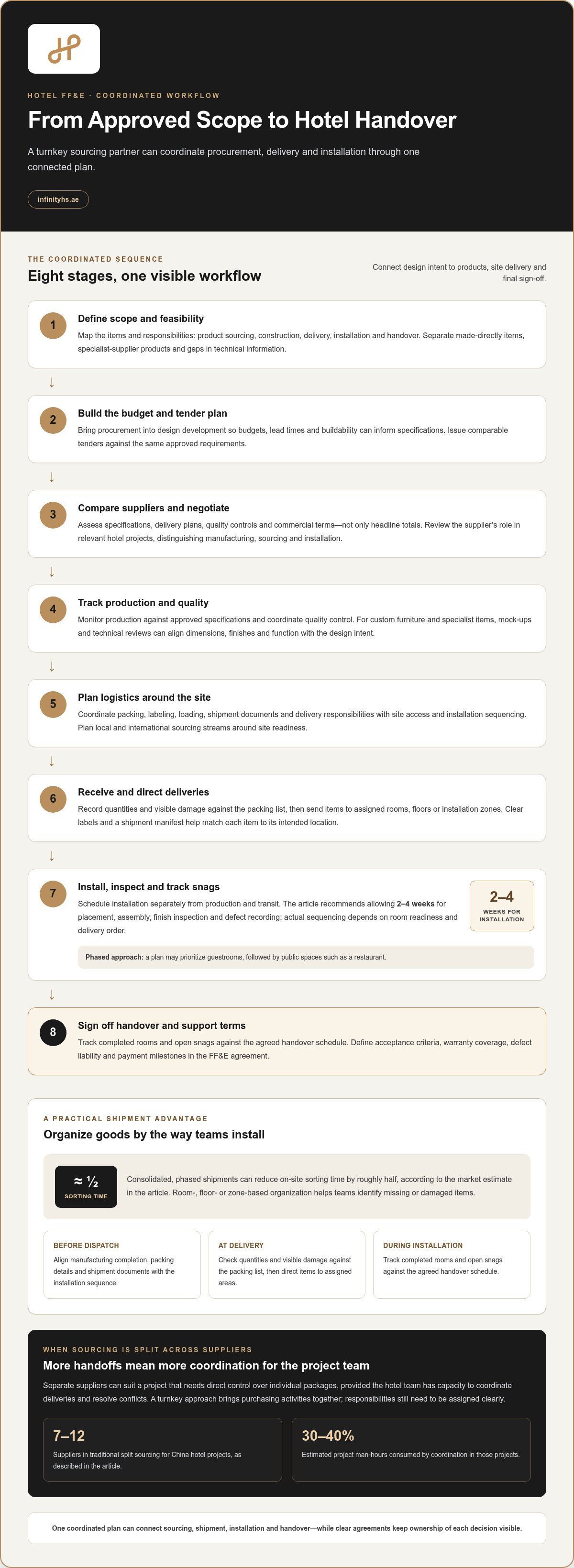
A turnkey partner coordinates FF&E sourcing and delivery, while separate suppliers leave the hotel team to manage more handoffs. In Africa, turnkey sourcing can simplify supplier coordination, but separate contractors may suit a project that needs direct control over individual packages. For China hotel projects, traditional split sourcing can involve 7 to 12 suppliers, with coordination consuming an estimated 30-40% of project man-hours.
Turnkey Service Offerings
Hotel FF&E turnkey sourcing combines activities such as budgeting, tendering, supplier negotiations, production tracking, quality control, logistics, installation, and handover. That structure gives the owner one coordinated procurement workflow instead of separate processes for guestroom furniture, restaurant furnishings, and other specified items. A 150-key hotel project, for example, can group these packages under one plan while keeping each product specification visible.
Supplier Experience and Hotel Projects
Completed hotel projects can show whether a supplier has delivered products to hospitality specifications and coordinated work across different areas. Review examples by scope, such as guestroom furniture, restaurant seating, delivery sequencing, and handover documentation. Clarify the supplier’s role in each example: manufacturing, sourcing, and installation are distinct responsibilities. For a project in Saudi Arabia, relevant regional experience can also indicate familiarity with local project coordination needs.
Procurement Fees and Supply Margins
Fee structures affect how procurement costs and product margins appear in the project budget. Contractor-led turnkey procurement may bundle purchasing into the construction price, making the procurement margin less visible to the owner. An independent procurement company may instead act for the owner, disclose its fee, and avoid adding a margin to purchased goods. Before approving the budget, compare the stated fee basis with itemized product and logistics costs.
FF&E agreements should define scope, product specifications, acceptance criteria, warranty coverage, payment milestones, and liability for defects or missed obligations. Link payment stages to clear events, such as approved drawings, production completion, delivery, and installation sign-off. This lets both parties track what each payment covers.
Sourcing, Tendering, and Negotiation
A sourcing partner identifies suitable suppliers, issues comparable tenders, and negotiates against approved specifications. Before tendering, divide the scope into items made directly, products requiring specialist suppliers, and gaps in the technical information. This helps bidders price the same furniture requirements instead of making different assumptions. The owner can then compare specifications, delivery plans, quality controls, and commercial terms, not just headline totals.
Separate sourcing can work well when the hotel team has the capacity to coordinate each supplier and resolve delivery conflicts. In one Middle East project described in the market, a procurement director was still coordinating partial shipments three weeks before opening. A single coordinated plan can reduce fragmented communication, but the agreement must still assign responsibility for every decision, delivery, installation task, and warranty claim.
Installation and after-sales support
Turnkey hotel FF&E procurement can cover feasibility, budgeting, sourcing, production tracking, quality control, logistics, delivery, installation, and handover. This sequence connects the approved design vision to manufacturing and shipment while giving the project team a coordinated view of key milestones. In the Middle East and Africa, local and international sourcing choices also affect shipment planning, site access, and installation sequencing.
Installation needs its own schedule, separate from production and transit. Allowing 2 to 4 weeks for installation gives teams time to place furniture, assemble items, inspect finishes, and record defects before handover. The actual sequence depends on room readiness and the order in which goods reach each floor or area. A phased plan can prioritize guestrooms, then public spaces such as a restaurant.
Consolidated, phased shipments can reduce on-site sorting time by roughly half, according to the market estimate. Instead of receiving mixed packages that require extensive sorting, site teams can organize deliveries by room numbers, floors, or installation zones. Clear labels and a shipment manifest help installers match each item to its intended location. This also makes missing or damaged items easier to identify on receipt.
- Before dispatch: align manufacturing completion, packing details, and shipment documents with the installation sequence.
- At delivery: record received quantities and visible damage against the packing list, then direct items to assigned areas.
- During installation: track completed rooms and open snags against the agreed handover schedule.
Regional sourcing can combine local products with international manufacturing when specifications, availability, and delivery plans support that mix. For a hotel project in Africa, the team might schedule locally sourced items separately from imported furniture, then coordinate both streams around site readiness. Packing, labeling, loading, documentation, and delivery responsibilities should reflect the destination, shipment method, Incoterms, and agreed scope.
After installation, a structured snagging process records each defect, its location, the responsible party, and the corrective action required. The handover record should identify outstanding items and the documents or warranty details supplied for installed products. After-sales support depends on clear accountability: the agreement should define how the hotel reports an issue, who assesses it, and how product, installation, or transport concerns are handled. This helps teams direct claims without confusing supplier and installer obligations.
Warranty claims can follow the agreed process. An FF&E procurement partner can oversee the project from feasibility studies and budgeting through delivery and installation.
Interior designer, procurement company, and general contractor roles
An interior designer develops the hotel concept and product specifications. A general contractor builds the base building and installs fixed items, while procurement sources movable FF&E to the approved specifications.
Partner Roles and Responsibilities
The interior designer shapes the guest experience through layouts, materials, furniture selections, and specifications. For example, the designer defines the style and dimensions of guestroom seating. The procurement company then sources products that meet those requirements and coordinates delivery. This division connects creative decisions to practical supply.
The general contractor manages building works and fixed, permanent items. The FF&E sourcing partner focuses on movable furnishings and equipment, coordinating procurement against the project scope. For example, built-in joinery may fall within the contractor’s work, while loose chairs and bedside tables follow the FF&E schedule. Clear boundaries help prevent gaps and duplicated responsibilities.
Installation responsibilities also need a clear owner in a hospitality project. The project team can assign fixed-item installation to the general contractor and movable-furniture placement to the FF&E team. This clarifies who coordinates access, resolves site clashes, and records completion. It also helps the operator distinguish construction closeout from furnishing handover.
Design and Specification Coordination
Design coordination aligns drawings, furniture schedules, and specifications across the designer, procurement company, and construction team. Before procurement, review these documents together for dimensions, materials, quantities, and technical gaps. For example, a seating specification should match the room layout while leaving workable circulation space. Early review gives the team time to resolve conflicts before purchasing.
For a Dubai hotel design on a fast-track schedule, teams can use a shared decision log. Record each approved finish, open technical question, responsible person, and required decision date. The procurement partner can flag sourcing or manufacturing implications while the designer protects the intended visual direction. The contractor can then coordinate building interfaces with the agreed product details.
Procurement should begin during design development, before specifications are finalised. At this stage, teams can test budgets, lead times, and buildability while the design can still change. For a hotel in the region, they might review guestroom furniture and restaurant seating packages first, then refine materials and quantities. This timing connects design choices to operational requirements and delivery planning.
A coordinated structure does not mean one partner makes every decision. The designer retains the creative brief, the owner approves scope and budget, and procurement translates specifications into sourced products. The contractor manages building interfaces and fixed installations. Assigning these decisions at the project’s start gives each party a defined route for approvals, changes, and handover.
Custom furniture, millwork, lighting, and accessories
Custom hotel FF&E brings guestroom furniture, public-area pieces, millwork, lighting, and accessories into one coordinated scope. The brief should define dimensions, materials, finishes, hardware, quantities, and intended use for each item. For example, a custom headboard needs clear measurements and finish details, while a restaurant pendant requires an agreed location and installation interface. These details help keep the design intent aligned with the products delivered.
Requirements differ by destination, so one GCC-wide import checklist cannot cover every market. For Saudi Arabia, shipments must include a Shipment Certificate of Conformity (SCOC); SASO manages the SABER electronic Certificate of Conformity system, while SALEEM regulates imported product quality and safety. Do not treat these Saudi-specific requirements as rules for the UAE, Qatar, or every other GCC destination.
Custom furniture requires more coordination than selecting standard products because dimensions, finishes, and construction details affect manufacturing and site installation. Hotel furniture mock-ups can test dimensions, comfort, materials, finishes, hardware, and function before larger-scale production. For example, a guestroom bedside unit can be reviewed beside the bed and lighting plan before production begins. This can reveal technical conflicts while changes remain manageable.
Highly customized FF&E pieces may take 90 to 120 days, while shipping can take 2 to 6 weeks depending on origin. Build these stages into the project schedule rather than treating shipment as the only delivery milestone. Custom millwork and lighting may also need separate packing and site sequencing. The agreed scope should identify who handles packing, labeling, loading, documentation, and final delivery.
Saudi Arabia’s customs valuation follows the WTO Customs Valuation Agreement. Imports are also subject to customs surcharges, port fees, cargo service fees, and an import inspection tax. These charges affect landed-cost planning, so budgets should distinguish product pricing from logistics and destination charges. The shipment plan should also state the agreed Incoterms, shipment method, and party responsible for each logistics handoff.
For export packaging across product categories, account for ISPM 15 in the packaging plan. Clear labels should connect each crate or carton to its item schedule, room, and destination area. That structure supports receiving teams as they direct guestroom furniture, accessories, and lighting to the right locations. In a hotel with custom pieces across guestrooms and public areas, shipment identification helps prevent a finished item from being sent to the wrong installation zone.
Custom sourcing works best when the design team, supplier, and installation team work from the same approved information. Keep drawings, finish samples, mock-up approvals, product schedules, and shipment records aligned as specifications change. For a hotel project in Saudi Arabia, a destination-specific document set and separate product schedule can make responsibilities easier to trace. This helps preserve design consistency while connecting manufacturing, logistics, and installation decisions.
Independent versus contractor-led turnkey procurement
Independent procurement represents the owner’s interests, while contractor-led procurement places purchasing within the construction contract. The right structure depends on who controls scope, commercial visibility, quality control, and accountability across production and delivery.
Procurement Scope and Responsibility Split
A procurement scope defines which hotel furniture and fixtures are purchased, who manages each package, and where responsibilities transfer. An independent procurement company can act for the owner, coordinate sourcing, and report against the approved scope. A contractor-led model can place procurement within the construction agreement, tying product purchasing to the contractor’s delivery obligations.
For a luxury hotel, the scope can separate movable furniture from fixed fixtures and identify who approves substitutions. It should also assign responsibility for production tracking, quality control, logistics, and installation interfaces. This helps the owner see which party must resolve a specification conflict or coordinate a late product change.
Criteria for Choosing a Procurement Partner
Assess a procurement partner through independence, fee transparency, relevant project and regional experience, and end-to-end capability. Also consider supplier and logistics networks, reporting practices, accountability, and references. These criteria show how the partner will represent the owner, communicate progress, and manage the handoffs that shape a hotel project.
Ask how the proposed scope manages quality control from approved specifications through production and receipt. Review completed hotel references for similar product categories, project roles, and delivery conditions. A reference is most useful when it clarifies the partner’s actual responsibility, rather than simply showing that the company took part in a hospitality project.
Single-Source and Fragmented Procurement
Single-source procurement places coordination with one lead, while fragmented procurement assigns packages to separate suppliers. A single lead can provide one reporting route for product status and delivery decisions. Separate suppliers can give the owner more direct control over individual packages, but the project team must manage interfaces and resolve competing schedules.
For example, separate hotel furniture and lighting suppliers may each provide their own production updates. The owner then needs a shared schedule connecting both packages to room readiness. A lead partner can consolidate those updates, but the scope should still identify product owners, approval rights, and escalation routes.
Sustainable procurement requires defined criteria rather than a broad label. Project teams can record material preferences, expected service life, repair considerations, packaging, and supplier documentation in the specifications. Apply the same review process to local and international suppliers. This supports consistent decisions without assuming a product is sustainable based on its origin or marketing language alone.
Risk management starts with a scope split identifying what will be manufactured directly, what needs specialist sourcing, and what technical information is incomplete. Track these points alongside approvals, production status, quality checks, and delivery responsibilities. Clear records help the owner distinguish a design change from a supplier delay or installation issue, then assign follow-up to the responsible party.
Discuss your hotel FF&E sourcing requirements with Infinity Hotel Supplies.
Infinity Hotel Supplies: Hotel Linen
Infinity Hotel Supplies is a practical next step when your hotel project needs Hotel Linen as part of its FF&E planning. Linen supports the guestroom’s operational setup, so aligning its selection with room standards helps define the project scope. Consider it when planning products and quantities for a new opening, refurbishment, or room refresh.
Infinity Hotel Supplies also offers LOVO Premium Electronics, LUFTER PHYTOGREEN, and Leather Accessories. These categories can support related hotel requirements while your team coordinates furniture, installation, and contractor responsibilities separately. A clear product schedule connects each requirement to the right project package.
For Hotel Linen or related hotel product requirements, contact Infinity Hotel Supplies to discuss your project.
Set Your Project Up for a Confident Start
Start with a clear procurement brief. Before appointing a delivery structure, align the owner, designer, contractor, and sourcing partner on the decisions that shape the project: who approves product changes, who coordinates delivery, and who handles issues after installation. This gives your team a shared basis for comparing a hotel FF&E turnkey sourcing partner with a separate interior contractor across GCC countries, the Middle East, and Africa.
Then match the supply scope to the hotel's operational priorities. Infinity Hotel Supplies offers Hotel Linen, LOVO Premium Electronics, and LUFTER PHYTOGREEN to support specific product requirements within a wider project plan. A defined brief turns those requirements into clear packages and gives stakeholders a practical starting point for discussion.
With responsibilities and product needs clearly defined, your team can approach the next project decision with greater clarity.
Frequently Asked Questions
How do turnkey FF&E and separate interior contracting compare in total cost and project timelines?
Turnkey sourcing brings more purchasing and coordination activities under one lead, while separate contracting divides them among parties. Compare the full scope, not just the initial contract total: account for product packages, delivery coordination, installation responsibilities, and change handling. Timelines depend on specification approvals, manufacturing, shipment planning, and site readiness. For example, late approval of a custom headboard can affect room completion even if other packages remain on schedule.
What are typical hotel FF&E procurement and installation costs in GCC countries?
There is no single typical cost for GCC hotel projects. The total depends on furniture quantity and type, customization, sourcing origin, shipment arrangements, installation scope, and destination. Request costs separated by product package and responsibility so you can compare equivalent scopes rather than bundled totals. The price depends on the project and is provided after a quote request; scope, specifications, sourcing, logistics, and installation all affect the estimate.
How should hotel owners evaluate and select an FF&E turnkey partner or interior contractor?
Start by matching the proposed scope to the project’s needs, then compare how each party handles approvals, changes, and site coordination. Use a sample package, such as guestroom seating, to assess whether the proposal links specifications, product submittals, delivery sequencing, and installation responsibility. A responsibility matrix can expose gaps between the designer, contractor, and sourcing partner before contract award. Review reporting formats too, since clear status records help owners act on delays and decisions.

Article by
Infinity Editorial Team
With deep expertise in hospitality product FF&E and OS&E across the Middle East and Africa, Infinity Editorial Team brings insights from Infinity Hotel Supplies, helping developers, hoteliers, and homeowners transform spaces from empty shells to fully furnished, design-ready environments.
Disclaimer
The content published by Infinity Editorial Team is intended for informational purposes only. All articles, guides, and insights are based on industry knowledge and experience in hospitality FF&E and OS&E supply across the Middle East and Africa. Infinity Hotel Supplies does not guarantee specific outcomes and recommends consulting a qualified professional for project-specific requirements.


