

A luxury hospitality supplier brings together the furnishings, operating supplies and guest-room details that help a hotel deliver a consistent experience. For hotels in Dubai, the GCC, the Middle East and Africa, the right partner can coordinate OS&E and FF&E, from room electronics and linens to amenities and accessories, around the property’s standards and operational needs.
Luxury hotels need more than an appealing product range. They need thoughtful coordination across guest rooms and hotel operations, with quality, presentation and practicality considered together. Choosing a supplier also means understanding how its scope and approach compare with suppliers serving the US market.
This guide explains the difference between OS&E and FF&E, the details that shape a well-appointed guest room, and the supply services hotels may need for a project. It also outlines how US luxury hospitality suppliers compare, so hotel owners, operators and procurement teams can assess the options with a clearer view of what matters.
Key Takeaways
- Learn how OS&E and FF&E serve different roles in hotel procurement and how textile standards can inform product decisions.
- See how guest room accessories and decorative details contribute to a cohesive, considered stay.
- Understand the key stages of hospitality supply manufacturing and distribution, from product development to delivery.
- Explore how US luxury suppliers differ in their product focus and service scope, and what to consider when comparing them.
- Discover how bulk hotel amenities, linen and room electronics can support hotel supply needs in Dubai and the GCC.
OS&E and FF&E categories in hotel procurement
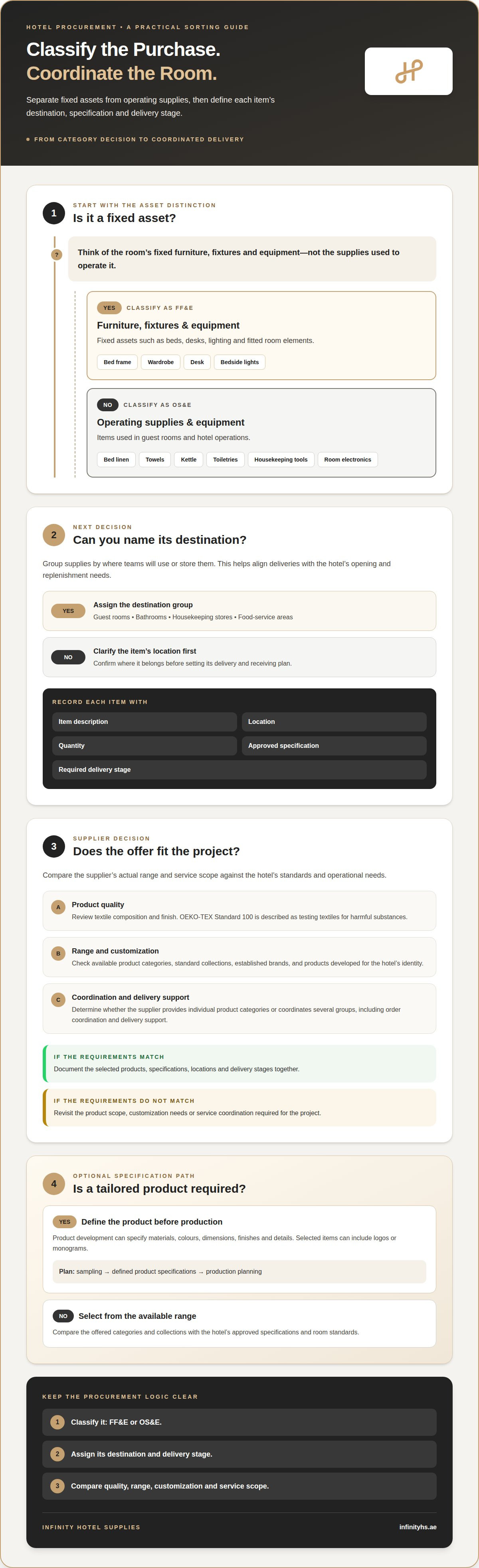
Hotel procurement usually separates fixed assets from operating supplies. FF&E means furniture, fixtures and equipment, such as beds, desks, lighting and fitted room elements. OS&E means operating supplies and equipment, including towels, tableware, housekeeping tools, guest amenities and room electronics. The distinction helps teams assign budgets, specifications and delivery stages to the right purchasing category.
In a guest room, FF&E can include the bed frame, wardrobe, desk and bedside lights. OS&E can include bed linen, towels, a kettle, toiletries and the housekeeping items used to prepare the room. A procurement schedule should identify each item, its location, quantity, approved specification and required delivery stage. This helps hotel teams coordinate fit-out purchases with operational stock.
Operating supplies also need a distribution plan. Group items by destination, such as guest rooms, bathrooms, housekeeping stores or food-service areas, then align deliveries with the hotel’s opening and replenishment needs. For example, a towel collection may require consistent sizes and colours, as well as replacement stock across rooms. Clear item descriptions and receiving records help teams track what arrives and where it belongs.
Quality, selection and service vary by supplier. Compare textile composition and finish, available product categories, customization options, order coordination and delivery support. For example, OEKO-TEX Association explains that OEKO-TEX Standard 100 tests textiles for harmful substances. A supplier’s range may span established brands, standard collections and products developed for a hotel’s own identity; service scope can likewise range from supplying individual categories to coordinating several product groups.
Custom design, branding and private-label products can be part of a supplier arrangement. Depending on the project, product development can cover materials, colours, dimensions, finishes and details, with logos or monograms applied to selected items. A hotel might seek matching branded bathroom amenities or a distinctive textile finish. Sampling and production planning help translate these choices into defined product specifications.
Amenity selection can be organized into practical tiers: essential toiletries, upgraded guest-room amenities and bespoke branded sets. These are planning categories, not a universal hotel grading system. Match each tier to the property’s guest expectations, room concept and replenishment approach. Brands matter, but so do packaging, presentation and the consistency of supply across the collection.
The toiletries market provides context for this category’s scale. The global hotel toiletries market was valued at $24.3 billion in 2024 and is projected to reach $45.3 billion by 2030, with projected compound annual growth of 10.9%. For procurement teams, the useful takeaway is to define amenity specifications and brand requirements early, then align them with the hotel’s room standards and supply plan.
Guest room accessories and decorative details
Accessories give a guest room its finishing character. A bedside tray, tissue box, luggage rack or leather accessory can combine practical use with the hotel’s visual identity. For boutique hotels and resorts, consistency matters: each item should suit the room palette, support daily routines and contribute to a considered guest experience. Map the guest journey, from entering the room to preparing for sleep, then place accessories where guests naturally need them.
Build the selection around use, material and placement. A writing surface may need desk accessories, while a reading chair may call for a side table and suitable lighting. In the bathroom, coordinate dispensers, trays and towels with the room’s finishes. Cotton linens influence how a room feels and looks, so consider their texture alongside bedside fabrics, curtains and upholstery. Repeating a finish or colour across a few details can create cohesion without making every item identical.
Guest-room accessories and appliances should work as a coordinated set. Consider practical items such as room electronics, kettles, hairdryers and bedside charging equipment alongside decorative pieces. Check that each item has a clear location, usable controls and a place in the room’s operating routine. For example, a kettle station needs a stable surface and space for cups, while bedside electronics should remain accessible without cluttering the nightstand.
- Function: Match each accessory to a guest need, such as storing luggage or keeping bedside items organized.
- Finish: Coordinate leather, wood, glass, metal and textiles with the room’s existing materials.
- Repeatability: Set a room standard that housekeeping can reset consistently across the property.
- Identity: Use restrained branding or a distinctive detail to make the selection feel specific to the hotel.
A supplier can develop guest-room products using materials such as leather, wood, glass, metal and textiles, adapting colours, dimensions, finishes and details to the project. This creates a route to a tailored look, from a luggage tag that echoes the room’s leather accents to a tray sized for a particular console. Define the use and placement first, then agree on materials and appearance so each product serves both design and operational needs.
Accessing supplier contact information is a practical step in building a clear project record. Use the supplier’s official company profile or trade directory entry to identify its business contact channel, then keep the relevant contact name, role and product scope together. For example, record whether the discussion concerns guest-room appliances, accessories or linens. A concise enquiry can describe the property type, intended room use and design direction, keeping the conversation focused on relevant products.
For coordinated accessories or room electronics, prepare a guest-room project enquiry that outlines the intended experience and key room details.
Hospitality supply manufacturing and distribution
Hospitality products can move through several stages: design, sampling, production, quality review and distribution. For a private-label amenity program, these stages turn a hotel’s brief into defined packaging, product specifications and finished goods. A supplier coordinating with manufacturers and makers can manage product development from initial ideas through final production. Each stage shapes the schedule, so teams should align sample approval and production planning with the property’s opening requirements.
Minimum order quantities depend on the product and how much customization it requires. The manufacturing guide gives a range of 5,000–10,000 units for private-label hotel amenity manufacturing. Lead times depend on product complexity, sample revisions, production scheduling and the route to the destination. A bespoke item requiring new packaging follows a different path from an existing product ordered in standard form.
Company size can indicate the scale of a supplier’s organization, though it does not by itself establish product fit or service quality. RevenueBase recorded this employee-size distribution for luxury hospitality supplier companies in the United States:
- 51–200 employees: 90 companies.
- 201–500 employees: 29 companies.
- 501–1,000 employees: 9 companies.
- 1,001–5,000 employees: 13 companies.
- 5,001–10,000 employees: 2 companies.
- 10,001 or more employees: 1 company.
These figures, recorded on October 17, 2026, describe the listed US companies, not the entire supplier market. For a national group of properties, assess whether the supplier can support consistent product specifications and repeat orders across locations. A smaller specialist may focus on a defined product category, while a larger organization may span more categories. Neither size automatically guarantees a better match.
Global distribution involves more than shipping finished cartons. A coordinated program connects product specifications, production quantities, packing details, destination information and delivery timing. For hotels serving guests worldwide, consistent item descriptions and approved samples help maintain standards across properties. Regional destinations can also shape routing and delivery coordination, so project teams should establish where each product is needed and when it must be ready.
Manufacturing review should cover materials, finishes, branding applications and production details. For example, a branded amenity set needs its packaging and logo treatment aligned with the approved design before production proceeds. Guest-room linen orders also benefit from clear specifications for each item and property. These controls create a useful reference for purchasing, receiving and future replenishment.
For luxury hotels, the right supply arrangement depends on product scope, customization, order scale and distribution needs. Define the products, destinations and required opening sequence first. Then map sampling and production stages against those requirements. This makes supplier capabilities easier to compare and helps each property receive the right goods for its operating program.
Ranked US luxury hospitality supplier companies
A useful supplier comparison should reflect the purchasing model a hotel needs. A company’s position on a generic list says little about its fit for a particular project. Instead, compare supplier types by their role in the buying relationship, then identify which model aligns with the property’s requirements and internal capabilities.
Four supplier models provide a practical comparison:
- Multi-category suppliers bring several hotel product groups under one commercial relationship. This structure may suit teams seeking fewer supplier interfaces across a broad purchasing scope.
- Category specialists concentrate on a defined product area. They may be relevant when a hotel needs focused expertise for a particular purchasing requirement.
- Manufacturers make products directly or work closely with production partners. This model can matter when the hotel’s priority is a product’s origin and production process.
- Custom product developers help shape products around a hotel’s identity or a specific use. Their fit depends on how central tailored design is to the project.
These are comparison categories, not a ranking of named companies. A hotel group may value the coordination of a multi-category model, while an independent property may prefer specialist attention for a narrower brief. The strongest fit depends on how the hotel divides responsibility between its purchasing team and suppliers.
Next, compare how each supplier structures the working relationship. Does one contact coordinate different product groups, or does each category require a separate point of contact? How are product decisions recorded, and how are changes communicated? Clear answers help hotels anticipate the coordination effort required from their own teams.
Consider product continuity as well. A hotel that expects to refresh rooms over time may value a supplier relationship that supports consistent product selection across later purchasing cycles. A property making a one-time purchase may prioritize a different arrangement. The relevant distinction is the hotel’s future operating plan, not a supplier’s scale or label.
Finally, distinguish a supplier’s catalogue from its role in a project. Some relationships focus on supplying selected goods; others may involve broader coordination across product groups. Match that scope to the work the hotel expects the supplier to handle. This avoids ranking companies on claims that do not answer the project’s central question: which relationship best supports the property’s purchasing goals?
Use these models to create a shortlist for the hotel’s specific purchasing brief. Rank candidates by fit with the required supplier role, the amount of coordination the hotel can manage, and whether the relationship supports its future plans. That approach makes a US supplier comparison more useful than a universal ranking.
What products and services do luxury hospitality suppliers provide?
Hotel suppliers can support different parts of a property, from guest-room essentials to distinctive branded products. Common categories include linens, amenities, room accessories, uniforms, housekeeping equipment and electronics. The right combination depends on the hotel’s concept and operating needs. A resort may prioritize poolside guest essentials, while a boutique property may focus on a coordinated room collection that reflects its design identity.
Guest amenities range from everyday toiletries to keepsakes and tailored gift sets. Suppliers may develop products for hotel occasions, corporate events, weddings and guest celebrations. For example, a resort could prepare a welcome gift that reflects its destination, while a city hotel might select practical travel accessories. Product choice, packaging and presentation all contribute to how guests experience their stay.
Customization can shape both appearance and fit. Spa and wellness products may be adapted by colour, dimensions, fabric, finish and design details. Selected items can also feature logos, monograms or bespoke designs. This approach can connect spa textiles or accessories with the wider property identity, while allowing each product to suit its intended use.
Material choices help hotels align products with their design priorities. Projects can incorporate natural fibres, organic cotton, bamboo, wood, leather alternatives, recycled materials and responsibly selected packaging. For instance, a hotel might specify organic cotton textiles alongside packaging that fits its brand presentation. Consider intended use, material and finish together when defining the product brief.
Special-occasion collections can support guest gifting and hotel programming. Examples include products for Christmas, New Year, Valentine’s Day, Easter, Mother’s Day, weddings, engagements, anniversaries and birthdays. When staging larger corporate gatherings or banquets, properties frequently collaborate with rental and decor specialists such as Events Master LLC alongside developing custom items. Before sampling begins, define the occasion, recipient, product purpose and visual direction to give development a clear starting point.
Product development may cover initial ideas, sampling and final production. A practical sequence starts with a defined brief, followed by material and design decisions, sample review and production planning. Teams can assess materials, finishes, branding applications and production details during development. For a branded spa set, align the packaging and logo treatment with the approved design before production proceeds.
Some suppliers coordinate several product categories within a broader hotel supply program. This can help align room accessories, guest amenities and occasion-based products under a shared design direction. A hotel seeking a specific gift set has different needs from a property developing a wider guest-experience collection. Product purpose, customization requirements and intended destination help determine the appropriate scope.
For hotels planning tailored amenity sets or a branded guest welcome, explore bulk hotel amenities as part of a coordinated product selection.
Discuss your hotel amenity requirements with the supplier.
Infinity Hotel Supplies: Bulk hotel amenities supplier
Infinity Hotel Supplies supports hotels across the GCC, Middle East and Africa with bulk guest amenities for consistent room presentation. This is a practical option when planning amenity quantities, developing custom products or aligning guest-room details with a property’s brand. Hotel teams can also source Hotel Linens, LOVO Premium Electronics and LUFTER PHYTOGREEN to address related room requirements.
For an amenity project, define the intended guest experience, product selection and branding direction. These details help shape a collection suited to the property’s rooms and service style. Whether you’re preparing for an opening or refreshing guest-room supplies, Infinity Hotel Supplies can support your hotel product requirements.
Contact Infinity Hotel Supplies to discuss your hotel amenity requirements.
Plan the next step for your property
Turn your procurement priorities into a concise project brief. Note the property’s operating needs, preferred design direction and decisions that require coordination across your team. This gives supplier discussions a clear purpose and helps keep the project focused on what matters to your hotel.
Before moving forward, identify who will approve specifications and how your team will record decisions. A shared process can help purchasing, operations and design teams work from the same requirements. With that foundation, a luxury hospitality supplier conversation can move from broad ideas to practical project needs.
Contact Infinity Hotel Supplies to discuss your project.
Start with a clear brief and take the next step with confidence.
Frequently Asked Questions
Who are the leading luxury hospitality suppliers in the United States?
There is no single supplier that leads every hotel product category. A hotel assessing supplier options should first identify the products and project requirements that matter most, then compare suppliers with relevant capabilities. For example, a property sourcing guest gifts may value customization, while a renovation team may prioritize products that meet its room specifications. The most suitable choice depends on the property’s needs, not a universal ranking.
How can hotels find and vet luxury hospitality suppliers?
Use hospitality trade directories, industry events and professional referrals to identify potential suppliers. Then review their product range and request information relevant to the project. For example, a hotel planning a guest welcome set can ask for product details and samples that match its intended presentation. Keep a record of key decisions, including approved specifications and points of contact, so purchasing and operations teams share the same understanding.
What certifications and sustainability standards should hospitality suppliers meet?
The relevant standard depends on the product and the hotel’s sustainability priorities. Build requirements by category, such as textile sourcing, packaging or cleaning products, rather than applying one label to every purchase. Ask which specific product a certification covers and what criteria it addresses. This helps procurement teams distinguish a product-level credential from broader statements about a supplier’s practices and make decisions against the property’s own requirements.
What are the risks of working with luxury hospitality suppliers, and how can hotels mitigate them?
Risks include inconsistent quality or specifications, delivery delays, and products that do not suit the hotel’s needs. Mitigate them by defining item specifications and delivery stages, reviewing samples and production details, and coordinating distribution and receiving records.
Plan the next step for your property
Set out your property’s priorities, assign responsibility for approvals and bring those decisions into one project brief. A clear starting point helps turn supplier discussions into practical decisions that fit your operating requirements and guest experience. Contact Infinity Hotel Supplies to discuss the next step for your property.

Article by
Infinity Editorial Team
With deep expertise in hospitality product FF&E and OS&E across the Middle East and Africa, Infinity Editorial Team brings insights from Infinity Hotel Supplies, helping developers, hoteliers, and homeowners transform spaces from empty shells to fully furnished, design-ready environments.
Disclaimer
The content published by Infinity Editorial Team is intended for informational purposes only. All articles, guides, and insights are based on industry knowledge and experience in hospitality FF&E and OS&E supply across the Middle East and Africa. Infinity Hotel Supplies does not guarantee specific outcomes and recommends consulting a qualified professional for project-specific requirements.


