

Large-scale hotel FF&E projects need more than a broad product list. They require coordinated specifications, sourcing, and quality control. A hospitality FF&E solutions supplier can help align furniture, fixtures, and equipment with a property’s design, operating needs, budget, and project schedule. Coordinating these elements can also reduce the work of managing separate vendors.
If you’re planning a new development, renovation, or property refresh, product decisions affect both the guest experience and the project’s progress. Durability matters, as do clear specifications, delivery coordination, and checks to catch issues before products reach the hotel.
This article explains how hospitality FF&E expertise supports large-scale projects, what coordination and quality controls contribute, and how durable specifications can help manage cost and lead-time pressures. It also covers what to consider when selecting a supplier, so you can assess whether the approach fits your project.
Key Takeaways
- Coordinate specifications, shipping, delivery, and installation planning to reduce friction across large hotel FF&E projects.
- Match commercial-grade durability requirements to how each space and furnishing will be used.
- Choose a full-service or partial engagement that fits the project scope and the support your team needs.
- Use clear specifications and quality checks to catch mismatches before products reach the property.
- Plan purchasing around project priorities to manage cost and lead-time pressures, and explore relevant hotel supply categories for your property.
How Do Expertise and Project Coordination Improve Hotel FF&E Outcomes?
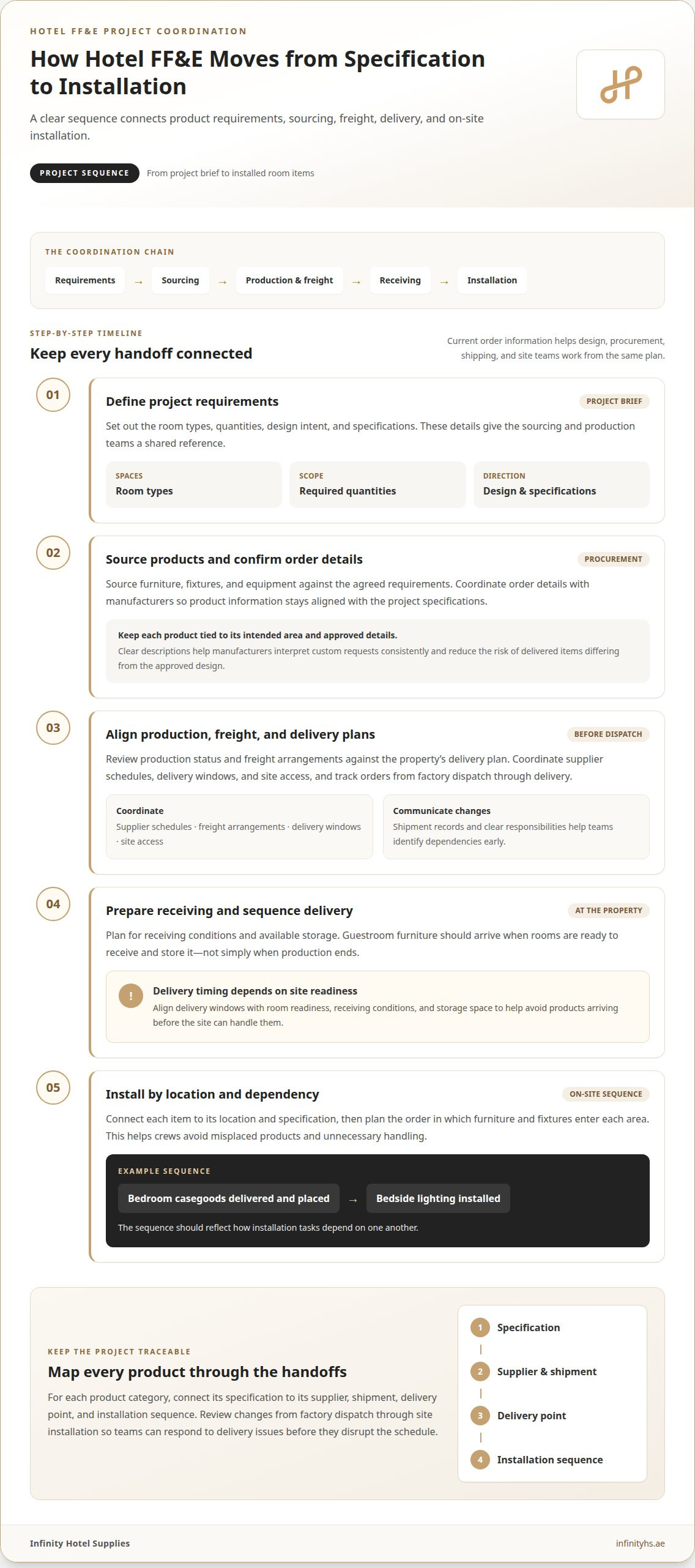
Hotel FF&E coordination connects product specifications with procurement, freight, delivery, and installation planning. A clear sequence helps project teams manage dependencies before furniture and fixtures arrive on site.
Shipping and Installation Coordination
Shipping coordination links supplier schedules, freight arrangements, delivery windows, and site access. For example, guestroom furniture should arrive when rooms are ready to receive and store it, not simply when production ends. A hospitality FF&E solutions supplier can track orders from factory dispatch through freight and delivery, then align installation with the project schedule.
Compare providers by how they coordinate suppliers and communicate changes. A delayed lighting fixture can affect room completion if installation depends on it. Clear shipment records, delivery sequencing, and assigned responsibilities help teams identify that dependency early. Installation planning should also account for receiving conditions, storage space, and the order in which furniture and fixtures enter each area.
Hospitality FF&E Sourcing and Installation Process
The process starts with project requirements, including room types, quantities, design intent, and specifications. The supplier then sources furniture, fixtures, and equipment to meet those requirements and coordinates order details with manufacturers. Before shipment, teams align production status and freight arrangements with the property’s delivery plan.
At delivery, coordination shifts to receiving and installation. For example, bedroom casegoods can be delivered and placed before bedside lighting is installed. The installation plan should connect each item to its location and specification, helping crews avoid misplaced products or unnecessary handling. The process works best when design, procurement, shipping, and site teams share current order information.
Supplier Products, Services, and Experience
How do hospitality FF&E suppliers compare on products, services, and experience? Compare product categories, specification support, logistics coordination, and installation planning against the project’s actual scope. A supplier familiar with hotel requirements can link room layouts and product details to procurement decisions, while coordinated service reduces separate handoffs.
Which hospitality FF&E suppliers serve the United States? Both domestic suppliers and international providers may serve U.S. projects. The relevant distinction is whether they can coordinate shipping, delivery, and installation for the project location. Compare experience with the required product mix, freight planning, and communication across suppliers. This keeps the evaluation focused on project needs rather than a general product catalogue.
For a U.S. hotel project, map each product category to its specification, supplier, shipment, delivery point, and installation sequence. This chain highlights dependencies, such as fixtures needed before room completion. Review how the supplier manages changes between factory dispatch and site installation. Timely information can help teams respond before a delivery issue disrupts the schedule.
Commercial-grade durability specifications
Commercial-grade specifications connect a hotel’s design vision with the demands of daily operation. A lobby armchair, guestroom desk, and bedside fixture face different patterns of use. Specifications should identify each item’s intended setting, finish, dimensions, and performance criteria. This gives manufacturers and project teams a shared reference before production and delivery.
Upholstery needs particular attention in guest-facing spaces. For a lobby sofa, the specification can identify the intended fabric and commercial-grade durability requirements, including the double-rub count. The required count should come from the project specification, not an assumed universal figure. A procurement partner can align fabric selection with the location, expected use, cleaning approach, and design intent.
Casegoods need equally clear details. A guestroom desk specification, for example, can record dimensions, finish, hardware, and intended room type. A bedside table may need a different size or finish to suit its placement and the guest experience. Clear descriptions help manufacturers interpret custom requests consistently and reduce the risk of delivered items differing from the approved design.
Durability also depends on matching products to their settings. Lobby seating has a different role from a guestroom chair, while a fixture must suit its planned location and use. Project teams can group specifications by area, such as lobby, guestroom, and dining space. This makes it easier to compare items with the property’s vision and identify where custom details matter.
A practical specification review follows a clear sequence: define the location and use, record dimensions and finish, state relevant durability criteria, then align the details with manufacturer documentation. For upholstered furniture, include the applicable double-rub requirement. For a custom casegood, document the finish and measurements alongside the design reference. These steps give procurement and production teams one consistent basis for review.
Before delivery, teams can compare approved specifications with product details and production records. For instance, they can check whether a guestroom chair’s upholstery matches the documented fabric and durability criteria. This focused review can identify mismatches while the project team can still address them through coordination. Clear criteria support durable choices without losing sight of comfort, appearance, or the guest experience.
Full-service and partial project engagements
A full-service engagement can connect product sourcing, supplier coordination, freight planning, and installation across a hotel project. A new property, for example, may need guestroom furniture, lobby fixtures, delivery sequencing, and installation arranged as one coordinated scope. This approach gives project teams a central point for managing dependencies between products and project stages.
A partial engagement focuses on defined categories or project phases. During a guestroom refresh, a hotel might need support coordinating selected furniture purchases while managing other work separately. The scope should identify which products, suppliers, logistics tasks, and installation responsibilities belong to each party. Clear boundaries help prevent duplicated work and missed handoffs.
Project needs often shift with renovation schedules, property improvement plans, brand conversions, or new development. A hotel replacing lobby seating, for instance, may need sourcing and delivery coordination without including guestroom products. A well-defined scope connects selected categories to the property’s requirements and keeps the engagement focused.
To structure an engagement, project teams can define responsibilities in sequence:
- Set the project boundary, such as all guestroom FF&E or lobby seating only.
- Assign sourcing, supplier communication, freight, delivery, and installation coordination.
- Record who approves specifications and handles changes for each product category.
- Align delivery and installation responsibilities with the property’s project schedule.
These steps clarify responsibilities among the hotel team, suppliers, and installation crews. If one party sources a dining chair while another arranges delivery, for example, the handoff must be explicit. Otherwise, a specification change may not reach the party coordinating freight or site installation. Defined communication paths keep decisions connected to the products they affect.
Compare full and partial scopes by the coordination burden left with the hotel team. A full scope may suit a new development with several product categories and linked delivery stages. A partial scope may fit a focused replacement when the hotel already manages other suppliers. The right fit depends on project complexity, internal capacity, and how closely sourcing, logistics, and installation need to work together.
Commercial terms should describe what an engagement covers, not simply label it “full-service.” For example, specify whether furniture sourcing includes supplier coordination and delivery planning, and whether installation coordination is included. This detail makes proposals easier to assess and helps keep expectations aligned as project requirements evolve.
Quality control and specification compliance
Quality control connects approved specifications with the items hotels receive and install. For each product, teams can compare purchase details with its intended location, finish, dimensions, and function. A guestroom desk, for example, should match its documented measurements and finish before installation. This keeps purchasing decisions tied to design and operating requirements.
Hotels should set applicable safety, durability, and brand specifications for each FF&E item. Review warranty coverage by product, including its scope, exclusions, and claim process. Certifications and safety standards should align with the property’s requirements and the product’s intended use. Record these criteria in the specification rather than assuming one standard applies to every furnishing.
Custom millwork shows why detailed checks matter. A custom banquette that does not fit the millwork can trigger disputes between the designer, manufacturer, and project team. Before production, teams can compare the banquette dimensions with approved millwork drawings. They can also document who approves changes, ensuring revised measurements reach the manufacturer before fabrication proceeds.
A structured quality review can follow four practical steps:
- Match each purchase order to the approved product specification.
- Compare dimensions, finish, and functional details against the design records.
- Inspect delivered items for visible damage and specification mismatches.
- Record discrepancies, responsible parties, and agreed corrective actions.
For example, a hotel receiving lobby seating can check the upholstery against the approved material and finish. The receiving record can note damaged fabric or a different finish before the furniture moves into the lobby. Early inspection gives the project team a clearer path to resolve issues before installation or guest use.
Quality checks should account for luxury design without treating appearance as a substitute for durability. A polished finish may match the design vision, but the product must still meet documented use requirements. Linking the specification, purchase record, and inspection findings creates a traceable decision path. That record helps teams address delays, distinguish functional defects from design changes, and keep accepted products aligned with hotel requirements.
Cost and lead-time efficiency
Cost control starts with the complete project sequence, not a single furniture unit price. A lower-priced item may create extra expense if production runs late or freight arrives damaged. A delayed lobby sofa, for example, can affect a boutique hotel’s opening plan and leave finished spaces incomplete. Evaluate sourcing, freight, delivery, and installation together to understand project risks.
Separate vendors can add coordination demands across a hotel project. A lighting supplier, furniture manufacturer, and freight provider may each follow different schedules. If product details change, the update must reach every party whose work depends on it. A trusted coordinator can connect those handoffs, helping teams address logistical issues before they disrupt delivery or installation.
Bundling hotel FF&E services into a single contract can help manage project risks and lead times. The value comes from aligning responsibilities, schedules, and product information across the work. Coordinating guestroom furniture and fixtures under one plan, for instance, can clarify delivery sequencing. The arrangement still needs a defined scope so each party understands its role.
For cost and schedule planning, map the following project dependencies:
- Group products by space, such as guestrooms, lobby, or dining areas.
- Connect each item to its manufacturer, production status, and freight plan.
- Align delivery windows with site access, storage, and installation sequence.
- Track changes that could affect another supplier or completed project work.
This sequence can expose timing conflicts. For example, a guestroom replacement may keep rooms unavailable longer than planned if furniture arrives after the installation window. Coordinating delivery with room access helps teams plan around that constraint. It also makes the operational impact of a shipment delay visible alongside its purchasing implications.
Compare proposals by scope and coordination detail, not only by unit price. A useful comparison identifies included product categories, freight responsibilities, delivery arrangements, and installation planning. It should also show how changes, damaged freight, and schedule updates are communicated between the hotel and each vendor. These details help reveal potential gaps before procurement begins.
To plan the project, match the level of coordination to the property’s requirements. A boutique refresh with selected spaces may need a focused schedule, while a broader project may require linked deliveries across several areas. Clear sequencing helps teams protect the opening plan and manage cost exposure without relying on assumptions about supplier performance.
Infinity Hotel Supplies: Bulk hotel amenities supplier
Infinity Hotel Supplies offers hotels guest-facing amenities, hotel linens, and room electronics. These categories support different parts of the guest experience, from room presentation to everyday comfort. A hotel team can identify the products it needs, the spaces they serve, and how those choices fit the property’s operating requirements.
For properties purchasing amenities in bulk, hotel amenities meet recurring room and guest needs. Custom hotel amenities also give hotels options aligned with their brand presentation. The right choice depends on the intended guest experience and the role each amenity plays during a stay.
Hotel linens are another relevant category for guest rooms and other hospitality spaces. A property planning a refresh can consider how linen requirements relate to room use and presentation. Hotels evaluating room technology can also explore premium guest room electronics to support modern hospitality standards. These needs may sit alongside amenities in a broader hotel supply plan.
Eco-friendly and sustainable product lines are also part of the available offering. Hotel teams can consider them alongside the specific requirements of their spaces. Keeping the decision grounded in intended use helps teams distinguish immediate purchasing needs from products for a later phase.
Before deciding what to source, outline the relevant product categories, intended spaces, and project priorities. A property preparing guest rooms, for example, may focus on linen, amenities, and room electronics, while another may prioritize amenities for ongoing operations. This clear brief keeps product discussions focused on the hotel’s needs.
Infinity Hotel Supplies can support hotels sourcing these product categories for a project or ongoing supply needs. The next step is to share the relevant products and property context, such as intended spaces and priorities. This gives the conversation a practical starting point without assuming every hotel has the same requirements or purchasing plan.
Contact Infinity Hotel Supplies to discuss your hotel’s product requirements.
Frequently Asked Questions
Can you handle large-scale projects?
Infinity Hotel Supplies supports hotel requirements across multiple product categories and serves hospitality properties worldwide, including across the GCC, Middle East, and Africa. Its offerings include FF&E Solutions, OS&E Solutions, hotel linens, and bulk orders for hotel room electronics. For a large project, define the property’s scope and purchasing priorities first. This helps distinguish a broad supply requirement from a focused order for a particular product category or operational need.
What Do Hotel FF&E Companies Provide for Hospitality Projects?
Hotel FF&E companies supply products used to furnish and equip hospitality properties. Depending on the provider and project, these products may serve guest rooms, public areas, or other hotel spaces. Catalogues and project roles vary, so the term alone does not describe a standard package. Separate product categories from project-management responsibilities when reviewing what an FF&E company provides.
What about shipping, logistics, and installation?
Shipping moves ordered products toward the property, while logistics covers the arrangements connecting suppliers, freight, and delivery. Installation is the placement or fitting of products at the hotel. The scope can vary by project. For example, a hotel may source products while its project team manages on-site installation. Define responsibilities clearly so each party knows where its role begins and ends.
What does an FF&E procurement firm do?
In general, an FF&E procurement firm sources and purchases furniture, fixtures, and equipment for a hospitality project. Its work can include aligning product choices with the hotel’s requirements and coordinating purchasing. This is a general industry definition, not a description of every supplier’s business model. Distinguish a firm’s procurement role from a supplier’s product sales and the hotel’s own project responsibilities.
What does a hospitality FF&E solutions supplier provide?
A hospitality FF&E solutions supplier provides products and related support for furnishing or equipping hotels, with scope varying by business. Infinity Hotel Supplies offers FF&E Solutions alongside hotel products that support hospitality operations. Suppliers may offer different categories and project services, so review the products and responsibilities relevant to the property’s requirements.
What types of furniture, fixtures, and equipment are included in hospitality FF&E?
Hospitality FF&E can include furniture and fixtures such as beds, casegoods, lighting, and lobby seating. The selection depends on the property and project scope. A guestroom package, for example, may differ from one designed for a lobby or dining area. OS&E is a separate category covering operating supplies and equipment used in a hotel’s day-to-day operations.
How much does hospitality FF&E procurement and installation cost?
Project pricing depends on the products and scope involved, so a general figure would not reliably describe a specific hotel’s requirements. Product selection, quantities, and requested project work shape the quotation. Infinity Hotel Supplies provides pricing through a quote request. Describe the property’s needs and product categories under consideration so the proposed scope and pricing address the actual project.
What factors should hotels consider when choosing an FF&E supplier?
Hotels can assess whether a supplier’s product range matches the property’s positioning, operating needs, and project scope. They should also understand the supplier’s experience with relevant hospitality categories and the responsibilities included in its proposal. For hotels in the GCC, Middle East, and Africa, geographic relevance matters too. A clear comparison focuses on fit and scope, rather than assuming every supplier offers identical products or support.
Conclusion
Hotel FF&E decisions benefit from clear product requirements, a suitable project scope, and attention to how each purchase supports the property. Infinity Hotel Supplies offers hospitality products and FF&E Solutions for hotel needs. Share your project requirements with Infinity Hotel Supplies and request a quote.

Article by
Infinity Editorial Team
With deep expertise in hospitality product FF&E and OS&E across the Middle East and Africa, Infinity Editorial Team brings insights from Infinity Hotel Supplies, helping developers, hoteliers, and homeowners transform spaces from empty shells to fully furnished, design-ready environments.
Disclaimer
The content published by Infinity Editorial Team is intended for informational purposes only. All articles, guides, and insights are based on industry knowledge and experience in hospitality FF&E and OS&E supply across the Middle East and Africa. Infinity Hotel Supplies does not guarantee specific outcomes and recommends consulting a qualified professional for project-specific requirements.


