

A furnished room isn’t necessarily ready to operate. For airport hotels in the GCC, hotel OS&E supplies are the everyday items teams use to serve guests and keep operations running. FF&E, by contrast, covers furniture, fixtures and equipment such as beds, seating and lighting.
The distinction matters when planning an opening or replenishment: furnishings shape the space, while operating supplies support daily service. This guide explains how to separate the categories and plan practical OS&E needs for an airport hotel.
We’ll cover tableware, housekeeping essentials, replenishment items and supplies for lobbies and other public areas. You’ll also learn how to coordinate these categories so teams can prepare guest rooms and shared spaces with the right everyday items.
Key Takeaways
- Separate daily operating items from furniture, fixtures and equipment to build a clearer hotel supply plan.
- Map tableware needs to dining formats, service routines and the hotel’s chosen presentation.
- Organize housekeeping and replenishment supplies around room turnover and ongoing guest use.
- Plan public-area supplies alongside lobby operations, keeping guest-facing spaces and staff workflows in view.
- Set room and guest quantities according to how each item is used, stored and replenished.
Cutlery and tableware
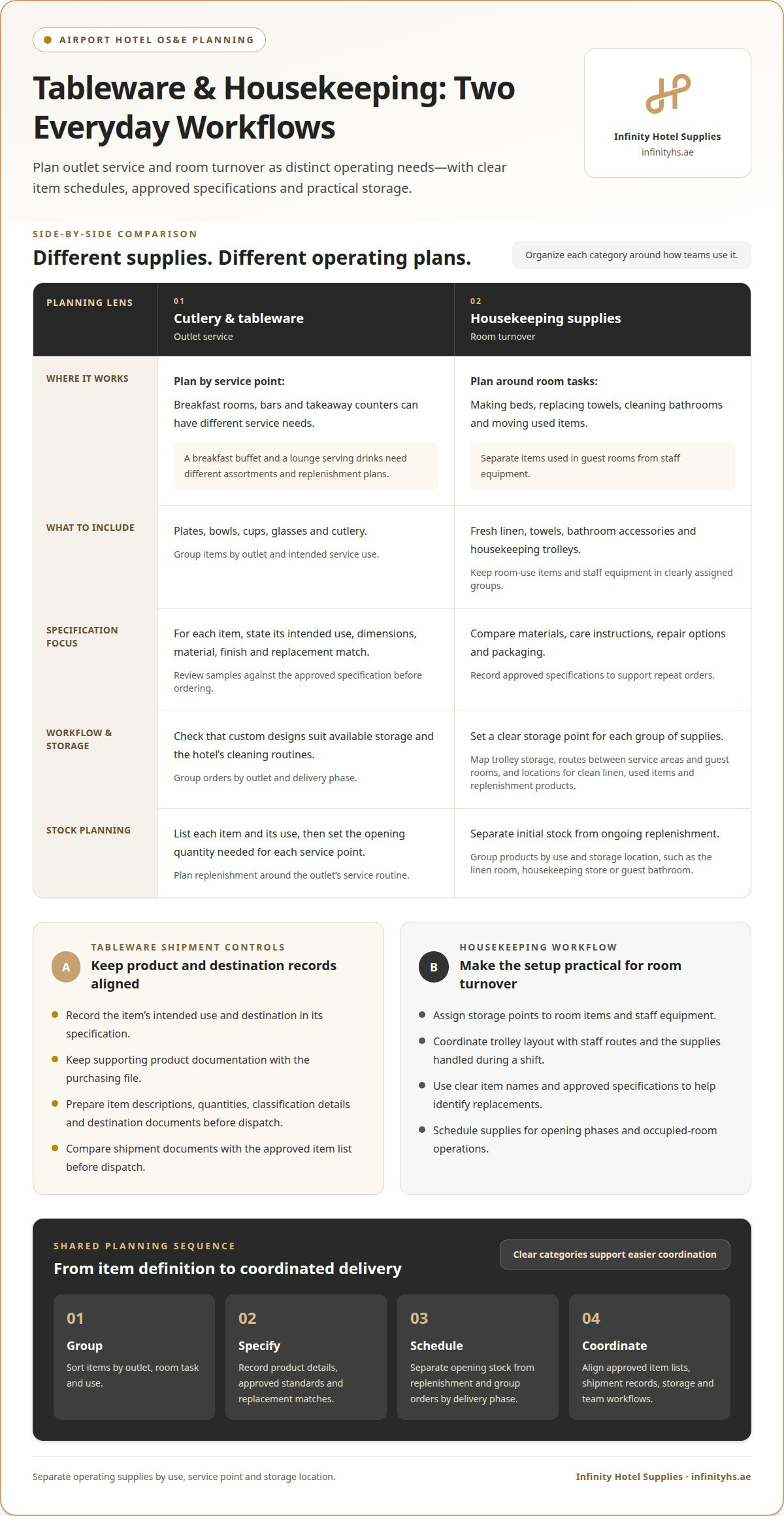
Airport hotels need tableware suited to each service point, from breakfast rooms to bars and takeaway counters. Guests may arrive at different hours, so service needs can vary more than at a hotel with one main dining outlet. Specify plates, bowls, cups, glasses and cutlery by outlet, service style and storage location. A breakfast buffet and a lounge serving drinks, for example, need different assortments and replenishment plans. Planning hotel OS&E supplies for airport hotels in the GCC starts with these distinct service needs.
Airport-hotel specifications should account for quick service, varied dining periods and efficient handling during room or outlet turnover. For each item, set out its intended use, dimensions, material, finish and replacement match. Review samples against the approved specification before ordering. Custom designs can align presentation across outlets, but should also suit available storage and the hotel’s cleaning routines.
Build a schedule by service point instead of treating tableware as one undifferentiated group. List each item, its use and the quantity needed for opening, then group orders by outlet and delivery phase. Hotel OS&E packages can include thousands of mostly off-the-shelf operating items, so clear descriptions help teams coordinate selection and logistics. Use clear categories to organize product reviews and sourcing for each outlet. The same category-based approach can guide sourcing hotel OS&E supplies for airport hotels in the GCC.
There is no single set of GCC food-contact or fire-safety requirements that applies to every OS&E item. Requirements depend on the destination country and product category. Assess food-contact tableware separately from items subject to fire-safety requirements. Record each item’s intended use and destination in its specification, and keep supporting product documentation with the purchasing file.
Import duties, VAT rates and customs requirements vary by GCC destination and product classification. There is no single rate or customs process for all GCC countries. For each shipment, prepare item descriptions, quantities, classification details and destination documents before dispatch. Align these records with the delivery schedule so customs processing is included in the logistics plan.
When items arrive from multiple countries at once, delays can affect opening readiness. Unclear product descriptions or identities can also increase counterfeit-product risk. Reduce these risks by keeping approved specifications, sample decisions and order records together. Before dispatch, compare shipment documents with the approved item list, including descriptions and quantities.
- Group plates, cups and cutlery by outlet and service use.
- Approve the specification before ordering, including finish and replacement match.
- Coordinate shipping records with destination, item classification and delivery phases.
Housekeeping supplies
Housekeeping teams need supplies for room turnover, linen handling and consistent cleaning routines. Build the list around tasks such as making beds, replacing towels, cleaning bathrooms and moving used items. A room-ready setup, for example, may include fresh linen, towels, bathroom accessories and a trolley. Separate room-use items from staff equipment, then assign each group a clear storage point. Planning hotel OS&E supplies for airport hotels in the GCC starts with these operational requirements.
Hotel operators typically specify OS&E to meet brand standards and local health and hygiene codes. To assess durability and sustainability, compare materials, care instructions, repair options and packaging. Record approved specifications for repeat orders. Include lighting requirements in the broader room schedule, rather than treating lighting as housekeeping equipment.
Include housekeeping trolleys in the workflow plan. Consider where they will be stored, their routes between service areas and guest rooms, and the supplies staff handle during a shift. Map the locations for clean linen, used items and replenishment products. This makes the trolley layout practical for room turnover and gives teams a consistent way to organize supplies across assigned floors or zones.
GCC airport hotels source housekeeping supplies through manufacturers, regional distributors and specialist hotel-supply companies. Each supplier type can support different procurement needs, from a defined product category to coordinated supply across operating areas. Compare proposals against shared item descriptions, brand standards, delivery phases and documentation requirements. For hotel OS&E supplies for airport hotels in the GCC, these criteria keep comparisons focused on the property’s actual needs.
Schedule supplies around opening phases and occupied-room operations. Separate initial stock from ongoing replenishment, then group products by use and storage location. A linen room, housekeeping store and guest bathroom each need a practical arrangement. Clear item names and approved specifications also help staff identify replacements without confusing similar products.
- Group supplies by room task and storage point.
- Record material, care and replacement specifications.
- Coordinate trolley layout with housekeeping routes.
A consistent item schedule helps teams align housekeeping needs with the hotel’s operating plan.
Ongoing replenishment
After opening, replenishment keeps guest rooms and service areas supplied as items are used, damaged or removed. Track recurring products separately, including amenities, bathroom accessories, linen and room electronics. For each item, record its storage location, approved specification, usage pattern and reorder point. This gives purchasing and housekeeping teams a shared view of stock needs. For example, track bathroom amenities on guest floors separately from reserve cartons in a central store.
For airport hotels, plan replenishment around operating demand and delivery schedules, not just the opening order. Review stock records, identify items nearing reorder points, and group orders by product and destination. A shipment plan can account for consolidated shipping, customs clearance, warehousing and phased site deliveries. Lead times depend on product availability, customization, shipment origin and delivery route, so align each order with its intended delivery phase.
Use the same sequence for every order: confirm the item specification, review stock, calculate the replenishment requirement, place the order, then schedule receipt and storage. A replacement amenities order, for example, should match the approved product and room presentation. A linen order should follow the hotel’s selected sizes and specifications. Keep the item description with the ordering record to distinguish similar products.
- Maintain a current stock record for each item and storage point.
- Set reorder points using actual use and delivery timing.
- Group compatible items into planned shipments and phased deliveries.
For properties operating across Qatar, Saudi Arabia or Bahrain, attach destination and delivery details to each order. Document item descriptions, quantities and delivery locations before dispatch. If supplies pass through a warehouse before reaching the hotel, include that handover in the schedule. These steps help teams spot delays early and plan around the pre-opening or operating calendar.
Custom amenities need particular attention because specifications and approval steps can affect the order schedule. Keep the approved design, item description and reorder details together so repeat orders remain consistent. Clear records also distinguish customized items from standard products during stock reviews and replacement planning. Assigning one item reference to each approved product can make records easier to use.
Build the replenishment plan around your hotel’s amenities requirements, storage arrangements and delivery schedule. A clear brief gives the discussion a practical starting point and keeps it focused on the property’s operating needs.
Public-area and lobby supplies
Airport hotel lobbies serve guests checking in, waiting for transport and moving between flights. Plan supplies around these activities. A reception zone may need queue-management equipment, while a seating area needs accessible waste bins and surfaces for guest use. Map each item to its location and purpose. This keeps lobby supplies distinct from the furniture and fixtures that shape the space.
Keep the OS&E and FF&E lists separate. Sofas, reception desks and fixed lighting are FF&E; movable operating items support daily service. A lobby trolley used to move supplies, for example, belongs in the operating plan. Specify its intended route, storage point and use before adding it to the order. These details help teams plan handling and delivery.
Build the public-area schedule by zone: entrance, reception, waiting area and guest washrooms. For each zone, list the required items, their locations and the team responsible for replenishment. A waste bin beside lobby seating, for example, needs a clear emptying routine. A trolley stored near a service area needs an agreed route that does not obstruct guest movement.
Choose lobby supplies with cleaning and replacement routines in mind. Smooth, accessible surfaces can simplify routine wiping, while clearly identified replacements make replenishment easier. Record each item’s approved description and finish, then use the same description for ordering, receiving and stock records. This reduces mix-ups between similar products in different public areas.
For a wider OS&E delivery, group lobby items by destination and placement sequence. Keep receiving records aligned with the item list so teams can direct each trolley, bin or accessory to its planned location.
- Map supplies to entrance, reception, seating and washroom zones.
- Separate movable operating items from FF&E.
- Record locations, descriptions and replenishment responsibilities.
- Plan receiving around the lobby’s setup sequence.
In the final review, compare the zone schedule with the hotel’s guest-flow plan. Check that each item supports a defined task, such as queue management, waste handling or moving supplies. Remove duplicates between zones and identify items that need shared storage. This focused review turns the lobby list into a practical operating plan.
What OS&E quantities should airport hotels budget per room and guest?
Set quantities from the hotel’s room mix, service model and expected occupancy, rather than using a generic per-room figure. Start with an item schedule for each room type. Separate fixed room sets, such as bathroom accessories, from guest-dependent items, such as amenities. This keeps the supplies for a double-occupancy room distinct from its standard room setup.
For room-based items, calculate the required set across rooms using the approved specification for each room type. Then add an operational reserve based on replacement needs and delivery timing. For example, count the linen set assigned to each room separately from spare linen held for changeovers. Keep each item’s standard, storage location and reorder point in the same schedule.
For guest-dependent items, base the calculation on expected occupancy and the hotel’s service pattern. A simple planning model is occupied guest places multiplied by the hotel’s chosen issue quantity per guest. Apply this to consumables such as amenities, then account for the time between replenishment deliveries. Airport hotels should also consider changing occupancy patterns across operating periods, rather than relying only on room capacity.
Build the quantity sheet in clear steps:
- Group items by guest room, bathroom, housekeeping and public area.
- Mark each item as a fixed room set, guest-use item or shared operational supply.
- Record the room type, expected occupancy and service frequency used in calculations.
- Separate opening quantities from ongoing stock and replacement reserves.
Tableware needs a different calculation from room amenities. Work it out by dining outlet, service format and expected covers, then account for items in use, cleaning and storage. A breakfast buffet and lounge service may need separate schedules. For housekeeping supplies, link quantities to room-turnover routines and the hotel’s linen-handling process.
After opening, review the schedule against actual operating records. Compare issued quantities with occupancy, replacement records and stock movement. If a product is frequently depleted, adjust its reorder point or delivery rhythm. If stock remains unused, revise the planned quantity. This feedback makes future budgets more responsive to the property’s actual use.
Where procurement research includes Qatar, keep category checks distinct from quantity calculations. The Qatar room-appliance topic has 2 filters for reviewing visible model evidence, while the Qatar eco-filtered guest-amenities topic uses 2 filters. These checks can sit alongside the item schedule without replacing the occupancy, service-frequency or replenishment assumptions used to set stock. The company says it offers hotel room supplies, toiletries, linens, and other hotel supplies, covering categories that may be considered during procurement planning.
Infinity Hotel Supplies
Infinity Hotel Supplies can support your airport hotel as you turn an OS&E schedule into product requirements or plan replenishment. Share the priorities already established: room types, approved specifications, expected use and delivery phases. This helps focus the discussion on the product categories relevant to your property instead of treating every OS&E item as one undifferentiated order.
Start with the needs in your schedule. Hotel Linen can address the property’s linen requirements, while LOVO Premium Electronics and Leather Accessories may suit other identified needs. LUFTER PHYTOGREEN is another offering to consider where it fits the project. The aim is to connect your requirements with relevant products, not add categories that do not belong in the plan.
For a pre-opening project, bring the item schedule and separate initial requirements from future replenishment. For an operating hotel, identify items needing replacement and the specifications already in use. Organized information makes the discussion more practical: it clarifies the requirement, intended use and place in the wider room or operating plan.
- Share the relevant room or project requirements.
- Identify approved specifications and the intended use.
- Separate opening needs from ongoing replacement requirements.
- Focus the discussion on applicable offerings.
This approach is useful when teams are refining an OS&E plan, aligning supplies with room requirements or reviewing replenishment needs. It helps procurement teams connect product decisions with the operational schedule. Infinity Hotel Supplies can discuss requirements relating to Hotel Linen, LOVO Premium Electronics, LUFTER PHYTOGREEN and Leather Accessories where those categories fit the project.
A clear schedule gives teams a shared reference as plans develop. Keep item descriptions, intended uses and approved specifications together, then use them to explain priorities in the discussion. This keeps the focus on the hotel’s requirements and relevant offerings, rather than assumptions about quantities, specifications or timing.
Contact Infinity Hotel Supplies to discuss your airport hotel’s requirements.
Turn your OS&E plan into a practical next step
The next step is to turn planning assumptions into a coordinated supply schedule. Keep product specifications, intended use and delivery priorities together so each decision supports the airport hotel’s operations. This gives teams a clear basis for discussing hotel OS&E supplies for airport hotels in the GCC and matching suitable products to the property’s requirements.
Infinity Hotel Supplies offers Hotel Linen, LOVO Premium Electronics and LUFTER PHYTOGREEN. Consider these categories where they match your hotel’s requirements and project scope. A focused discussion can connect your documented needs with relevant offerings while keeping the operating plan in view.
Bring your priorities to the next conversation, whether you are preparing for an opening or reviewing an operating property’s requirements. A clear brief keeps the discussion specific and useful.
A well-structured plan gives your team greater clarity and confidence as it moves forward.
Frequently Asked Questions
What OS&E supplies are essential for airport hotels?
Essential supplies are the items that help each hotel department serve guests and complete routine tasks. Prioritize guest-room and bathroom items, housekeeping equipment, dining tableware and lobby operating supplies. Then match the list to the property’s actual facilities, such as a restaurant, lounge or meeting space. For a GCC hotel, organize specifications by property and operating standard so teams can manage shared requirements without overlooking local project needs.
What OS&E items are most important for airport hotel housekeeping, dining, and guest rooms?
Start with items that allow each area to function during a normal shift. Housekeeping needs practical equipment and access to clean linen; dining teams need table settings suited to each outlet’s service; guest rooms need their specified amenities and room-use items. A useful review is to follow one guest journey, from arrival through breakfast to checkout, and note which supplies each team uses, replaces or hands over.
What GCC standards and regulations apply to hotel OS&E, including fire safety and food contact?
Requirements depend on the destination country and product category. Assess food-contact tableware separately from items subject to fire-safety requirements. Record each item’s intended use and destination, and keep supporting product documentation with the purchasing file.
Which OS&E suppliers and distributors serve GCC airport hotels?
GCC airport hotels source housekeeping supplies through manufacturers, regional distributors and specialist hotel-supply companies. Compare proposals against consistent item descriptions, brand standards, delivery phases and documentation requirements.
What are the steps and lead times for OS&E procurement and delivery in the GCC?
Confirm specifications, review stock or opening needs, calculate quantities, place orders, then schedule receipt, storage and phased delivery. Coordinate item descriptions, quantities, classification and destination documents. Lead times depend on availability, customization, shipment origin and delivery route.

Article by
Infinity Editorial Team
With deep expertise in hospitality product FF&E and OS&E across the Middle East and Africa, Infinity Editorial Team brings insights from Infinity Hotel Supplies, helping developers, hoteliers, and homeowners transform spaces from empty shells to fully furnished, design-ready environments.
Disclaimer
The content published by Infinity Editorial Team is intended for informational purposes only. All articles, guides, and insights are based on industry knowledge and experience in hospitality FF&E and OS&E supply across the Middle East and Africa. Infinity Hotel Supplies does not guarantee specific outcomes and recommends consulting a qualified professional for project-specific requirements.


