

What if a hotel uniform’s most important design feature isn’t its colour or cut, but how it performs outdoors and through a long shift? The best hotel staff uniform design ideas for desert climates balance a polished appearance with breathable fabrics, practical coverage and freedom of movement. A coordinated look matters, but a uniform that works for the setting and the role matters just as much.
Choosing uniforms can be challenging when front desk, housekeeping and outdoor teams face different demands. A design that suits a guest-facing lobby may not offer the flexibility or durability needed for physical tasks. Separate role-based looks, meanwhile, can make a hotel’s visual identity feel fragmented. Define shared design elements, then adapt garments to each team’s work.
This guide covers climate-aware fabric considerations and uniform concepts for different hotel roles. It also explains how to assess comfort, care needs, durability and visual consistency before procurement, so you can shape a cohesive uniform direction for your property and its setting in the GCC or wider Middle East.
Key Takeaways
- Assess fabric feel, opacity, movement and care needs against each garment’s intended role and setting.
- Adapt uniform concepts to staff exposure, physical tasks and guest interaction while retaining shared visual details.
- Use hotel staff uniform design ideas for desert climates to balance the property’s identity with comfort and practical performance.
- Review concepts through role mapping, wear trials and team feedback before making a final selection.
- Set clear design standards to keep the uniform programme consistent as garments and teams change.
Why Desert Climate Changes Hotel Staff Uniform Design
A hotel uniform needs to communicate the property’s character while supporting the people who wear it throughout their working day. In desert settings, heat, strong sunlight, dry air and dust can all shape how a garment feels and functions. Staff may also move between outdoor paths, shaded entrances and air-conditioned interiors, so one uniform specification may not suit every role.
Climate-aware hotel uniform design balances a hotel’s visual identity with wearer comfort and the practical needs of each role and setting. This is the starting point for useful hotel staff uniform design ideas for desert climates: design for actual duties and exposure, rather than treating the whole team as one group.
For a visual reference to how hospitality uniforms can combine a polished appearance with practical design, watch this hotel uniform showcase:
Which desert-climate conditions should influence uniform concepts?
Start by mapping where and how each team works. Outdoor staff may need different coverage and layering options from colleagues who remain indoors. Work in shaded areas also differs from duties in direct sun. Dust can influence choices such as garment colour and how easily marks show, while heat and dry air belong in the broader comfort assessment. These are design considerations, not a single formula for every property.
For sun-exposed roles, review fabric coverage and construction as well as appearance. The overview of sun protective clothing explains factors such as UPF ratings, weave density and material types, which can help frame questions about textiles intended for sun exposure.
How can a hotel keep climate-aware uniforms on brand?
Use the property’s established colour palette, service style and guest expectations as the visual foundation. Then adapt garment shapes and details to suit duties, rather than asking every team to wear identical pieces. Shared colours, consistent trims or aligned design details can connect different role-specific garments without limiting practical choices.
Cultural references call for care. Avoid costume-like interpretations or assumptions about what local identity should look like. Instead, build a refined, respectful design direction from the hotel’s brand standards and setting. Assess each concept for comfort and suitability across indoor, shaded and outdoor work. This balance makes the uniform feel intentional as well as appropriate to its environment.
Hotel Uniform Fabrics and Construction: What to Compare in Hot, Dry Conditions
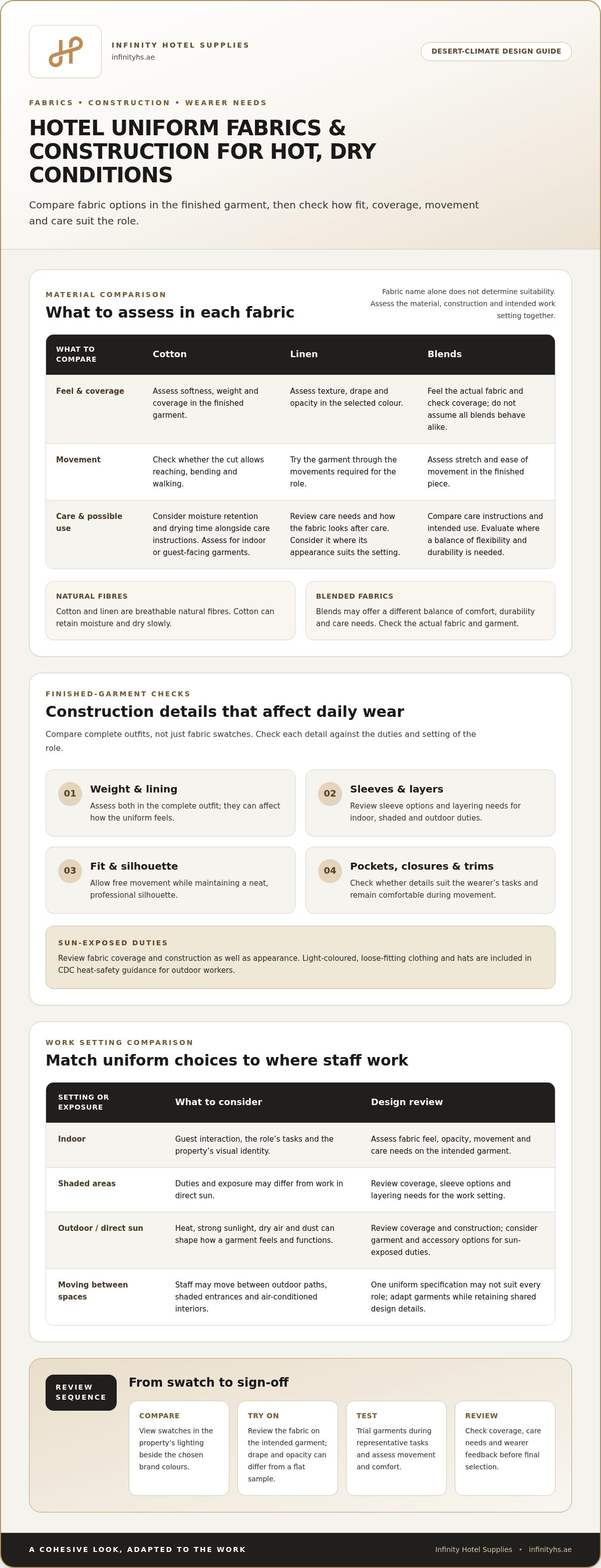
A fabric name alone won’t tell you whether a uniform suits a particular job. Compare how the material feels, looks and moves in the finished garment, then consider its care requirements and the conditions in which staff will wear it.
Fabric suitability depends on the role, garment construction, care routine and wearer preference. This principle keeps hotel staff uniform design ideas for desert climates grounded in daily use, not just swatch appearance.
How should hotels compare fabrics for staff uniforms?
Assess cotton, linen and blended fabrics as options, not automatic solutions. Cotton and linen are breathable natural fibres, while cotton can retain moisture and dry slowly. Blends may offer a different balance of comfort, durability and care needs. The finished fabric, garment design and intended work setting all matter.
Compare swatches in the property’s lighting and beside the chosen brand colours. Then review them on the intended garment: a fabric that looks opaque as a flat sample may drape differently when worn. Read the care instructions and consider how they fit the hotel’s regular garment-care process.
| Material to assess | Feel and opacity | Movement | Care and possible role |
|---|---|---|---|
| Cotton | Assess softness, weight and coverage in the finished garment. | Check how the cut allows reaching, bending and walking. | Consider moisture retention and drying time alongside care instructions; assess for indoor or guest-facing garments. |
| Linen | Assess its texture, drape and opacity in the selected colour. | Try the garment through the movements required for the role. | Review care needs and how the fabric looks after care; consider it for roles where its appearance suits the setting. |
| Blends | Feel the actual fabric and check coverage rather than assuming all blends behave alike. | Assess stretch and ease of movement in the finished piece. | Compare care instructions and intended use; evaluate for roles that need a balance of flexibility and durability. |
Which construction details matter during long shifts?
Garment weight and lining can affect how a uniform feels, so assess both in the complete outfit. Review sleeve options and layering needs for indoor, shaded and outdoor duties. Fit should allow staff to move freely while maintaining a neat, professional silhouette.
Check whether pockets, closures and trims suit the wearer’s tasks and remain comfortable during movement. For outdoor roles, the CDC heat safety for outdoor workers guidance includes recommendations on light-coloured, loose-fitting clothing and hats. Treat this as useful context when considering garments and accessories for sun-exposed duties.
Photographs and swatches can help narrow choices, but wearer feedback adds practical evidence. Trial garments during representative tasks, then review comfort, coverage, movement and care needs before sign-off. These checks help hotel teams assess uniform options against the property’s roles and working conditions.
Hotel Staff Uniform Design Ideas by Role and Property Setting
Uniforms can differ by department without making the hotel feel visually fragmented. Start with each team’s setting, movement needs and level of guest interaction, then carry a few shared brand elements across the garments. The best hotel staff uniform design ideas for desert climates are adaptable concepts, not one fixed look for every employee.
For example, a coordinated palette can connect a tailored front desk outfit with a more relaxed operational uniform. Consistent trim, buttons or insignia—such as iron-on emblems from Custom Patches Australia—can also create continuity across different silhouettes. Choose details that suit the property’s service style and remain practical for the people wearing them.
| Role and setting | Exposure and movement | Adaptable uniform concept | Guest interaction |
|---|---|---|---|
| Front desk and concierge, indoors | Mostly indoor duties; regular standing and reaching | Structured shirt or blouse with tailored trousers or a dress; consider a removable layer for indoor temperature changes | Frequent, so prioritise a polished look and clear brand alignment |
| Bell and valet teams, entrances and outdoor areas | Movement between indoor, shaded and exposed areas; frequent walking and handling items | A distinct shirt-and-trouser combination with practical pockets; coordinate its colours or trim with guest-facing indoor uniforms | Regular, so keep the presentation recognisable and professional |
| Poolside staff, outdoor setting | Outdoor exposure and movement around the pool area | A simple, role-appropriate outfit with coverage and details selected for the setting and hotel identity | Direct guest contact; balance approachability with a clear connection to the property |
| Housekeeping, guest rooms and service areas | Frequent bending, reaching and walking, with duties across different areas | A flexible-looking top and trousers with functional pockets; use shared colours or a consistent badge detail | Varies by property and task, so focus on an orderly, coordinated appearance |
What uniform ideas suit front desk and concierge teams?
For indoor, guest-facing roles, consider breathable-looking layers that retain a composed silhouette. Structured shirts or blouses paired with trousers, or a simple dress, offer different routes to a polished appearance. Align colour, fit and accessories with the hotel’s service style. A removable layer can help staff adapt between the lobby and other indoor spaces without changing the core look.
How can outdoor and operational teams have distinct, coordinated looks?
Bell, valet, poolside and housekeeping teams work in different settings and move in different ways. Give outdoor roles a distinct garment direction from indoor teams, and choose operational concepts that allow staff to carry out their daily tasks comfortably. Avoid assuming that a particular fabric or garment offers protection or performance without evidence. Shared palette choices or repeated trims can still unite each team under one hotel identity.
Use the table as a starting point, then adapt each concept to the property’s duties and guest experience. The result can be a coordinated uniform programme with role-specific silhouettes, rather than identical outfits that overlook how each team works.
How to Evaluate Desert-Climate Uniform Concepts Before Ordering
A structured review helps hotel teams compare uniform concepts on more than appearance. Map the work first, then test samples against the property’s brand, staff feedback, care needs and actual settings. This turns design ideas into clear procurement decisions.
What should a hotel include in its uniform review?
Use this numbered process to move from role requirements to final sign-off:
- Map roles and settings. Record each department’s duties, indoor or outdoor work areas, guest interaction and expected garment combinations.
- Set the design criteria. Agree on brand fit, suitable coverage, comfort, movement, care requirements and the appearance expected in each setting.
- Compare sample garments. Review fit, drape, opacity, seams, closures and pockets on the intended wearer. Read care instructions and consider whether they suit the hotel’s routine garment-care process.
- Arrange realistic wear trials. Invite wearers from the relevant roles to try samples during representative tasks, such as walking, reaching, bending or welcoming guests. Include indoor and outdoor settings where relevant.
- Record feedback and decide. Use the same review questions for staff and managers. Note what works, what restricts movement and what needs adjustment, then compare responses against the agreed criteria before sign-off.
Consistent feedback matters. Ask wearers to comment on comfort, ease of movement and how the garment feels through normal duties. Managers can assess presentation, role suitability and consistency with the hotel’s service style.
How can the hotel check consistency across teams?
Document approved colours, garment pairings, trims and role-specific variations in one accessible reference. Review samples side by side under consistent lighting to spot differences in colour tone, finish or overall presentation. This helps teams maintain a connected appearance while allowing garments to suit different jobs.
Keep the approved specifications with the uniform programme so future replenishment follows the same design direction. Record changes through the same review process, rather than relying on memory or a photograph alone.
Reusable review checklist: Role and setting mapped; brand fit reviewed; sample movement and comfort tested; care instructions considered; wearer and manager feedback recorded; shared design standards documented.
Use this process to compare concepts with confidence and shape a uniform programme around the property’s teams and working conditions.
Building a Cohesive Desert-Ready Hotel Uniform Programme
A cohesive uniform programme doesn’t require every employee to wear the same outfit. It needs a clear visual framework that connects garments across departments while allowing each team’s clothing to suit its setting, duties and guest contact. That balance helps a hotel maintain a recognisable identity without overlooking practical differences between roles.
Should every hotel department wear the same uniform design?
A single uniform design can create a strong, unified appearance and simplify decisions. However, the same cut or combination may not suit front desk staff, outdoor teams and employees doing physical tasks. Coordinated role-specific variations offer more flexibility, while shared colours, trim, buttons or name-badge placement can preserve a consistent hotel image.
Set the balance by considering how often each team interacts with guests, where its members work and what their tasks involve. Then document the common brand elements and the approved department differences. Clear standards give teams a reference for selecting garments and help keep future additions aligned with the original direction.
What are the next steps for a hotel uniform project?
Bring the design discussion into focus before selecting garments. Prepare the property’s identity references, including its colour palette and service style, alongside a map of departments, duties and indoor, shaded or outdoor settings. Then define the visual direction and practical criteria the team will use to review options, such as comfort, movement, care instructions and fit with each role.
Record the agreed garment combinations, colours, trims and role-specific variations in a shared programme document. This makes it easier to review samples consistently and maintain the intended presentation as teams and garments change. Keep the standards practical, clear and connected to the way the hotel operates.
Infinity Hotel Supplies supplies hotel uniforms for hospitality teams. A clear brief covering roles, settings and visual direction gives the uniform discussion a practical starting point.
Shape a Uniform Programme That Fits Your Property
Strong hotel staff uniform design ideas for desert climates begin with the work itself. Match fabric and construction to each role, setting and care routine, then assess samples through realistic wear trials. Shared colours and clear design standards can keep different garments connected to the hotel’s identity.
Balance consistency with practical, role-specific choices. Guest-facing teams may need a more structured look, while outdoor and operational teams need garments suited to their duties and movement. Staff feedback, alongside brand fit, helps your team make a considered decision before ordering.
For hotels in the GCC and wider Middle East, Infinity Hotel Supplies offers hotel uniforms as part of its hospitality product range.
Discuss your hotel uniform requirements with Infinity Hotel Supplies.
A clear direction can help your team build a polished, coordinated uniform programme that suits your property and its setting.
Frequently Asked Questions
What fabrics work best for hotel staff uniforms in desert climates?
No single fabric is best for every hotel uniform. Suitability depends on the staff member’s role, garment construction, care instructions and wearer preference. Compare cotton, linen and blended-fabric swatches, then assess finished samples in the intended garment. Check their feel, opacity, drape and movement rather than choosing by fabric name alone. This practical approach helps teams evaluate hotel staff uniform design ideas for desert climates without assuming one material suits every department.
How should hotel uniforms differ for indoor and outdoor staff?
Uniforms should reflect where staff work, their exposure, movement needs and how often they interact with guests. Indoor reception staff may need a more structured look, while outdoor teams may benefit from different garment choices and layering options suited to their duties. Housekeeping also has distinct movement requirements. Keep shared colours, trims or other brand details across these variations, rather than expecting one design to work for every department.
Can hotel uniforms look professional and still feel comfortable in hot weather?
Yes, teams can assess a polished appearance and wearer comfort together, but the result depends on the garment and the person wearing it. Consider fit, garment weight, lining, construction and whether staff need layers for their work setting. Then trial complete outfits during realistic tasks, such as standing, walking, reaching or bending. Gather wearer feedback on comfort and movement before selecting a design; photographs alone can’t show how a uniform feels in use.
What colours are suitable for hotel uniforms in desert climates?
Start with the hotel’s established palette, the guest experience it aims to create and practical care needs. A colour that looks right on screen may appear different on fabric, so compare swatches under the property’s lighting and beside other uniform materials. Review the colours on finished garments as well. Don’t assume a particular shade will feel cooler or resist fading without evidence for the fabric and garment being considered.
How can a hotel keep uniforms consistent across different departments?
Document the shared colours, trims and approved garment combinations, then note which variations suit each department. This gives teams a clear reference while allowing garments to reflect different duties and settings. Review samples together to compare colour tone, finish and overall presentation. Consistent specifications help maintain a coherent appearance as uniforms change, without requiring every team to wear identical silhouettes or relying on memory when selecting garments.
What should a hotel check before ordering staff uniforms?
Map departments, duties and work settings first. Then assess brand alignment, fit, movement, care instructions and wearer feedback for each proposed garment. Review complete outfits, not only individual fabric swatches, so you can see how the pieces work together. Ask staff to try samples during realistic activities and record comments consistently. An organised review helps the hotel compare concepts against the same criteria before making a final selection.
How can a hotel choose uniform designs for a resort in the GCC?
Build the design brief around the resort’s identity, guest experience, department duties and indoor or outdoor work settings. GCC properties across the Middle East vary in their brands and operations, so avoid assuming one uniform direction suits every resort. Compare role-specific samples as complete outfits, then gather feedback from staff and managers. Infinity Hotel Supplies, based in Dubai, supplies hotel uniforms to hotels across the GCC and Middle East.

Article by
Infinity Editorial Team
With deep expertise in hospitality product FF&E and OS&E across the Middle East and Africa, Infinity Editorial Team brings insights from Infinity Hotel Supplies, helping developers, hoteliers, and homeowners transform spaces from empty shells to fully furnished, design-ready environments.
Disclaimer
The content published by Infinity Editorial Team is intended for informational purposes only. All articles, guides, and insights are based on industry knowledge and experience in hospitality FF&E and OS&E supply across the Middle East and Africa. Infinity Hotel Supplies does not guarantee specific outcomes and recommends consulting a qualified professional for project-specific requirements.


