

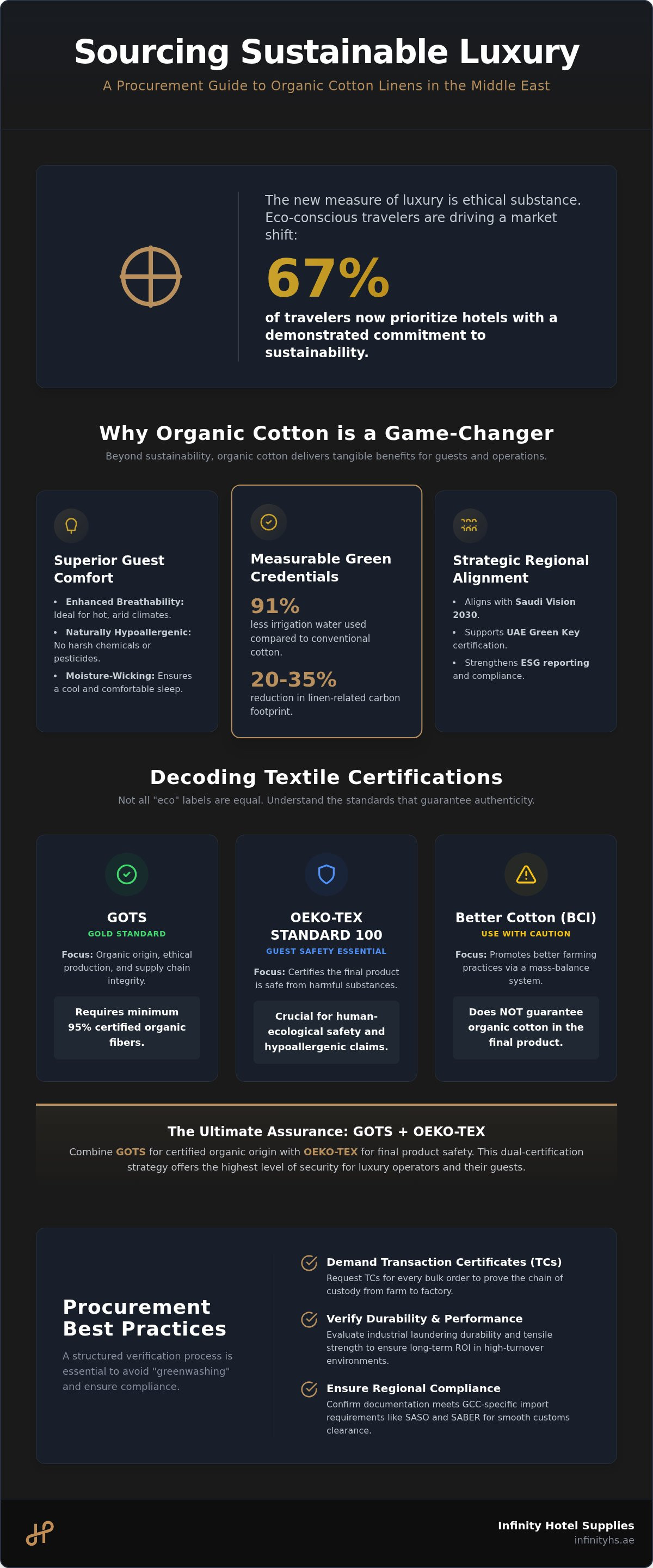
Did you know that 67% of travelers now prioritize staying at hotels with a demonstrated commitment to sustainability? While the demand for eco-conscious luxury is soaring, the process of sourcing organic cotton hotel linens in the Middle East often feels like a logistical minefield. Procurement directors frequently face a frustrating disconnect between international sustainability ideals and the harsh realities of desert climates or complex regional supply chains. You need textiles that respect the planet without sacrificing the plush, high-thread-count experience your guests expect.
We recognize that verifying GOTS 8.1 certifications or ensuring fiber durability under intense industrial laundering is a significant challenge. This guide provides a clear framework for evaluating suppliers and aligning your procurement strategy with regional goals like Saudi Vision 2030 and the UAE Green Key. You'll discover how to secure a reliable, transparent supply chain that enhances your brand's reputation for ethical excellence. We will explore certification standards, logistical best practices, and the latest 2026 textile innovations to help you master sustainable luxury.
Key Takeaways
- Understand why 2026 hospitality trends shift luxury from aesthetics to ethical origins to meet the rising expectations of eco-conscious GCC travelers.
- Navigate the latest GOTS 8.1 and OEKO-TEX updates to ensure your textile procurement meets strict international and regional compliance standards.
- Streamline the logistical complexities of sourcing organic cotton hotel linens in the Middle East by effectively managing lead times and GCC-specific import duties.
- Evaluate long-term ROI by comparing the industrial durability and tensile strength of organic fibers against conventional alternatives in high-turnover desert environments.
- Align your property with regional sustainability goals like Saudi Vision 2030 through a structured, end-to-end procurement methodology that maintains luxury standards.
The Evolution of Sustainable Luxury in Middle East Hospitality
Luxury in the Middle East is undergoing a fundamental transformation. For years, the region's hospitality sector was defined by opulence and scale, but the 2026 landscape prioritizes ethical substance alongside aesthetic beauty. Today, sourcing organic cotton hotel linens in the Middle East is a primary objective for procurement teams aiming to meet the sophisticated demands of modern travelers. These textiles are defined by a production process that eliminates toxic pesticides and synthetic fertilizers, focusing instead on soil health and biodiversity. This shift is driven by a regional market where "premium" now includes a product's environmental legacy.
Data suggests that approximately 67% of travelers prefer hotels with clear sustainability commitments. In the GCC, this trend is even more pronounced among younger, affluent demographics who view their choice of accommodation as a reflection of their personal values. Consequently, 5-star properties are moving away from conventional linens toward high-quality hotel linen that carries certified organic credentials. What was once considered an "optional extra" has become a non-negotiable brand standard for the region's leading hospitality groups.
Why Organic Cotton Matters for 2026 Guest Experiences
The desert climate presents unique challenges for guest comfort. Organic cotton fibers offer enhanced breathability and moisture-wicking properties, which are essential for maintaining a cool sleep environment in arid regions. Because organic cotton production avoids harsh chemical treatments, the resulting fabric is naturally hypoallergenic. This is a critical advantage for luxury suites catering to guests with sensitive skin or respiratory concerns. There's also a significant psychological impact tied to "sustainable sleep." Guests feel a deeper sense of loyalty to brands that actively protect the environment, especially when they learn that organic cotton uses up to 91% less irrigation water than traditional varieties.
Regional Sustainability Initiatives and Compliance
Sourcing organic cotton hotel linens in the Middle East is no longer just about guest preference; it's about national alignment. Major initiatives like Saudi Vision 2030 and the UAE's Green Key certification have set rigorous benchmarks for environmental stewardship. Hotel operators must now demonstrate how their supply chains contribute to national ESG (Environmental, Social, and Governance) targets. By integrating organic textiles, properties can reduce their linen-related carbon footprint by 20% to 35%. This transparency is vital for LEED-certified developments and new mega-projects across the GCC that require every component, from the building materials to the bedsheets, to meet high sustainability thresholds.
Navigating Global Standards and Certifications
Sourcing organic cotton hotel linens in the Middle East demands a discerning eye for detail. It's often difficult to distinguish between genuine organic fibers and "Better Cotton" (BCI). While BCI promotes improved environmental practices, it uses a mass-balance system that doesn't guarantee the actual presence of organic cotton in the final product. For 5-star properties, the Global Organic Textile Standard (GOTS) remains the essential benchmark. It ensures that at least 95% of the fibers are certified organic, providing the transparency required for modern ESG reporting.
GOTS vs. OEKO-TEX: Which Should You Prioritize?
Procurement teams shouldn't view these as competing standards. GOTS focuses on the biological origin and social ethics of the production process. In contrast, OEKO-TEX Standard 100 certifies that the finished hotel linen is safe for human use. The June 2026 update to OEKO-TEX introduced even stricter limits on PFAS and phthalates. A combination of both certifications offers the highest level of security for luxury operators. It guarantees that the product is as gentle on the guest as it is on the planet.
Verifying Certifications in the Global Supply Chain
Avoiding "greenwashing" requires more than just checking a supplier's website. You must demand Transaction Certificates (TCs) for every bulk order. These documents link specific shipments to the original organic farm, ensuring the chain of custody remains intact. This is particularly vital for regional compliance, as markets like Saudi Arabia require these documents for SASO and SABER clearance. Robust procurement strategies also include third-party audits and on-site inspections at manufacturing facilities. Such rigorous oversight is standard for established partners with global footprints. If you need assistance navigating these technical requirements, contact our procurement specialists for a comprehensive audit of your current textile supply chain.
Logistics and Sourcing Challenges in the GCC
Logistics in the GCC require a meticulous approach. When sourcing organic cotton hotel linens in the Middle East, the primary hurdle is managing the extended lead times inherent in certified production. Organic cotton harvests are seasonal, and mills require specific production windows for certified runs. This rigidity means that procurement managers can't rely on the "just-in-time" inventory models used for conventional linens. Planning must happen months in advance to account for both these specialized production cycles and international maritime transit times.
Navigating the regulatory environment is equally demanding. Each GCC nation maintains unique import protocols that must be followed to avoid port delays. For instance, according to recent Saudi Arabia organic cotton market data, the surge in luxury tourism is driving stricter enforcement of sustainability standards. Failure to provide correct Transaction Certificates at the border can lead to costly rejections. Maintaining a regional warehouse is a strategic necessity for sourcing organic cotton hotel linens in the Middle East, as it ensures that properties have immediate access to stock even during global supply chain fluctuations.
The Value of a Dubai-Based Procurement Partner
Working with a local expert provides a significant tactical advantage. Our team has managed regional logistics since 2014, offering deep insights into UAE and Saudi Arabian customs regulations. We prioritize reducing transit times by leveraging our strategic distribution network. By maintaining offices in the UAE, China, and the UK, we oversee the entire process from the factory floor to the hotel guest room. This global footprint allows us to offer reliable Infinity Hotel Supplies Linen Solutions that bypass common third-party delays and ensure your inventory remains consistent.
Turnkey Solutions for New Property Developments
The pre-opening phase of a hotel is notoriously complex. Coordinating FF&E and OS&E timelines requires a partner who understands how these categories intersect. We provide comprehensive support that ensures your organic linens arrive in sync with furniture and electronics. Managing quality control at the source is vital; our international offices conduct rigorous inspections before any shipment leaves the port. For a deeper look at managing these complexities, read our Hospitality Procurement Solutions: A Strategic Guide for 2026. This end-to-end methodology is designed to protect your investment and ensure a seamless property launch.
Evaluating Performance: Durability for High-Turnover Properties
Performance is the ultimate metric for any procurement strategy. While some hospitality operators worry that eco-friendly fabrics are more delicate, modern organic textiles are specifically engineered to withstand the rigors of high-occupancy environments. Successful sourcing organic cotton hotel linens in the Middle East requires a shift from viewing textiles as a disposable commodity to seeing them as a long-term asset. High-quality organic fibers can retain over 85% of their tensile strength even after 300 industrial wash cycles. This durability is essential for properties in the GCC, where high turnover and harsh environmental factors demand consistent fabric integrity.
Maintaining a "crisp white" look is a particular challenge in the Middle East due to the mineral content in desalinated water. Conventional bleaching agents can often be too aggressive for organic fibers, leading to premature thinning. Instead, luxury properties utilize stabilized peroxide-based whitening systems that preserve the fiber's natural wax coating. This approach ensures that your hotel linen remains bright and soft without compromising the structural density required for a 5-star guest experience.
Thread Count vs. Fabric Integrity
Many procurement managers mistakenly equate higher thread counts with better quality. In reality, a 300-400 thread count is the "sweet spot" for organic hotel linens. This range provides the perfect balance of weight, breathability, and structural strength. The secret lies in the use of long-staple organic cotton. Because these fibers are longer and smoother than conventional varieties, they create a stronger yarn with fewer loose ends. This significantly reduces pilling and ensures the fabric remains smooth after repeated laundering, directly impacting guest satisfaction scores and reducing your replacement frequency.
Laundering and Care for Organic Textiles
Preserving the lifespan of organic cotton requires a refined approach to laundry chemistry. High temperatures and excessive mechanical action are the primary enemies of fabric longevity. We recommend optimizing wash cycles with lower temperatures and pH-neutral detergents to protect the organic integrity of the fibers. Managing your PAR (Periodic Automatic Replenishment) levels is equally important. For high-turnover properties, maintaining a PAR level of 4 allows the cotton fibers to "rest" and recover their shape between uses. This rotation strategy, combined with proper care, can extend the life of your linens by up to 25% compared to conventional alternatives.
Strategic Procurement with Infinity Hotel Supplies
Sourcing organic cotton hotel linens in the Middle East requires more than just a list of suppliers; it demands a partner capable of executing a sophisticated vision. Infinity Hotel Supplies simplifies this complex process by acting as a single point of accountability. Our end-to-end methodology begins at the factory floor, where we oversee raw material selection and certification compliance. It ends only when the finished linen is placed on the guest bed. This holistic approach removes the burden of managing multiple international vendors and ensures every thread meets your property's specific standards for luxury and longevity.
We understand that luxury is personal. That's why we offer extensive custom branding and design options, allowing you to create exclusive organic bedding collections that reflect your hotel's unique identity. Whether you require bespoke embroidery or custom weave patterns, our team ensures that sustainability doesn't come at the cost of brand distinction. By managing the technical and creative aspects of production, we allow your team to focus on what matters most: the guest experience.
A One-Stop Solution for Middle East Hospitality
Operational efficiency is best achieved through consolidation. Integrating your textile needs with our LUFTER PHYTOGREEN amenities creates a cohesive eco-strategy that resonates with modern travelers. Our global offices in the UAE, China, and the UK provide a direct line of oversight, ensuring rigorous quality control at every stage of the supply chain. This international footprint allows us to source the finest materials while maintaining the logistical agility needed for the GCC market. Beyond linens, we provide a wide range of Premium Hotel Room Accessories to ensure your property's aesthetic remains consistent across all guest touchpoints.
The Infinity Advantage: Trust and Reliability
Established in 2014, Infinity Hotel Supplies has spent over a decade serving the GCC hospitality market. We've built our reputation on a commitment to cost-efficient, high-quality sustainable strategies that don't compromise on the 5-star experience. Our expertise allows us to navigate the specific challenges of the region, from customs regulations to climate-specific fabric performance. We don't just provide products; we build long-term partnerships that drive operational excellence and guest satisfaction. If you're ready to elevate your property's sustainability profile, we are here to facilitate that transition with precision and care.
Master Your 2026 Sustainable Procurement Strategy
The transition toward sustainable luxury is now a strategic requirement for properties across the GCC. By prioritizing certified organic fibers, you align your brand with regional initiatives like Saudi Vision 2030 while satisfying the 67% of travelers who seek eco-conscious accommodations. We've explored how navigating certifications and managing desert-specific logistics are the essential pillars for sourcing organic cotton hotel linens in the Middle East.
Reliable procurement requires a partner who understands the nuances of the regional market and the technicalities of global supply chains. Since 2014, our Dubai-based team has provided turnkey OS&E and FF&E solutions backed by a global quality control network. This expertise ensures your property maintains the highest luxury standards while achieving long-term operational excellence and guest loyalty.
It's time to transform your guest experience with textiles that reflect a dedicated commitment to both excellence and environmental stewardship.
Frequently Asked Questions
Is organic cotton linen durable enough for 5-star hotel use?
Organic cotton is exceptionally durable for 5-star environments when you select long-staple fibers. These premium yarns create a stronger fabric that resists pilling and maintains its structural integrity over time. Modern organic textiles are tested to retain approximately 85% of their tensile strength after 300 industrial wash cycles. This performance makes sourcing organic cotton hotel linens in the Middle East a viable long-term investment for high-occupancy resorts requiring consistent luxury.
How does the cost of organic cotton compare to conventional hotel linens?
Organic cotton typically carries a higher initial purchase price compared to conventional alternatives. However, the total cost of ownership is often lower because the fibers last longer in industrial laundering environments. Beyond direct costs, these linens contribute to improved guest satisfaction scores and help properties meet strict ESG targets. This alignment with sustainability goals is increasingly valuable for hotels operating under the UAE Green Key or Saudi Vision 2030 frameworks.
What are the most important certifications for organic hotel textiles?
The Global Organic Textile Standard (GOTS) and OEKO-TEX Standard 100 are the two most critical certifications. GOTS ensures the biological origin of the fibers and maintains a transparent chain of custody from the farm to the finished product. OEKO-TEX focuses on chemical safety, guaranteeing that the linens are free from harmful substances. For procurement in the GCC, these certifications are vital for verifying supplier claims and ensuring compliance with regional import regulations.
Can organic linens be custom branded for my hotel?
Yes, custom branding is a core offering for luxury properties. Infinity Hotel Supplies provides comprehensive customization options, including bespoke embroidery, specific thread count configurations, and unique weave patterns for organic bedding. This allows hotels to maintain their distinct brand identity while transitioning to sustainable materials. Our global quality control network ensures that every customized detail meets the high luxury standards expected by guests in the Middle East hospitality sector.
Does organic cotton require different laundering processes?
Organic cotton benefits from a more refined laundering approach to maximize its lifespan. We recommend using pH-neutral detergents and avoiding chlorine-based bleaches, which can degrade natural fibers over time. Opting for lower wash temperatures and shorter drying cycles also helps preserve the cotton's natural wax coating. Implementing these specific care protocols ensures that your sustainable linens remain soft and bright while resisting the thinning often caused by aggressive chemical treatments.
How do I calculate the correct PAR levels for organic linens?
We recommend maintaining a PAR level of 4 for organic linen programs. This calculation includes one set on the bed, one in the closet, one in the laundry, and one resting in storage. Allowing fibers to "rest" for 24 hours between uses is crucial because it lets the cotton recover its natural shape and elasticity. This rotation strategy significantly reduces fiber fatigue and can extend the total lifespan of your inventory by up to 25%.
What is the typical lead time for sourcing organic linens in the GCC?
Lead times for organic textiles are typically longer than conventional options due to the specialized nature of certified production. Procurement teams should plan for extended windows to account for seasonal organic harvests and specific mill certification runs. When sourcing organic cotton hotel linens in the Middle East, it is also important to factor in international maritime transit and regional customs clearance. Partnering with a Dubai-based supplier with regional warehousing can help mitigate these delays.
Are organic cotton linens suitable for the Middle East climate?
Organic cotton is perfectly suited for the Middle East's arid climate. The fibers are naturally more breathable and have superior moisture-wicking properties compared to synthetic blends. This ensures that guests remain cool and comfortable throughout the night, even in high-temperature environments. Additionally, the absence of harsh chemical residues makes organic cotton hypoallergenic, providing an extra layer of comfort for guests with sensitive skin in luxury suites across the GCC.

Article by
Infinity Editorial Team
With deep expertise in hospitality product FF&E and OS&E across the Middle East and Africa, Infinity Editorial Team brings insights from Infinity Hotel Supplies, helping developers, hoteliers, and homeowners transform spaces from empty shells to fully furnished, design-ready environments.
Disclaimer
The content published by Infinity Editorial Team is intended for informational purposes only. All articles, guides, and insights are based on industry knowledge and experience in hospitality FF&E and OS&E supply across the Middle East and Africa. Infinity Hotel Supplies does not guarantee specific outcomes and recommends consulting a qualified professional for project-specific requirements.


