
A single frayed hem or a dull, greyish tint on a pillowcase can dismantle a five-star guest experience in seconds. Knowing when to replace hotel linens is no longer just a housekeeping check; it's a strategic financial decision that impacts your brand's reputation and bottom line. You likely recognize the tension between wanting to maximize every sheet's lifespan and the fear of a negative review triggered by "tired" textiles. It's a delicate balance that every luxury operator must strike to maintain excellence.
This 2026 Strategic Lifecycle Guide helps you master industry standards to balance guest satisfaction with operational cost efficiency. We'll examine specific wash-cycle benchmarks for various thread counts, analyze how occupancy rates dictate your replacement calendar, and outline a proactive procurement strategy. By the end of this guide, you'll have a clear roadmap to maintain a premium guest environment while reducing your total cost of ownership through smarter quality selection and inventory management. We'll move beyond reactive ordering toward a methodical, data-driven approach to textile management.
Key Takeaways
- Learn why industrial wash cycles are a more precise metric than calendar months, with luxury standards now targeting 150 to 200 launderings.
- Identify critical visual and tactile indicators, such as thinning fabric or pilling, to retire items before they impact guest satisfaction scores.
- Discover how maintaining a 4.0 PAR level extends textile longevity by providing essential fiber recovery time between guest stays.
- Establish a data-driven schedule for when to replace hotel linens to optimize your procurement budget and avoid emergency inventory shortages.
- Understand how global sourcing and turnkey solutions help GCC operators navigate aggressive laundry conditions while maintaining strict brand standards.
Standard Lifespan Benchmarks for Hotel Linens
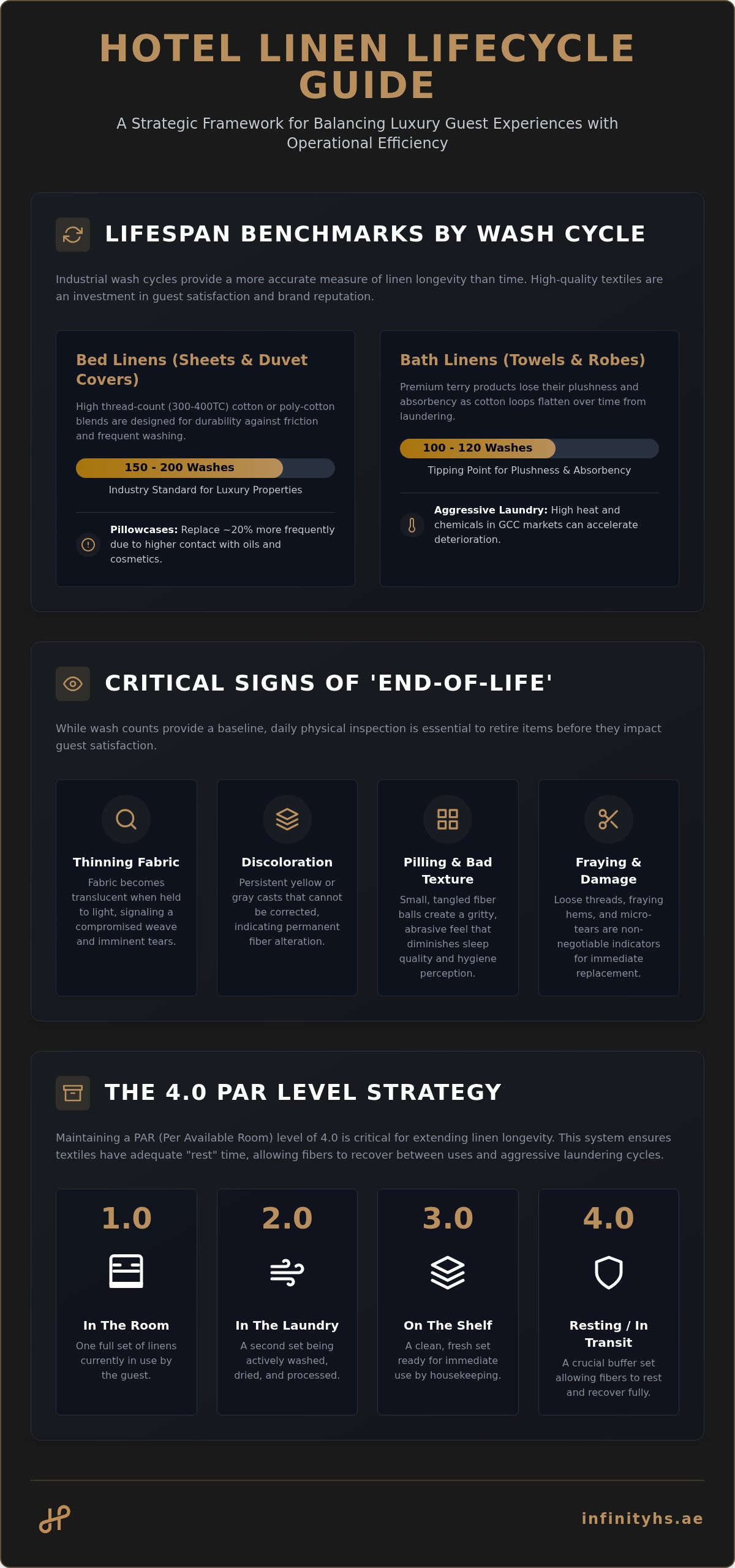
In high-occupancy markets like the GCC, relying on calendar months to determine when to replace hotel linens often leads to inconsistent guest experiences. A sheet in a hotel with 90% occupancy reaches its wear limit significantly faster than one in a property at 60% capacity. Professional institutional housekeeping departments have shifted toward wash cycle metrics to ensure precision. By 2026 standards, luxury bed linens should withstand 150 to 200 industrial launderings before the fibers begin to lose their structural integrity. High-quality Hotel Linen remains an investment in brand reputation, and tracking these cycles prevents the "tired" look that triggers negative reviews.
Towel longevity follows a tighter window. Most premium terry products reach a tipping point for plushness between 100 and 120 washes. Beyond this, the loops flatten and the cotton loses its ability to trap air, resulting in a thin, scratchy texture. In Middle Eastern luxury properties, the combination of aggressive laundry chemicals and high mineral content in water can accelerate this fatigue, making proactive monitoring essential for operational efficiency.
Bedding Lifecycle: Sheets, Pillowcases, and Duvet Covers
The material composition of your bedding dictates its survival rate. While 100% combed cotton offers superior breathability, poly-cotton blends often provide a longer replacement interval due to the synthetic fibers' resistance to tensile strength loss. However, not all items in a set wear equally. Pillowcases typically require replacement 20% more frequently than flat sheets because they face higher levels of friction and direct contact with oils and cosmetics. Investing in higher thread counts (300TC to 400TC) provides a denser weave that resists the thinning and "see-through" patches common in lower-spec textiles.
Bath Linen Lifecycle: Towels, Mats, and Robes
Grams per Square Metre (GSM) is the primary indicator of both luxury and durability. While high GSM towels feel more substantial, they also endure more fiber fatigue during the extended drying times required in industrial tumblers. Bath mats often fail well before hand towels because they endure constant floor friction and heavier soil loads. In luxury spa environments, premium bathrobes require replacement triggers based on collar fraying and belt loop tension. Once a robe loses its "loft," it no longer provides the cocooning experience guests expect from a five-star stay. Monitoring these specific touchpoints ensures you know exactly when to replace hotel linens to maintain a seamless guest journey.
Critical Signs Your Linens Have Reached 'End-of-Life'
Identifying the precise moment when to replace hotel linens requires a keen eye for detail and a commitment to uncompromising brand standards. While wash cycle counts provide a baseline, the physical condition of the textile remains the ultimate arbiter of guest satisfaction. Thinning fabric is a primary red flag. When light passes through a sheet too easily, it signals that the base weave is compromised and a tear is imminent. Persistent discoloration, often manifesting as a yellow or gray cast, indicates that industrial detergents and mineral buildup have permanently altered the fibers beyond the reach of standard recovery washes.
To maintain a consistent aesthetic, many properties adopt a practical replacement framework that includes the 'White Test'. This involves comparing used inventory against a factory-fresh sample under natural light. If the contrast reveals a significant loss of brightness or a shift in tone, the item should be retired. Beyond color, structural failures like fraying hems, loose threads, and loss of dimensional stability through excessive shrinkage are non-negotiable indicators of a textile's end-of-life. These flaws suggest a lack of meticulous care that guests quickly notice.
The Impact of Pilling and Fiber Breakage
Pilling occurs when short-staple fibers migrate to the surface and tangle into small, unsightly spheres. These micro-balls create a gritty, abrasive texture that guests often mistake for crumbs or sand in the bed. This tactile failure directly diminishes sleep quality and the perception of hygiene. To identify micro-tears before they become visible holes, housekeeping teams should hold linens against a strong light source during the folding process to spot areas of uneven density or fiber thinning.
Persistent Staining and Chemical Damage
Professional housekeeping departments generally follow a 'three-strike' rule for stained Hotel Linen. If a mark persists after three specialized reclamation cycles, the piece is permanently removed from the guest-facing inventory. Chemical burns, which appear as brittle, yellowed, or scorched patches, often result from excessive bleaching or aggressive pH levels in industrial laundries. Stubborn makeup, sunscreen, or massage oil stains necessitate immediate retirement, as they signal a failure in the luxury experience. If your current audit reveals widespread textile fatigue, it's often more cost-effective to discuss a strategic replenishment plan with a dedicated partner than to manage escalating guest complaints.
Factors That Accelerate Linen Deterioration
While standard usage dictates a predictable lifecycle, several external variables can drastically shorten the interval for when to replace hotel linens. In the GCC region, industrial laundry facilities often utilize high temperatures and aggressive pH levels to ensure hygiene standards. This chemical intensity, while necessary for sanitization, strips natural oils from cotton fibers. It leads to premature brittleness. Mechanical wear during high-speed extraction and passing through industrial ironers further compounds this stress, literally pulling the weave apart over time.
Environmental challenges in Middle Eastern coastal properties also play a significant role. High humidity and airborne dust can penetrate storage areas, causing microscopic abrasions within the fabric. Additionally, guest misuse remains a persistent challenge. Using premium bath towels for beach excursions or housekeeping staff using retired textiles for heavy cleaning can contaminate the laundry stream with grease or salt. This accelerates the decline of the entire inventory, forcing procurement teams to act sooner than anticipated.
Laundry Chemistry and Water Quality
Hard water is a common hurdle across the Middle East. High mineral content, particularly calcium and magnesium, leads to "graying" and a stiff, board-like texture that no amount of softener can fully rectify. There is a constant trade-off between using aggressive whitening agents to maintain that crisp white look and preserving the fiber's tensile strength. For properties facing these harsh conditions, sourcing high-durability hotel linen designed specifically for industrial turnover is a strategic necessity to prevent rapid inventory depletion.
The Importance of Proper Storage and 'Resting'
One of the most overlooked factors in textile longevity is the "resting" period. Cotton is a natural fiber that requires approximately 24 hours of rest between the dryer and the guest room to rehydrate. Using "hot" linens straight from the laundry prevents the fibers from settling. This makes them more prone to tearing and wrinkling. Overcrowded linen rooms also restrict airflow, creating pockets of stagnant air that can trap moisture. Utilizing ergonomic housekeeping trolleys during transport minimizes mechanical damage. It prevents the dragging and snagging that often occurs with manual handling or improvised storage solutions. Proper handling ensures you won't have to wonder when to replace hotel linens ahead of your scheduled budget.
Strategic Inventory Management: The PAR Level Connection
Strategic inventory management is the silent engine of a successful housekeeping operation. At its core lies the PAR level, which represents the minimum amount of linen required to support one guest room. Typically, one PAR is in the room, one is in the laundry, and one is in storage. Maintaining a robust PAR level is the most effective way to manage when to replace hotel linens. When a property operates with a low PAR level, specifically under 3.0, the inventory is forced into a rapid, high-stress turnover. This lack of breathing room prevents fibers from rehydrating, leading to accelerated thinning and structural failure.
To maintain a seamless supply chain, procurement specialists recommend budgeting for an annual 15-20% top-up. This allocation accounts for inevitable losses, accidental damage, and standard wear. It ensures your inventory remains consistent without the need for emergency, high-cost orders. For more detailed technical steps on balancing your stock, consult our hotel linen par level calculation guide.
Calculating Your Annual Replacement Rate
Predicting your replacement needs requires a calculation that weighs current PAR against forecasted occupancy. In regional hubs like Riyadh or Dubai, seasonal peaks can push occupancy to near-capacity for months at a time. During these windows, a 3.0 PAR system may see each sheet washed daily, shortening its lifespan to less than a year. Conversely, luxury properties often maintain a 4.0 or 5.0 PAR. This higher investment ensures that every item presented to the guest feels fresh and maintains its original loft, effectively extending the calendar lifespan of the entire inventory.
The Cost of 'Tired' Linen: Reputation vs. Savings
There is a direct correlation between linen quality and a property's Average Daily Rate (ADR). Guests paying premium rates expect a specific tactile experience. When bedding feels thin or scratchy, it triggers immediate dissatisfaction that often manifests as negative online reviews. These complaints impact long-term booking revenue far more than the cost of a timely replacement order. Strategic operators view linen as a depreciating asset that must be managed with precision. Our analysis of Durable Linens for High-Turnover UAE Hotels demonstrates that investing in higher-spec textiles actually lowers the total cost of ownership by reducing the frequency of replacement cycles.
Sourcing for Longevity: The Infinity Hotel Supplies Advantage
The decision of when to replace hotel linens starts long before the first wash cycle. It begins at the moment of procurement. Reactive purchasing often leads to inconsistent quality and inflated operational costs. By contrast, a strategic turnkey approach ensures that every textile entering your property meets rigorous brand standards from day one. Infinity Hotel Supplies prioritizes high-spec durability, allowing luxury properties across the Middle East to extend their replacement cycles without compromising the guest experience. This proactive methodology transforms linen from a recurring headache into a managed asset.
Global sourcing is a cornerstone of this operational stability. With a physical presence in the UAE, UK, and China, we maintain end-to-end oversight of the entire supply chain. This global footprint allows us to balance cost-efficiency with the meticulous quality control required for five-star OS&E management. We help hospitality operators move beyond emergency orders toward a planned, predictable replenishment program. This transition protects your bottom line while ensuring that guest rooms always reflect a sense of established reliability and excellence.
Selecting Fabrics Built for the Middle East
The regional climate and industrial laundry infrastructure demand specific textile characteristics to survive. Long-staple cotton is essential for this environment. Its longer fibers create a smoother, stronger yarn that resists the shredding and thinning caused by aggressive GCC laundry cycles. Weave patterns also dictate longevity. While Sateen offers a lustrous, silky hand-feel, Percale provides a crisp, breathable alternative that often demonstrates higher resistance to pilling in high-humidity coastal environments. You can explore our detailed Infinity Linen Page to review the technical specifications for each weave and thread count.
Partnering for Turnkey Excellence
Managing the logistical complexities of bulk linen delivery requires a seasoned global partner. Infinity Hotel Supplies navigates the challenges of international shipping and local distribution to ensure your inventory levels remain consistent. Our global offices facilitate direct factory audits. This ensures that every batch of Hotel Linen adheres to the exact GSM and tensile strength requirements of your brand. This level of precision eliminates the guesswork involved in determining when to replace hotel linens. We handle the details so you can focus on the guest.
If you are ready to optimize your textile lifecycle and reduce long-term procurement costs, contact Infinity Hotel Supplies for a comprehensive linen audit. We provide the data and the high-durability products needed to transform your housekeeping department into a model of operational efficiency.
Mastering the Strategic Textile Cycle
Mastering the textile lifecycle is a shift from reactive maintenance to strategic asset management. By prioritizing industrial wash cycles over calendar months and maintaining a robust 4.0 PAR level, you safeguard both your operational budget and your guest experience. Determining when to replace hotel linens becomes a data-driven process rather than a guessing game. It's a method that ensures every guest interacts with textiles that project the stability and excellence of your brand.
Since 2014, Infinity Hotel Supplies has served as a meticulous facilitator for luxury properties across the GCC. Our global sourcing expertise and turnkey procurement solutions ensure that your inventory resists the unique stresses of the Middle Eastern climate. Partnering with a provider that understands the technical nuances of fiber fatigue allows you to focus on the finer details of hospitality. Transitioning to a proactive replacement program is the final step in achieving seamless operational efficiency.
We look forward to helping you maintain the highest standards of luxury and durability for years to come.
Frequently Asked Questions
How often do 5-star hotels replace their bed sheets?
Most 5-star properties replace bed sheets after 150 to 200 industrial wash cycles to maintain an impeccable guest experience. Depending on occupancy rates, this usually translates to a replacement window of 18 to 24 months. Luxury hotels often retire linens at the first sign of thinning or loss of brightness. This proactive approach ensures the tactile quality remains consistent with the property's high Average Daily Rate and brand reputation.
What is the average lifespan of a hotel towel in washes?
Premium hotel towels typically last between 100 and 120 industrial washes before the fibers lose their plushness and absorbency. Beyond this point, the terry loops flatten, and the cotton becomes scratchy or thin. In high-occupancy Middle Eastern resorts, this means towels are often replaced every 8 to 12 months. Monitoring the "hand-feel" is a vital indicator for when to replace hotel linens in the bath category.
What are the standard PAR levels for a luxury hotel in 2026?
The 2026 industry standard for luxury properties is a minimum 4.0 PAR level. This system allocates one set in the guest room, one in the laundry, one in the linen room, and one "resting" in storage. Higher PAR levels reduce the frequency of washing for each individual item. This directly extends the overall inventory lifespan and ensures a consistent supply during peak seasonal occupancy in cities like Dubai or Riyadh.
Can damaged hotel linens be repurposed or recycled?
Sustainable hospitality practices in 2026 encourage repurposing retired linens to reduce waste. Sheets with minor tears can be converted into laundry bags or baby cot linens. Heavily damaged items are often downgraded to cleaning rags for the engineering or housekeeping departments. Some properties partner with textile recyclers to transform 100% cotton fibers into industrial wiping cloths or insulation materials, effectively supporting modern corporate ESG mandates and environmental goals.
Why do hotel sheets turn yellow or gray over time?
Discoloration is usually caused by mineral buildup or chemical reactions during the laundry process. Graying often results from "soil redeposition," where dirt from the wash water settles back onto the fabric. Yellowing is frequently a sign of residual body oils or sunscreens that haven't been fully removed. In the GCC region, the high mineral content in the water supply accelerates these visible changes, requiring specialized water softeners to protect the fabric.
Is it more cost-effective to buy higher thread count linens?
Higher thread counts, such as 300TC or 400TC, are generally more cost-effective over the long term. While the initial investment is higher, the denser weave offers greater tensile strength and resistance to industrial laundering. These textiles maintain their "plump" feel and whiteness for more wash cycles than budget alternatives. Choosing quality reduces the frequency of when to replace hotel linens, ultimately lowering your total annual procurement expenditure.
How does Middle Eastern water quality affect hotel laundry?
Water in the GCC region is often characterized by high salinity and mineral hardness. These factors interfere with detergent efficiency and lead to a stiff, abrasive texture in towels and sheets. Hard water also causes "graying" as minerals bond with the cotton fibers. Professional properties must use water softeners or specialized sequestration agents in their laundry chemistry to protect the fabric's integrity and maintain the standards guests expect in a luxury environment.

Article by
Infinity Editorial Team
With deep expertise in hospitality product FF&E and OS&E across the Middle East and Africa, Infinity Editorial Team brings insights from Infinity Hotel Supplies, helping developers, hoteliers, and homeowners transform spaces from empty shells to fully furnished, design-ready environments.
Disclaimer
The content published by Infinity Editorial Team is intended for informational purposes only. All articles, guides, and insights are based on industry knowledge and experience in hospitality FF&E and OS&E supply across the Middle East and Africa. Infinity Hotel Supplies does not guarantee specific outcomes and recommends consulting a qualified professional for project-specific requirements.


