

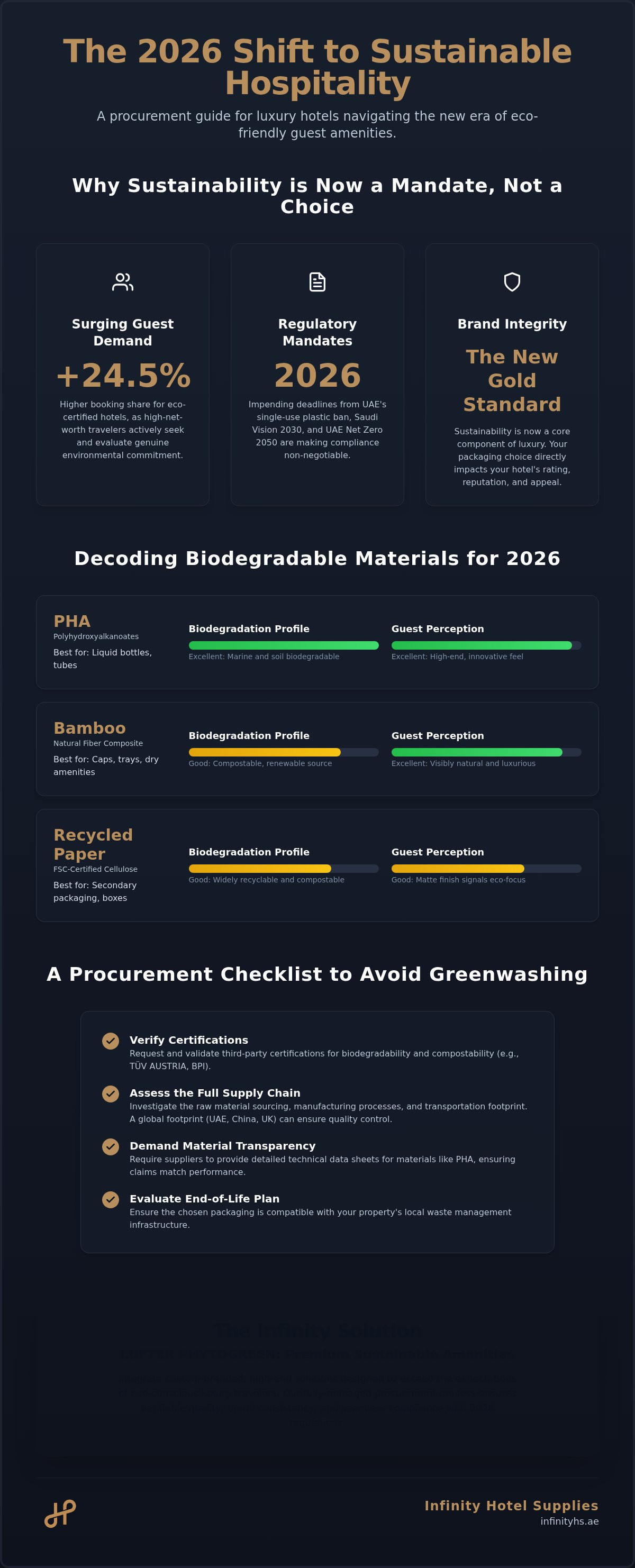
Did you know that eco-certified hotels can see up to a 24.5% higher booking share compared to properties reliant on traditional plastics? As we navigate the regulatory shifts of late 2026, the transition toward sustainability is no longer a marketing choice; it's a financial and operational mandate. You likely understand that guests expect more than just a "green" label on a bottle. They want a genuine commitment to the environment. However, the practical reality of sourcing biodegradable packaging for hotel amenities is often complicated by supplier greenwashing, inconsistent quality, and the logistical delays of overseas procurement.
We're here to help you master the complexities of eco-friendly procurement for luxury hospitality in the Middle East. This report provides a clear framework for auditing suppliers and details the latest material trends, such as the rise of PHA bioplastics. We'll also highlight reliable sourcing partners for GCC hotels, ensuring your supply chain remains as polished as your guest experience. By the end of this guide, you'll have the knowledge to navigate new ESG reporting requirements and secure sustainable solutions that truly perform.
Key Takeaways
- Understand why 2026 regulations and shifting guest psychology make eco-friendly packaging a non-negotiable standard for luxury hotels.
- Compare the performance and sustainability of modern materials like PHA and bamboo to choose the best fit for your specific amenity needs.
- Discover how a global procurement footprint in the UAE, China, and the UK simplifies sourcing biodegradable packaging for hotel amenities while maintaining quality control.
- Implement a rigorous auditing framework to verify supplier claims and protect your brand from the risks of greenwashing.
- Learn how to integrate custom-branded, high-end solutions like LUFTER PHYTOGREEN to meet the demands of eco-conscious, high-net-worth travelers.
The Evolution of Sustainable Luxury: Why Biodegradable Packaging is Mandatory in 2026
Sustainability in luxury hospitality has crossed a critical threshold. What was once a voluntary commitment to environmental stewardship is now a regulatory and commercial prerequisite across the GCC. For procurement directors and hotel general managers, sourcing biodegradable packaging for hotel amenities is no longer a line item to revisit annually; it's an operational priority that demands a structured, forward-looking strategy.
The distinction matters: biodegradable, in the context of five-star hotel operations, does not simply mean "breaks down eventually." It means materials certified to decompose under specific conditions, within defined timeframes, without releasing harmful residues. Sustainable packaging encompasses a broad spectrum of approaches, from compostable bioplastics to plant-derived cellulose, and understanding these distinctions is essential before committing to a supplier or product line.
Regional Mandates and Plastic-Free Initiatives
The UAE's ban on single-use plastics has fundamentally altered hotel procurement cycles. Hotels that previously ordered miniature shampoo bottles and plastic-wrapped amenities by the pallet are now navigating compliance requirements that affect their entire OS&E sourcing calendar. Saudi Vision 2030 and the UAE Net Zero 2050 strategy both embed sustainability targets into national economic frameworks, which means hospitality operators face pressure from regulators, investors, and brand standards simultaneously.
Dubai's Department of Economy and Tourism (DET) has positioned sustainability compliance as a component of hotel rating criteria. This creates a direct link between your packaging choices and your property's classification standing. Smart procurement teams are already anticipating the next wave of restrictions, particularly around composite materials and non-certified "biodegradable" claims, rather than reacting to bans after they're enforced.
Key areas to address proactively in your procurement pipeline:
- Amenity packaging: Shampoo, conditioner, and body wash containers made from certified compostable or PHA-based materials
- Wrapping and protective materials: Replacing polybags with recycled tissue or water-soluble film alternatives
- Room collateral: Eliminating plastic sleeves from slippers, combs, and toiletry kits
The Guest Experience: Sustainability as the New Gold Standard
High-net-worth travelers in 2026 don't just notice sustainable packaging; they evaluate it. The tactile quality of a bamboo-capped amenity bottle or a matte-finish recycled carton signals brand intentionality in a way that a small "eco-friendly" sticker never could. Guests who choose a luxury resort in Dubai or Riyadh increasingly expect the room amenities to reflect the same environmental values they apply to their own purchasing decisions.
This is where premium custom hotel amenities become a genuine brand asset rather than a cost centre. Biodegradable packaging enhances the narrative arc of a guest's stay, reinforcing that the property's commitment to sustainability is embedded in every detail, from the lobby architecture to the moisturiser on the bathroom shelf. The challenge is executing that commitment without compromising the sensory experience that defines five-star hospitality.
Decoding Biodegradable Materials: What to Look for in 2026
Selecting the right substrate is a technical decision that impacts both guest perception and waste management efficiency. When sourcing biodegradable packaging for hotel amenities, you must evaluate the environmental conditions required for decomposition. While many suppliers offer generic "eco-friendly" options, the chemical reality of how these materials behave in a hotel's specific waste stream varies significantly. Understanding the technical specifications of modern resins ensures that your sustainability claims remain verifiable and accurate.
| Material Type | Primary Use Case | Biodegradation Profile | Guest Perception |
|---|---|---|---|
| PHA (Polyhydroxyalkanoates) | Liquid bottles and tubes | Marine and soil biodegradable; breaks down in natural environments. | Premium, weighted feel similar to traditional high-end plastic. |
| PLA (Polylactic Acid) | Rigid containers and caps | Industrially compostable; requires specific heat and moisture levels. | Clear and glass-like, though can feel slightly brittle. |
| Stone Paper | Dry kit wraps and soap boxes | Photo-degradable; produced without water, bleach, or trees. | Velvety, matte finish that signals luxury and innovation. |
| Bamboo / FSC Paper | Dental and shaving kits | Fully compostable in home or industrial settings. | Tactile and organic; reinforces a wellness-centric brand story. |
Bioplastics vs. Natural Fiber Packaging
The choice between bioplastics and natural fibers depends largely on the product's moisture barrier requirements. PHA bioplastics are currently the gold standard for shampoos and lotions because they prevent evaporation and preserve the integrity of the fragrance. However, it's essential that these choices align with the EU's Packaging and Packaging Waste Regulation, which sets strict benchmarks for recyclability and compostability. These international standards increasingly influence GCC procurement requirements, making certification a non-negotiable step in your audit process.
Natural fibers like bamboo or sugarcane bagasse are ideal for dry kits. They offer a textured, organic aesthetic that guests associate with holistic wellness and environmental responsibility. Sugarcane bagasse is particularly versatile for secondary packaging, turning agricultural byproduct into elegant, sturdy amenity trays. These materials are often home-compostable, providing a circular solution that simplifies the disposal process for both guests and housekeeping teams.
Innovative Secondary Packaging Trends
Secondary packaging is moving toward a minimalist, zero-waste philosophy. Many luxury properties are adopting water-soluble films or recycled paper sleeves to eliminate plastic overwraps entirely. These solutions pair perfectly with high-quality bathroom accessories, such as ceramic or stone dispensers that reduce the need for individual miniatures. Custom-branded biodegradable boxes allow you to maintain a sophisticated brand identity while meeting your ESG targets. If you're looking to refine your material selection, you can consult our procurement experts to find the ideal balance between durability and environmental impact. Understanding the shelf life of these resins ensures your inventory remains pristine even in challenging regional storage conditions.
Strategic Sourcing: Navigating the Global Supply Chain for GCC Hotels
Operating a luxury property in the Middle East requires more than just high standards; it demands a resilient and transparent supply chain. When sourcing biodegradable packaging for hotel amenities, the geographical distance between manufacturing hubs and GCC resorts often introduces risks like quality variance and logistical delays. Successful procurement leaders mitigate these through a global footprint, leveraging offices in the UAE, China, and the UK to oversee production at the source. This physical presence allows for real-time adjustments and ensures that every shipment aligns with the specific environmental regulations of the destination country.
Managing lead times is particularly vital for custom branded amenities. Transitioning to biodegradable materials often involves different manufacturing processes than traditional plastics, which can affect production schedules. Value engineering plays a central role here. By analyzing material specifications and consolidating orders, hotels can reduce costs without sacrificing the premium feel of their eco-materials. Navigating international freight and customs for sustainable goods requires meticulous documentation. It's essential to ensure that "green" products meet local standards without being stalled at the border due to ambiguous labeling or certification gaps.
Quality Control in Global Sourcing
On-the-ground inspection in manufacturing hubs like China is non-negotiable. It's the only way to verify that the bioplastics or fibers used match the samples approved during the tender phase. Testing for durability is equally essential. You must ensure that biodegradable packaging doesn't begin to degrade prematurely while in storage, especially given the high humidity and temperatures common in regional warehouses. Maintaining consistent brand standards across multiple material suppliers requires a centralized quality assurance protocol. This process monitors everything from color matching on stone paper to the structural integrity of PHA bottles, ensuring a cohesive guest experience.
Turnkey Procurement Solutions for GCC Resorts
Implementing hospitality procurement solutions streamlines the transition to sustainable operations. For multi-property hotel groups in Riyadh and Doha, managing bulk orders through a single partner ensures volume discounts and brand uniformity across the entire portfolio. This approach is especially beneficial during the pre-opening phases of new resorts, where a comprehensive OS&E package can cover everything from custom hotel amenities to essential room accessories. By integrating sustainable sourcing into the initial project management phase, developers can meet their ESG targets from day one of operation while maintaining the meticulous attention to detail that luxury guests expect.
A Procurement Checklist: Auditing Supplier Sustainability Claims
Verifying the legitimacy of eco-claims is the most challenging phase of sourcing biodegradable packaging for hotel amenities. As regional regulations tighten, the risk of greenwashing grows. Suppliers often use vague descriptors like "green" or "natural" without providing the technical data to back them up. A robust audit ensures that your sustainability reporting remains accurate and that your property avoids the reputational damage of unsubstantiated claims.
Certification and Compliance Standards
A credible supplier must provide third-party certifications that align with international and regional standards. For Middle East imports, TUV Austria (OK Compost) and BPI certifications are the primary benchmarks for compostability. These labels confirm that the material will break down within a specific timeframe without leaving toxic residues behind. ISO 14001 certification further demonstrates that the manufacturer follows a structured environmental management system.
Compliance goes beyond the material itself. In the KSA market, ensuring that ingredients in eco-packaging are Halal-certified is a critical requirement for luxury properties. You should also request documentation for the cradle-to-grave lifecycle of the amenities. This includes assessing the carbon footprint of the entire supply chain. A product made from sustainable bamboo loses its luster if the logistics of moving it from the factory to the GCC generate excessive emissions.
- ISO 14040/44: Standards for conducting a verifiable Life Cycle Assessment (LCA).
- FSC Certification: Ensures that paper and bamboo components come from responsibly managed forests.
- Local Standards: Compliance with MoIAT (UAE) and SASO (KSA) health and safety requirements for toiletries.
Supplier Transparency and Ethics
Transparency is the foundation of a successful partnership. You should audit factory conditions and labor practices to ensure the global supply chain operates ethically. Requesting Material Safety Data Sheets (MSDS) for all biodegradable resins is a non-negotiable step. These sheets reveal the chemical composition of the packaging, ensuring it's safe for guest use and won't react with the liquid formulations inside.
Building long-term relationships with established global hotel procurement companies provides an added layer of security. These partners conduct regular site visits and quality checks, acting as your eyes and ears on the factory floor. This meticulous approach is essential when sourcing biodegradable packaging for hotel amenities that must meet the uncompromising standards of five-star hospitality.
The Infinity Solution: LUFTER PHYTOGREEN and Premium Sustainable Amenities
Luxury is defined by the meticulous attention to detail that transforms a guest's stay into a memorable experience. However, a common tension exists between high end aesthetics and environmental responsibility. Many procurement specialists worry that sustainable materials might feel "budget" or lack the polished finish expected in a five star setting. We resolve this conflict through LUFTER PHYTOGREEN, a range designed specifically to occupy the intersection of nature and luxury. This collection proves that sourcing biodegradable packaging for hotel amenities does not require a compromise on brand prestige.
Our methodology extends beyond simple product supply. We integrate these sustainable amenities into your property's wider design narrative, ensuring they complement our broader OS&E and FF&E solutions. Whether you require custom branded amenity kits or sophisticated dispensers, our global procurement footprint ensures consistent quality. A prominent five star property in Dubai recently successfully transitioned to 100% biodegradable packaging by partnering with us. They achieved this shift without sacrificing their signature aesthetic, demonstrating that modern sustainability can be as elegant as it is ethical.
LUFTER PHYTOGREEN: A Case for Sustainable Luxury
The LUFTER PHYTOGREEN range is engineered for properties that refuse to settle for generic eco-labels. These products feature premium tactile qualities, using weighted bioplastics and textured natural fibers that feel substantial in the guest's hand. The visual appeal is equally sophisticated, offering a canvas for high fidelity custom branding that reinforces your resort's identity. By choosing these materials, you provide a sensory experience that signals quality while meeting the strictest environmental standards. You can explore our full range of sustainable hotel amenities to see how these materials translate into a cohesive guest room offering.
Turnkey Integration and Support
Transitioning an entire property to eco-friendly alternatives is a complex logistical undertaking. Infinity Hotel Supplies manages the full lifecycle of this process, from initial material selection to final delivery at your GCC resort. We provide ongoing operational support and meticulous inventory management to ensure your supply chain remains uninterrupted. This end to end service allows hotel managers to focus on guest satisfaction while we handle the technicalities of compliance and global shipping. If you're ready to modernize your procurement strategy, contact us for a tailored hotel amenities sustainability audit to identify the most impactful changes for your property.
Future-Proofing Your Luxury Hospitality Procurement
The transition toward sustainable luxury is no longer a distant goal but an immediate operational requirement for GCC hotels. Success in 2026 depends on your ability to distinguish between genuine biodegradable materials and greenwashing while maintaining the tactile quality that high-net-worth guests expect. Mastering the complexities of sourcing biodegradable packaging for hotel amenities requires a blend of technical knowledge and logistical precision.
Infinity Hotel Supplies has served as a dedicated partner to the Middle East hospitality sector since 2014. Our established sourcing offices in China and the UK provide the global oversight necessary for premium turnkey OS&E solutions. We manage the meticulous details of procurement for five-star resorts, ensuring your property achieves excellence in both sustainability and operational efficiency.
We look forward to helping you lead the way in sustainable hospitality while enhancing the guest experience through meticulous attention to detail. It is time to secure a stable and excellent supply chain for the future.
Frequently Asked Questions
What is the difference between biodegradable and compostable packaging?
Biodegradable materials break down through natural processes over an indefinite period. In contrast, compostable packaging must decompose within a specific timeframe under controlled conditions, such as those found in industrial facilities. For hospitality operators, compostable options like those certified by EN 13432 offer more verifiable environmental benefits. While all compostable items are biodegradable, not all biodegradable items are compostable, making precise certification essential for your property's sustainability reporting.
Are biodegradable hotel amenities more expensive than traditional plastic?
Sustainable materials often carry a cost premium compared to conventional plastics. For instance, compostable poly mailers can be significantly more expensive than their plastic counterparts. However, these upfront costs are often balanced by reduced waste management fees and enhanced brand reputation. By leveraging bulk ordering through a global partner, hotels can achieve better price stability. High-net-worth travelers also report a willingness to pay a 5% premium for stays at eco-certified properties.
How do I verify if a supplier's packaging is truly biodegradable?
Verification requires a thorough audit of third-party certifications. You should look for recognized standards such as TUV Austria's OK Compost, BPI, or EN 13432. It's also vital to request Material Safety Data Sheets (MSDS) and Life Cycle Assessments (LCA) compliant with ISO 14040. A reliable partner will provide these documents transparently. This level of scrutiny is necessary to avoid greenwashing and ensure the integrity of your supply chain and guest experience.
Can biodegradable packaging maintain the same quality feel as luxury plastic?
Modern sustainable materials are designed to match or exceed the tactile quality of traditional plastics. Materials like PHA bioplastics and stone paper offer a premium, weighted feel that resonates with luxury brand standards. Bamboo and sugarcane bagasse also provide an organic, high-end aesthetic for dry amenities. Sourcing biodegradable packaging for hotel amenities no longer means sacrificing the sensory experience that five-star guests expect from their bathroom kits and room accessories.
What are the current regulations for hotel plastics in Dubai and Riyadh?
Dubai has implemented strict bans on single-use plastics, with the Department of Economy and Tourism (DET) integrating sustainability into hotel rating criteria. In Riyadh, Saudi Vision 2030 drives a nationwide shift toward circular economies and waste reduction. Both regions now require mandatory ESG reporting for many entities. Staying ahead of these regulations requires a proactive procurement strategy that prioritizes certified compostable materials over vaguely defined eco-friendly alternatives to ensure long-term compliance.
How long does it take to source custom-branded biodegradable amenities?
Lead times for custom-branded biodegradable amenities typically range from several weeks to a few months, depending on material complexity and design requirements. Sustainable resins like PHA may require different manufacturing cycles than standard plastics. To ensure seamless delivery, it's best to work with a provider that maintains a global footprint in the UAE, China, and the UK. This allows for better quality control and more predictable shipping schedules for Middle East resorts.
Do biodegradable amenity bottles have a shorter shelf life?
Most biodegradable amenity bottles are engineered to remain stable throughout their intended use and storage period. However, they're designed to break down in specific disposal environments. It's essential to store these items in climate-controlled warehouses to prevent premature degradation, especially in high-humidity regions like the GCC. Testing for durability during the procurement phase ensures that your amenities maintain their structural integrity and fragrance until they reach the guest in the room.
Is it possible to source biodegradable packaging for liquid toiletries?
Sourcing biodegradable packaging for hotel amenities like shampoo and body wash is now highly effective thanks to PHA bioplastics. PHA offers the necessary barrier properties to contain liquids without leaking or reacting with the formulation. This material is marine and soil biodegradable, making it a superior choice for liquid toiletries in 2026. These innovations allow luxury hotels to eliminate single-use plastic bottles while providing high-quality, sustainable solutions that meet international environmental standards.

Article by
Infinity Editorial Team
With deep expertise in hospitality product FF&E and OS&E across the Middle East and Africa, Infinity Editorial Team brings insights from Infinity Hotel Supplies, helping developers, hoteliers, and homeowners transform spaces from empty shells to fully furnished, design-ready environments.
Disclaimer
The content published by Infinity Editorial Team is intended for informational purposes only. All articles, guides, and insights are based on industry knowledge and experience in hospitality FF&E and OS&E supply across the Middle East and Africa. Infinity Hotel Supplies does not guarantee specific outcomes and recommends consulting a qualified professional for project-specific requirements.


