

What if the most expensive part of your staff wardrobe isn't the initial purchase price, but the hidden cost of a uniform that fails under the intense Doha sun? Every hospitality leader understands the frustration of seeing a premium brand identity literally fade away or watching staff performance dip because of non-breathable, heavy fabrics. Selecting a hotel uniform supplier in Doha is no longer just a matter of aesthetic style; it's a technical decision that directly impacts your operational efficiency and employee retention.
We've developed this expert-led 2026 procurement checklist to help you navigate the complexities of sourcing high-performance garments in Qatar's unique desert climate. You'll learn how to ensure your textiles meet the mandatory GSO 1956:2009 standards and how the recent Decree No. (31) of 2026 customs tariff updates might affect your logistics. From moisture-wicking fabric technology to maintaining brand consistency across diverse departments, this guide provides the roadmap for a streamlined procurement process that prioritizes both sophisticated luxury and long-term durability.
Key Takeaways
- Learn to apply the "Breathability Test" to select high-performance fabrics that ensure staff comfort and brand integrity in Qatar’s extreme desert temperatures.
- Identify the critical criteria for selecting a hotel uniform supplier in Doha, focusing on global sourcing capabilities and rigorous manufacturing quality control.
- Discover how to balance sophisticated aesthetics with department-specific functionality, from front-of-house elegance to kitchen safety and stain resistance.
- Navigate the 2026 regulatory landscape, including the latest GCC customs tariff updates and mandatory GSO textile labeling requirements for Qatar.
- Master the final procurement phases by implementing "wear-trial" protocols to verify garment durability and fit before committing to bulk production.
Selecting a Hotel Uniform Supplier in Doha: Why Climate Matters
A guest's first impression of your property often begins before they even reach the check-in desk. It starts with the valet, the doorman, and the concierge. In the high-stakes world of Qatar's luxury hospitality, your staff's appearance is a living extension of your brand's promise. While the basic definition of what a uniform is involves standardized clothing for a specific group, the 2026 standard for Doha hotels demands a far more sophisticated approach. Comfort drives performance; if your team is struggling with heavy, non-breathable fabrics in 45-degree heat, their ability to provide world-class service will inevitably decline.
Choosing a hotel uniform supplier in Doha requires a partner who views apparel as a technical component of your property's success. This selection shouldn't happen in a vacuum. Instead, savvy operators are integrating their wardrobe needs into their broader hospitality procurement solutions. This holistic strategy ensures that the textures and colors of your staff's attire complement your interior design and operational goals. When your procurement is synchronized, you avoid the common pitfall of having uniforms that clash with your newly installed FF&E elements.
To better understand the visual impact of premium attire, watch this brief look at high-end kitchen wear:
The Role of Uniforms in Qatar's Luxury Hospitality Brand
Your uniforms serve as a visual bridge between your property’s architecture and the human element of service. A turnkey approach to design ensures that every role, from the executive chef to the housekeeping team, feels like part of a unified narrative. This is particularly vital in Doha's multicultural environment. A professional hotel uniform supplier in Doha must create designs that offer a cohesive look across diverse staff nationalities while maintaining a high standard of formal elegance. When the wardrobe reflects the same level of detail as your leather accessories or premium electronics, it reinforces a sense of established reliability for the guest.
Challenges of the Doha Desert Climate
Doha's climate presents unique technical challenges that off-the-shelf solutions simply cannot meet. High humidity combined with extreme temperature fluctuations between outdoor sun and indoor air conditioning requires advanced textile engineering. Outdoor staff need garments with high UV resistance and superior colorfastness to prevent the "washed-out" look that plagues lower-quality fabrics. Also, designers must balance traditional modesty requirements with modern thermal comfort. This means utilizing lightweight, moisture-wicking linings and intelligent venting that remains invisible to the guest but provides essential relief to the wearer.
Fabric and Material Selection Checklist for High Temperatures
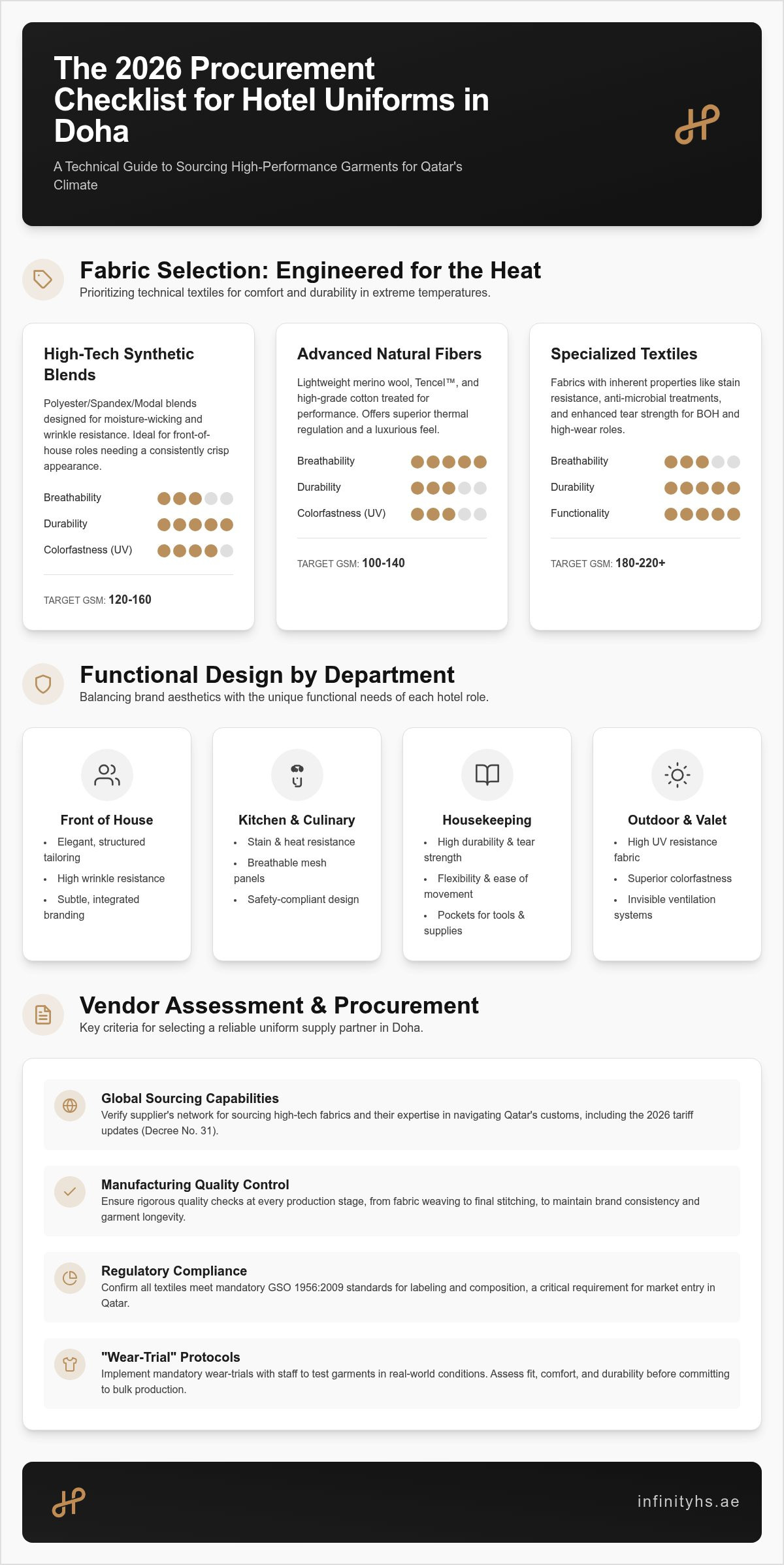
Selecting the right textile is a precise science that balances wearer comfort with the rigors of industrial maintenance. A professional hotel uniform supplier in Doha understands that while 100% natural fibers offer superior airflow, they often struggle to maintain a crisp silhouette after a full shift in humidity. To identify the best fabrics for hot, humid conditions, procurement managers must evaluate the Grams per Square Meter (GSM) of every sample. For Doha’s intense summer months, aim for a GSM between 100 and 140 for shirting. This ensures the garment remains lightweight without becoming transparent.
The following table provides a technical comparison of materials commonly utilized in Qatar’s luxury sector to help guide your selection process:
| Fabric Type | Target GSM | Breathability | Best For |
|---|---|---|---|
| Cotton-Rich Blend | 115–130 | High | Front-office shirting |
| Linen-Tencel Blend | 140–160 | Excellent | Boutique resort staff |
| Performance Synthetic | 120–150 | Moderate | Housekeeping/Banquets |
Durability is the second pillar of material selection. Just as you prioritize high tensile strength for your hotel linen, your uniforms require fabrics that can withstand frequent high-temperature washing. High-performance synthetic blends provide the necessary elasticity and color retention that pure cotton lacks. These performance blends are essential for roles involving high physical activity where fabric stress is constant. It's a technical choice that protects your long-term investment.
Breathable vs. Durable: Finding the Middle Ground
Linen blends are currently trending for boutique resorts across the Middle East because they evoke a relaxed, high-end aesthetic while providing natural cooling. However, for high-traffic city hotels, cotton-rich fabrics remain the industry workhorse. These materials keep staff cool during outdoor shifts while resisting the deep creasing associated with pure linen. Before approving any bulk order, request the results of a Martindale rub test. A score of 20,000 cycles or higher is the benchmark for garments that must endure daily wear and frequent laundering without pilling or thinning.
Moisture-Wicking Technology for Outdoor Staff
Modern hospitality standards in 2026 have seen a shift toward integrating athletic-grade moisture management into traditional formal cuts. This technology is no longer reserved for the gym; it's a vital tool for doormen and pool attendants. Modern moisture-wicking technology serves as a thermal regulator that actively pulls perspiration away from the skin to the fabric's surface for rapid evaporation. This ensures staff remain composed during peak service hours. Additionally, anti-microbial treatments are now a baseline requirement for staff working in humid areas. Our team can help you analyze your specific environmental needs to select the most resilient textiles; reach out to our specialists for a material consultation.
Department-Specific Design Checklist: Function Meets Style
Design in the hospitality sector is a delicate equilibrium where visual identity meets physical necessity. A professional hotel uniform supplier in Doha understands that a single design philosophy cannot apply to every department. While your front-office team requires sharp tailoring to reflect your property's prestige, your housekeeping and maintenance crews need garments engineered for high-intensity physical labor. When these designs are executed correctly, they reduce staff fatigue and ensure a consistent guest experience across all touchpoints.
Operational efficiency often depends on the small details that off-the-shelf garments overlook. For example, housekeeping staff constantly maneuver heavy house-keeping trolleys through narrow corridors. If their uniforms lack sufficient stretch or feature restrictive shoulder seams, their productivity drops and the risk of strain increases. Similarly, spa and wellness teams require textiles that remain pristine even when in contact with the oils and chemicals found in premium amenities. Selecting a hotel uniform supplier in Doha that offers bespoke design ensures these technical requirements are addressed during the initial prototyping phase.
Front-Office: The First Impression in Doha
The "Doha Luxury" aesthetic is characterized by a blend of modern international styles and subtle local influences. For front-of-house roles, consider incorporating delicate embroidery or patterns inspired by Qatari heritage into collars or cuffs. This creates a unique sense of place for international travelers. Because these roles are high-visibility, crease-resistance is a non-negotiable requirement. High-twist wool blends or advanced synthetic weaves allow staff to remain looking polished from the start of their shift until the very end, even in humid conditions.
Operational Efficiency for Housekeeping and Kitchen
Safety and ergonomics define the design requirements for the heart-of-house. In the kitchen, where ambient temperatures can soar, garments must adhere to OSHA heat safety guidelines to protect workers from heat-related stress. This involves using lightweight, fire-retardant fabrics and incorporating hidden mesh vents in high-perspiration areas. Range of motion is equally critical; look for designs that include:
- Underarm gussets to allow for reaching and lifting without the shirt untucking.
- Strategic pocket placement for digital communication devices and essential tools.
- Reinforced stitching at stress points to prevent tearing during heavy physical tasks.
- Moisture-resistant finishes for maintenance staff working in outdoor or high-humidity environments.
By partnering with an experienced hotel uniform supplier in Doha, you ensure that every garment serves as a functional tool for your team. This meticulous attention to detail transforms a simple uniform into a strategic asset that supports your staff’s well-being and your property's operational excellence.
Vendor Assessment Checklist: Finding a Reliable Partner
Selecting a hotel uniform supplier in Doha is a strategic commitment that goes beyond a single transaction. You need a partner capable of navigating the logistical hurdles of the GCC while maintaining a global standard of excellence. Reliability is built on transparency. Start your assessment by auditing the supplier's supply chain. A provider that controls every step, from initial material sourcing to final delivery, significantly reduces the risks of color variance and shipping delays. This end-to-end oversight is what separates a mere vendor from a dedicated facilitator of guest experiences.
Managing inventory for a large hospitality team requires the same mathematical precision as managing your guest room inventory. We recommend applying the rigorous logic found in our hotel linen par level calculation guide to your wardrobe procurement strategy. This methodology ensures you maintain sufficient stock for new hires, size exchanges, and regular laundry rotations. By calculating par levels correctly, you avoid the common pitfall of over-investing in dormant capital while ensuring your team never faces a shortage of pristine garments.
Global Sourcing and Quality Control Standards
Infinity Hotel Supplies leverages an established presence in the UAE, China, and the UK to provide a seamless procurement experience. This global footprint allows for rigorous quality control at the manufacturing site before goods ever reach the Doha port. It also facilitates a more ethical sourcing model. You can verify that your garments are produced under fair labor conditions and meet the GSO 1956:2009 standards for harmful substances. When we manage turnkey logistics for new developments, we handle the complexities of the 2026 GCC Integrated Customs Tariff. This proactive approach ensures your opening dates aren't jeopardized by regulatory bottlenecks or customs delays.
Bespoke Customization and Branding Capabilities
Brand integrity is fragile. It can be compromised by poor-quality embroidery that puckers or screen printing that cracks after only a few industrial washes. Evaluate your supplier's branding techniques under high-heat stress to ensure longevity. Bespoke customization should also include professional "fit sessions" for your diverse team members. A uniform that fits poorly looks unprofessional, regardless of the fabric quality. To achieve a truly holistic brand identity, consider sourcing matching leather accessories such as belts, name tag holders, or menu covers from the same provider. This ensures a perfect color match and consistent texture across all guest-facing touchpoints.
The Final Procurement Checklist: Samples to Delivery
Precision in the final stages of procurement prevents operational friction during a property's opening or rebranding phase. Once you've selected a hotel uniform supplier in Doha, the focus shifts from design concepts to technical execution and logistical reliability. This transition requires a methodical approach to quality assurance, ensuring that the bulk production perfectly mirrors the approved prototypes. Meticulous documentation of every fabric specification and trim detail provides a baseline for inspecting the final delivery, safeguarding your investment against manufacturing inconsistencies. Following a structured checklist ensures that nothing is overlooked before the final shipment arrives at your loading dock.
- Prototype Validation: Inspect physical samples to ensure they meet the specific brand standards and design details established during the consultation.
- Field Testing: Conduct a 30-day wear-trial to monitor fabric resilience, colorfastness, and breathability in Qatar's high-humidity zones.
- Sizing Sessions: Create a detailed matrix for your international staff to ensure a tailored, professional fit that accommodates diverse body types.
- Compliance Audit: Confirm that all materials meet GSO 1956:2009 standards for harmful substances and adhere to ethical labor practices.
- Logistics Planning: Coordinate with your provider to manage the 5% C.I.F. customs duty and bilingual labeling requirements mandated by the 2026 GCC tariff updates.
Managing the Prototype and Sizing Process
A 30-day wear-trial allows your team to test the garments in real-world conditions, assessing how fabrics respond to Doha’s heat and daily service stresses. This phase provides the last chance to adjust pocket placement or hidden venting before bulk manufacturing begins. Prototype testing serves as a critical safeguard that identifies potential design flaws before bulk manufacturing, effectively eliminating the risk of expensive re-orders and timeline setbacks. It's the most effective way to guarantee staff satisfaction before the final rollout.
Logistics and Lifecycle Management
Evaluating the "Cost per Wear" is more vital than the initial purchase price for long-term budget stability. A garment that retains its silhouette through 100 industrial wash cycles offers far better value than a cheaper alternative that pills within months. To maximize efficiency, synchronize these deliveries with your broader OS&E shipments. Implementing a digital inventory system using RFID tags can further automate replenishment for new hires, ensuring your team always looks its best without the need for manual stock counts.
Future-Proofing Your Property’s Brand Identity
Mastering the complexities of 2026 hospitality standards requires a shift from viewing uniforms as a simple expense to seeing them as a strategic performance tool. By prioritizing climate-resilient fabrics and ensuring compliance with the latest GCC customs regulations, you protect your staff’s comfort and your property’s operational flow. Success hinges on partnering with a hotel uniform supplier in Doha that can manage global logistics while understanding the specific cultural and environmental nuances of Qatar.
Infinity Hotel Supplies has served as a meticulous facilitator of high-end guest experiences since 2014. Our established global sourcing network across the UAE, China, and the UK ensures that your bespoke designs are delivered with technical precision and cost-efficiency. As specialists in turnkey OS&E solutions, we provide the stability and expertise needed to navigate the evolving demands of the Middle Eastern luxury market.
We look forward to helping you elevate your brand and empower your team with garments designed for excellence.
Frequently Asked Questions
What are the best fabrics for hotel uniforms in Doha's climate?
Cotton-rich blends and Tencel are the most effective choices for Qatar's intense heat. These materials provide the natural breathability of cotton while offering the durability and wrinkle resistance of high-performance synthetics. For outdoor roles, we recommend moisture-wicking athletic blends that actively manage perspiration. Aim for a fabric weight between 100 and 140 GSM for shirting to ensure staff remain cool without the garments becoming transparent under bright light.
How do I ensure my uniforms comply with Qatar's luxury brand standards?
Compliance begins with bespoke design that reflects your property's specific aesthetic and cultural context. High-quality embroidery and precise tailoring are essential for maintaining a polished, authoritative appearance. A professional hotel uniform supplier in Doha will conduct fit sessions and wear-trials to ensure every piece meets five-star expectations. Consistency across all departments, from valet to management, reinforces your brand's commitment to excellence and meticulous attention to detail.
What is the typical lead time for custom hotel uniforms in the Middle East?
Typical lead times for custom bulk orders range from 12 to 16 weeks. This comprehensive timeline accounts for the initial design phase, fabric sourcing, prototype development, and a essential 30-day wear-trial. It also includes the window required for mass production and GCC customs clearance. Planning your procurement at least four months before your property opening or rebranding ensures that your team is fully equipped and polished for launch.
Can a hotel uniform supplier in Doha also handle global shipping for our African properties?
Yes, our global operational footprint allows us to manage complex logistics for properties across Africa and the wider Middle East. By leveraging offices in the UAE, China, and the UK, we coordinate shipments directly from manufacturing hubs to your international sites. This centralized management ensures that your brand standards remain consistent across all global locations while optimizing shipping costs and streamlining the customs documentation process for diverse jurisdictions.
How many sets of uniforms should I order per staff member?
We recommend a minimum of three sets per staff member to maintain steady operational efficiency. This standard allows for one set in use, one in the laundry, and one in reserve. For roles that involve high physical activity or outdoor shifts in Doha's humidity, increasing this to four sets can extend the lifecycle of the garments. Proper par level management prevents premature wear and ensures your team always appears in pristine attire.
Is it better to source bespoke uniforms or off-the-shelf designs for a new hotel?
Bespoke uniforms are the superior choice for luxury properties seeking a distinct and memorable brand identity. Off-the-shelf designs often lack the technical specifications needed for Qatar's climate and fail to reflect a hotel's unique design narrative. Custom solutions allow you to select specific fabric blends, incorporate heritage-inspired patterns, and ensure an ergonomic fit that off-the-rack options cannot match. This investment pays off through increased staff morale and guest perception.
How does a turnkey procurement company simplify uniform sourcing?
A turnkey provider manages the entire lifecycle of uniform sourcing, from initial design to final delivery. This holistic approach removes the burden of coordinating multiple vendors and ensures that your uniforms match other OS&E elements like leather accessories or linens. By handling quality control at the factory level and navigating complex customs regulations, a turnkey partner provides a seamless, risk-mitigated solution for busy hospitality operators and executive procurement specialists.
What is the difference between sourcing uniforms in Dubai vs. Doha?
The primary differences lie in logistics and specific local regulatory requirements. While both markets face similar climates, a hotel uniform supplier in Doha must navigate specific Qatari customs updates, such as Decree No. (31) of 2026. Qatar also enforces strict GSO labeling standards that require care instructions in both Arabic and English. Working with a supplier that has a dedicated local focus ensures your property remains compliant with Qatar's specific legal and cultural expectations.

Article by
Infinity Editorial Team
With deep expertise in hospitality product FF&E and OS&E across the Middle East and Africa, Infinity Editorial Team brings insights from Infinity Hotel Supplies, helping developers, hoteliers, and homeowners transform spaces from empty shells to fully furnished, design-ready environments.
Disclaimer
The content published by Infinity Editorial Team is intended for informational purposes only. All articles, guides, and insights are based on industry knowledge and experience in hospitality FF&E and OS&E supply across the Middle East and Africa. Infinity Hotel Supplies does not guarantee specific outcomes and recommends consulting a qualified professional for project-specific requirements.


