

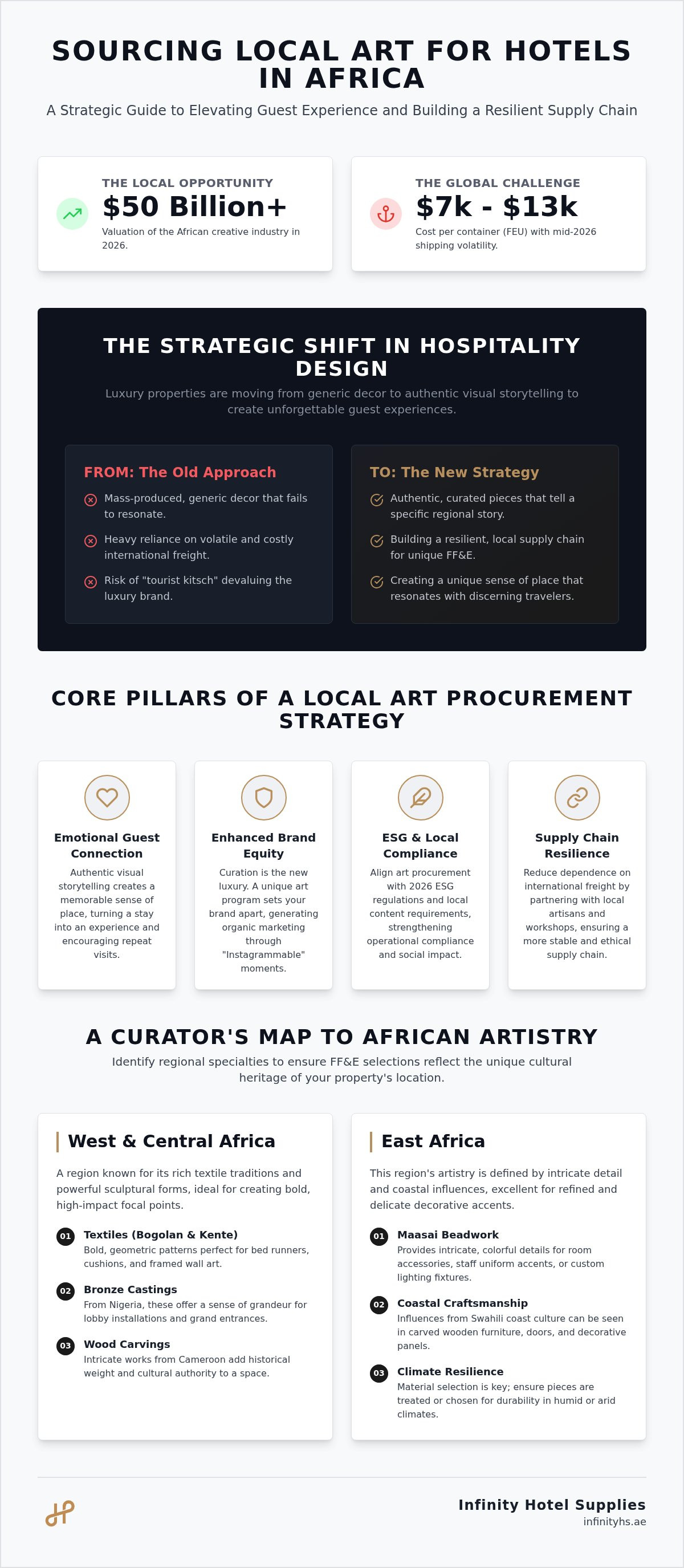
In 2026, the African creative industry is valued at over $50 billion, yet many luxury properties still settle for mass-produced decor that fails to resonate with the modern, discerning traveler. Sourcing local art for hotels in Africa is no longer just a design choice; it's a strategic supply chain asset that builds brand equity and ensures compliance with evolving ESG regulations. You recognize that guests crave authentic, place-based experiences, but the path to procurement is often blocked by logistical hurdles and the fear of inadvertently purchasing "tourist kitsch" instead of genuine artistry.
We understand that managing the "last mile" for fragile works can be daunting, especially with container shipping costs surging to between $7,000 and $13,000 per FEU in mid-2026. This guide provides a professional roadmap to help you navigate these complexities. You'll discover how to ethically source authentic pieces that elevate your guest experience while strengthening your regional supply chain. We'll preview the impact of the African Continental Free Trade Area (AfCFTA) on logistics, discuss the nuances of fair payment for artisans, and outline a streamlined procurement process for your next FF&E project.
Key Takeaways
- Learn why authentic visual storytelling serves as the primary driver for emotional guest connection in luxury lodges and urban boutique properties.
- Identify regional specialties across the continent to ensure your FF&E selections reflect the unique cultural heritage of your specific location.
- Implement ethical frameworks for sourcing local art for hotels in Africa to avoid mass-produced replicas and ensure equitable compensation for artisans.
- Discover strategies for managing the "last mile" of intra-Africa freight to safely transport fragile works from rural workshops to your property.
- Align your art procurement with 2026 ESG regulations and local content requirements to strengthen your brand equity and operational compliance.
The Strategic Value of Local Art in African Hospitality
In the 2026 hospitality market, the definition of local art has shifted from mere decoration to a core pillar of property identity. Sourcing local art for hotels in Africa is no longer about filling wall space with generic masks or mass-produced prints. Instead, it involves a meticulous selection of authentic pieces that tell a specific regional story. Authenticity acts as a safeguard against the "tourist kitsch" that devalues luxury brands. By prioritizing genuine craftsmanship, hotel operators create a sense of place that resonates with high-net-worth travelers who seek depth over superficiality. This approach moves the property beyond the standard "beige" room, establishing a brand standard that is both unique and culturally grounded.
Visual storytelling remains the most powerful driver for guest emotional connection. When a guest enters a lobby or a private villa, the art serves as their first silent introduction to the culture. For those seeking a comprehensive overview of African art, the diversity across the continent offers endless possibilities, from intricate textiles to bold sculptures. Beyond aesthetics, art procurement is now a critical tool for meeting Environmental, Social, and Governance (ESG) targets. Many jurisdictions are tightening local content regulations, making the ethical integration of local talent a regulatory necessity rather than a choice.
Art as a Guest Experience Strategy
Economic Impact and Supply Chain Resilience
Strategic procurement involves looking beyond the initial purchase. By partnering with local workshops, hotels can build a resilient hotel supply chain in Africa that is less vulnerable to global shipping volatility. Sourcing local art for hotels in Africa reduces the heavy reliance on international freight, which has seen dramatic cost spikes recently. Additionally, the "Made in [Country]" label holds immense marketing value. International guests appreciate knowing their stay supports the local economy, which enhances the perceived value of the hospitality experience.
A Regional Map of African Artistry for Hotel Procurement
Successful sourcing local art for hotels in Africa requires a granular understanding of how traditional crafts translate into modern FF&E requirements. You aren't just buying artifacts; you're selecting functional design elements that must meet hospitality grade standards. This process involves balancing centuries-old heritage with contemporary African fine art to create a space that feels both timeless and current. It's a meticulous exercise in aligning cultural storytelling with the practical needs of a commercial property.
Material selection is a critical, often overlooked factor in the procurement process. Organic materials like untreated wood or certain natural textiles may react poorly to extreme humidity in West African coastal cities or the intense, arid heat of the Sahel. Ensuring that your art selections are treated for climate resilience or selected specifically for their durability in diverse environments is essential for long-term property maintenance and asset protection.
West and Central African Textiles and Sculptures
West Africa offers a wealth of textile traditions that integrate seamlessly into bespoke hotel linen and soft furnishings. Bogolan, or mud cloth, from Mali and Kente from Ghana provide bold, geometric patterns that serve as excellent accents for bed runners, decorative cushions, or framed wall hangings. For high-impact lobby focal points, bronze castings from Nigeria or intricate wood carvings from Cameroon offer a sense of grandeur and historical weight. These large-scale installations are particularly effective in grand entrances where they set an immediate tone of cultural authority.
East African Beadwork and Coastal Influences
In East Africa, the focus often shifts toward intricate detail and coastal craftsmanship. Incorporating Maasai beadwork into room accessories, such as coasters, tray accents, or custom branding elements, adds a tactile layer of authenticity to the guest experience. Coastal regions benefit from the Swahili wood carving tradition, characterized by elaborate geometric patterns often found on monumental doors, headboards, and mirrors.
When managing procurement for safari lodges in Kenya, the aesthetic challenge lies in blending these vibrant traditions with the rugged, natural environment of the bush. Achieving this balance requires a steady hand and a deep knowledge of regional supply chains. If you're looking to refine your property's aesthetic through professional procurement, you can consult with our regional specialists to explore custom solutions tailored to your location.
Ethical Sourcing vs. Commercial Procurement
Avoiding the commercial trap is a primary challenge for operators focused on authenticity. Mass-produced replicas might offer lower initial costs, but they devalue the guest experience and fail to provide the cultural depth travelers expect in 2026. Sourcing local art for hotels in Africa requires a rigorous vetting process to ensure suppliers can meet the high-volume demands of a 100-room property while maintaining consistent quality. Turnkey procurement companies often outperform standalone art consultants in this regard. They integrate art into the broader FF&E timeline and quality control framework, ensuring that creative vision aligns with operational reality.
Fair trade frameworks are essential for maintaining brand reputation and meeting ESG requirements. You must ensure that the artisans receive equitable compensation, which builds long-term supply chain resilience. Vetting local suppliers involves more than just checking their portfolio; you must evaluate their reliability, financial stability, and ability to scale production for large orders. A supplier who can produce ten beautiful pieces might struggle when asked for three hundred, leading to project delays and compromised standards.
Direct Artisan Engagement vs. Gallery Sourcing
Working directly with village cooperatives is ideal for sourcing bulk items like hand-woven baskets or small carvings for guest rooms. These partnerships support local economies and provide unique, high-volume accents that feel grounded in the community. However, managing dozens of individual artisans requires significant oversight. For high-impact "hero" pieces in restaurants or main corridors, high-end galleries are often more reliable. They provide the provenance and investment-grade quality required for focal points. Ethical art procurement is the balance of fair pay and quality assurance.
Quality Control and Standardization
Handmade pieces present unique challenges regarding safety and durability in high-traffic zones. Operators must ensure that organic materials are treated against pests and that sculptures are stable enough for public areas. Standardizing sizes is another logistical necessity. When sourcing local art for hotels in Africa for 100+ rooms, slight variations in dimensions can complicate framing and installation schedules. Natural dyes also present a challenge for color consistency. While some variation adds charm, you must establish tolerance ranges to ensure the property maintains a cohesive visual identity. This level of meticulousness ensures that your art program remains a professional asset rather than a maintenance liability.
Logistics, Preservation, and Installation Challenges
The logistical burden of moving art within the continent remains one of the most significant barriers to successful procurement. Infrastructure gaps often add 40% to 60% to the total cost of goods, making the "last mile" delivery from a rural workshop to an urban hotel a complex operation. Sourcing local art for hotels in Africa requires a partner who understands the nuances of regional transport, from specialized crating for fragile sculptures to climate-controlled storage for delicate textiles. Without these safeguards, the investment in authentic pieces can be lost before the items even reach the property. This is especially true when moving large-scale installations through ports that are currently experiencing peak season surcharges and congestion.
Preservation is equally critical once the art is installed. High-traffic hospitality zones expose organic materials like wood, grass, and hand-woven fabrics to fluctuating humidity and physical wear. Implementing preservation strategies is essential for protecting your FF&E investment. You must consider environmental controls to mitigate UV damage and fading, particularly in sun-drenched lobbies or outdoor corridors. Specialized LED lighting solutions can highlight the work's texture without emitting the heat or UV rays that compromise structural integrity over time. Additionally, security mounting hardware is a non-negotiable requirement for valuable works in public spaces. These systems ensure that art remains securely fixed, preventing both intentional theft and accidental damage from guest luggage or housekeeping equipment.
Managing Cross-Border Freight and Customs
Managing the regulatory landscape is a core component of the supply chain. You must have a clear understanding of import duties for hotel supplies in Nigeria and other regional hubs to avoid unexpected delays at the border. Documentation is paramount. This includes obtaining "Cites" certifications for specific organic materials and verifying the provenance of cultural artifacts to ensure legal compliance. Professional expertise in managing international freight ensures that these administrative hurdles don't derail your FF&E timeline or inflate your budget with avoidable storage fees.
Maintenance and Long-Term Curation
A successful art program requires an ongoing commitment to maintenance. Housekeeping staff need specific training on how to care for delicate local pieces, as standard industrial cleaning agents can destroy natural dyes and organic fibers. Beyond daily care, consider rotating your collection every few years. This keeps the guest experience fresh and allows for the professional restoration of pieces that have suffered wear. Managing this operational lifecycle ensures that the art remains a vibrant, high-value asset for the property's entire duration. Sourcing local art for hotels in Africa is a long-term investment that pays dividends in guest loyalty and brand authority.
Integrating Art into Turnkey Procurement Solutions
Integrating art into a turnkey procurement solution ensures that the creative vision remains both financially and logistically viable. Many hospitality operators treat art as a final decorative layer, but including it in the early-stage FF&E budget prevents design friction and costly mid-project adjustments. Sourcing local art for hotels in Africa works most effectively when it is managed alongside other critical room elements from the start. By consolidating art with amenities and room electronics, you reduce the administrative burden of managing multiple vendors and disparate delivery timelines.
This "one-stop" methodology allows for significant logistical efficiencies that are often overlooked in fragmented procurement models. Consolidating art with other FF&E shipments minimizes the risk of damage and optimizes container space, which is crucial given the current volatility in global shipping rates. Infinity Hotel Supplies leverages its established offices in Dubai, China, and the UK to provide on-the-ground quality control and ethical vetting. We ensure that every piece meets the property’s technical and aesthetic standards before it enters the shipping pipeline, providing a necessary layer of security for your investment.
Art as Part of the FF&E Package
Successful integration requires a cohesive design language that flows through every guest touchpoint. Art should complement other room details, such as custom leather accessories, bespoke furniture, and high-end electronics. Value engineering plays a vital role in this process; we help you achieve a high-end, authentic look while managing the procurement budget effectively. In recent 2026 resort projects, we've successfully integrated large-scale sculpture programs by aligning them with the initial FF&E design phase. This proactive approach ensured that structural requirements for installation, such as reinforced wall mounts or specialized lighting, were addressed before construction was finalized, saving significant time and labor costs.
Partnering with Infinity Hotel Supplies
Our methodology for sourcing local art for hotels in Africa is grounded in regional expertise and a commitment to authenticity. We don't just buy art; we meticulously vet the artisans and cooperatives to ensure ethical compliance and production capacity. Managing the "last mile" delivery to remote hotel locations is a core strength, utilizing our established regional networks to navigate challenging terrain. This end-to-end support allows you to focus on guest operations while we handle the complexities of the supply chain with precision and care.
Contact our procurement experts to discuss your African hotel project
Elevating Your Property with Authentic African Artistry
Sourcing local art for hotels in Africa is a sophisticated logistical and creative undertaking that transforms a physical space into a cultural destination. By prioritizing ethical engagement with regional artisans and integrating these selections into your early-stage FF&E planning, you ensure both design excellence and operational efficiency. You've seen how regional specialties serve as powerful drivers for guest emotional connection while helping your property meet modern ESG and local content regulations.
Managing the complexities of intra-Africa freight and preservation requires a partner with a global operational footprint. Our turnkey FF&E and OS&E expertise, supported by global quality control capabilities, ensures that every piece meets your brand standards. We provide dedicated support for African hospitality projects to navigate the unique challenges of the regional supply chain with precision and care.
We look forward to facilitating your next high-end hospitality experience with the precision and dedication your brand deserves.
Frequently Asked Questions
Why is it important to source local art for hotels in Africa?
Sourcing local art for hotels in Africa is essential for creating an authentic sense of place that resonates with high-net-worth travelers. It moves your property beyond generic design standards, offering a unique visual narrative that drives emotional guest connection. Beyond aesthetics, it fulfills local content requirements and strengthens regional supply chains. This strategic choice builds long-term brand equity by ensuring your hotel feels deeply rooted in its specific geographical and cultural context.
How do I ensure the art I source for my hotel is ethically produced?
You ensure ethical production by implementing rigorous fair trade frameworks and vetting local suppliers for transparency. It's vital to verify that artisans receive equitable compensation and work in safe conditions. Partnering with established cooperatives or using procurement specialists to conduct on-the-ground audits helps you avoid the "commercial trap" of mass-produced replicas. These ethical practices protect your brand reputation while supporting the economic resilience of the communities surrounding your property.
What are the main challenges of shipping art across African borders?
The primary challenges involve navigating poor infrastructure and complex customs regulations, which can add between 40% and 60% to the total cost of goods. Moving art from rural workshops to urban centers often requires specialized crating and climate-controlled transport to prevent damage. You must also manage specific documentation, such as "Cites" certifications for organic materials and regional import duties. Professional logistics management is necessary to solve these "last mile" delivery hurdles across diverse African borders.
Can local art meet the strict brand standards of international hotel chains?
Local art can absolutely meet and exceed the strict brand standards of international hotel chains when managed through a professional procurement framework. The key lies in selecting pieces that are treated for durability and standardized for commercial installation. By integrating art into the early-stage FF&E design, you ensure that every piece aligns with the property's technical requirements and aesthetic identity. This professional oversight ensures that handmade never equates to low quality.
What types of African art are most durable for high-traffic hotel guest rooms?
Bronze castings, treated hardwoods, and high-quality textiles like Kente or Bogolan are among the most durable options for high-traffic zones. You should select materials that are resilient to specific regional climates, such as extreme humidity or arid heat. Art pieces used in guest rooms must be stable, easy to clean, and securely mounted to prevent accidental damage. Using these robust materials ensures your art program remains a long-term asset rather than a maintenance liability.
How does local art sourcing impact a hotel’s ESG rating?
Sourcing local art for hotels in Africa significantly improves your ESG rating by demonstrating a commitment to social responsibility and economic inclusion. It reduces the carbon footprint associated with international shipping while directly supporting local artisanal talent. Compliance with local content regulations is increasingly important for hospitality operators in 2026. This approach provides measurable data for your sustainability reports, proving that your procurement strategy prioritizes both regional growth and environmental consciousness.
Should art be considered FF&E or OS&E in hotel procurement?
Art is traditionally categorized as FF&E, particularly for large-scale installations and permanent wall pieces. However, smaller decorative items and tabletop accents may fall under OS&E. To achieve the best results, you should include art in your early-stage FF&E budget. This allows for better coordination with furniture styles and ensures that structural requirements, such as reinforced mounting or specialized lighting, are addressed during the construction phase, preventing costly mid-project adjustments.
How can a procurement company like Infinity Hotel Supplies help with local art sourcing?
Infinity Hotel Supplies provides a turnkey solution by consolidating art procurement with your broader FF&E and OS&E needs. We leverage our offices in Dubai, China, and the UK to manage global sourcing, quality control, and complex logistics. Our team handles the ethical vetting of artisans and manages the "last mile" delivery to remote locations. This integrated approach streamlines your supply chain, ensuring that authentic African artistry is delivered safely, on time, and within budget.

Article by
Infinity Editorial Team
With deep expertise in hospitality product FF&E and OS&E across the Middle East and Africa, Infinity Editorial Team brings insights from Infinity Hotel Supplies, helping developers, hoteliers, and homeowners transform spaces from empty shells to fully furnished, design-ready environments.
Disclaimer
The content published by Infinity Editorial Team is intended for informational purposes only. All articles, guides, and insights are based on industry knowledge and experience in hospitality FF&E and OS&E supply across the Middle East and Africa. Infinity Hotel Supplies does not guarantee specific outcomes and recommends consulting a qualified professional for project-specific requirements.


